A quiet visitor dressed in dead-leaf brown
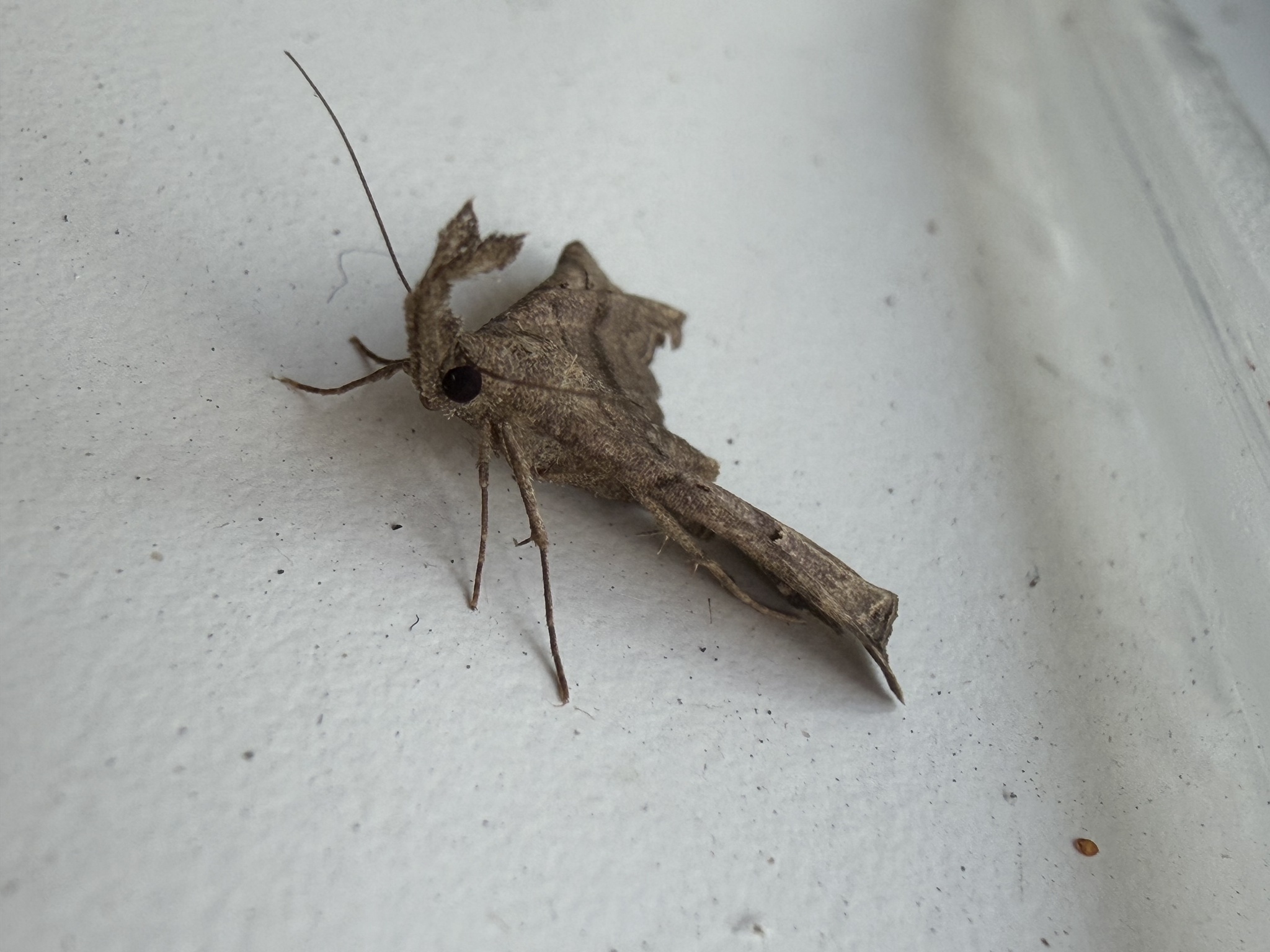
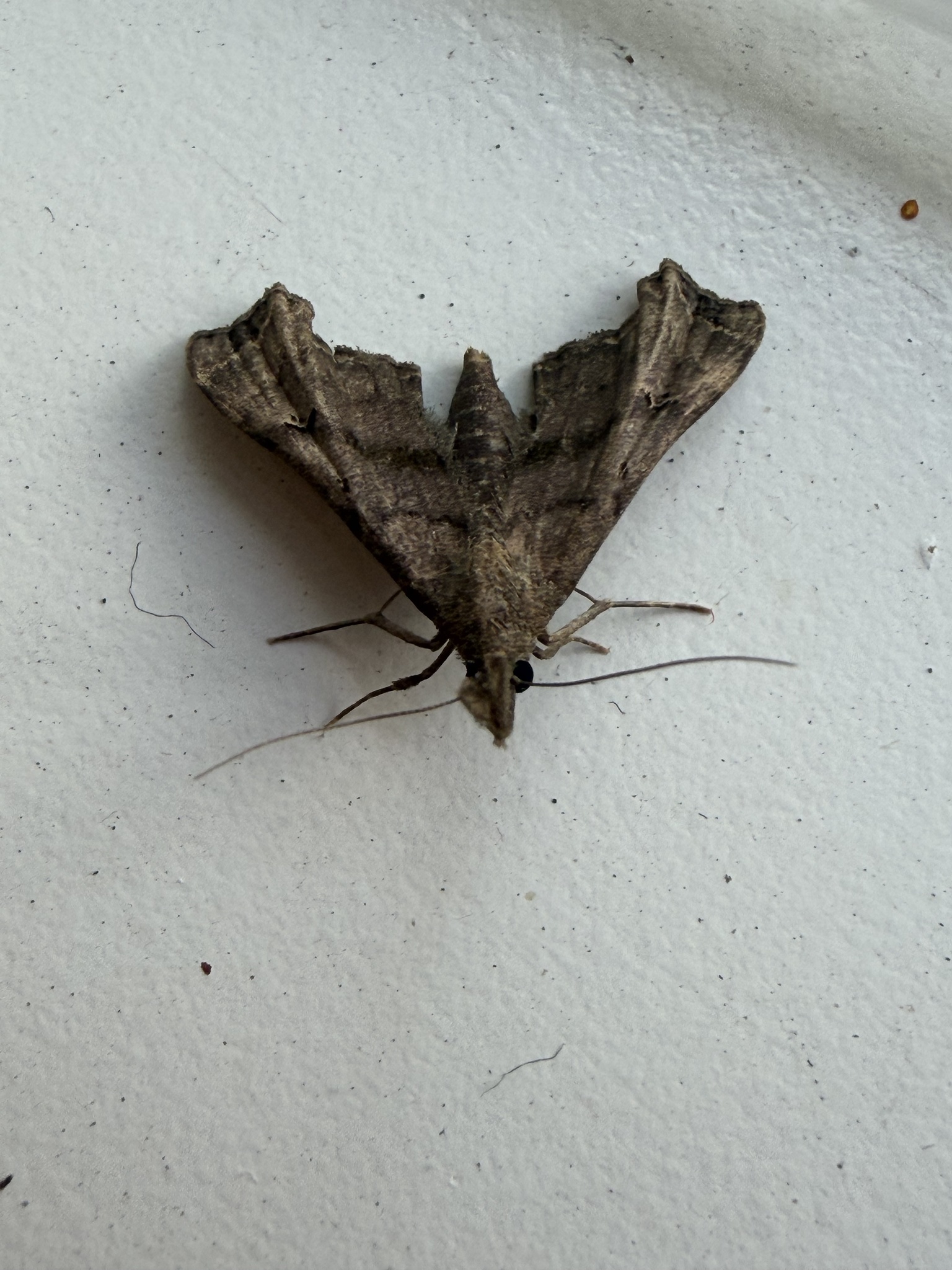
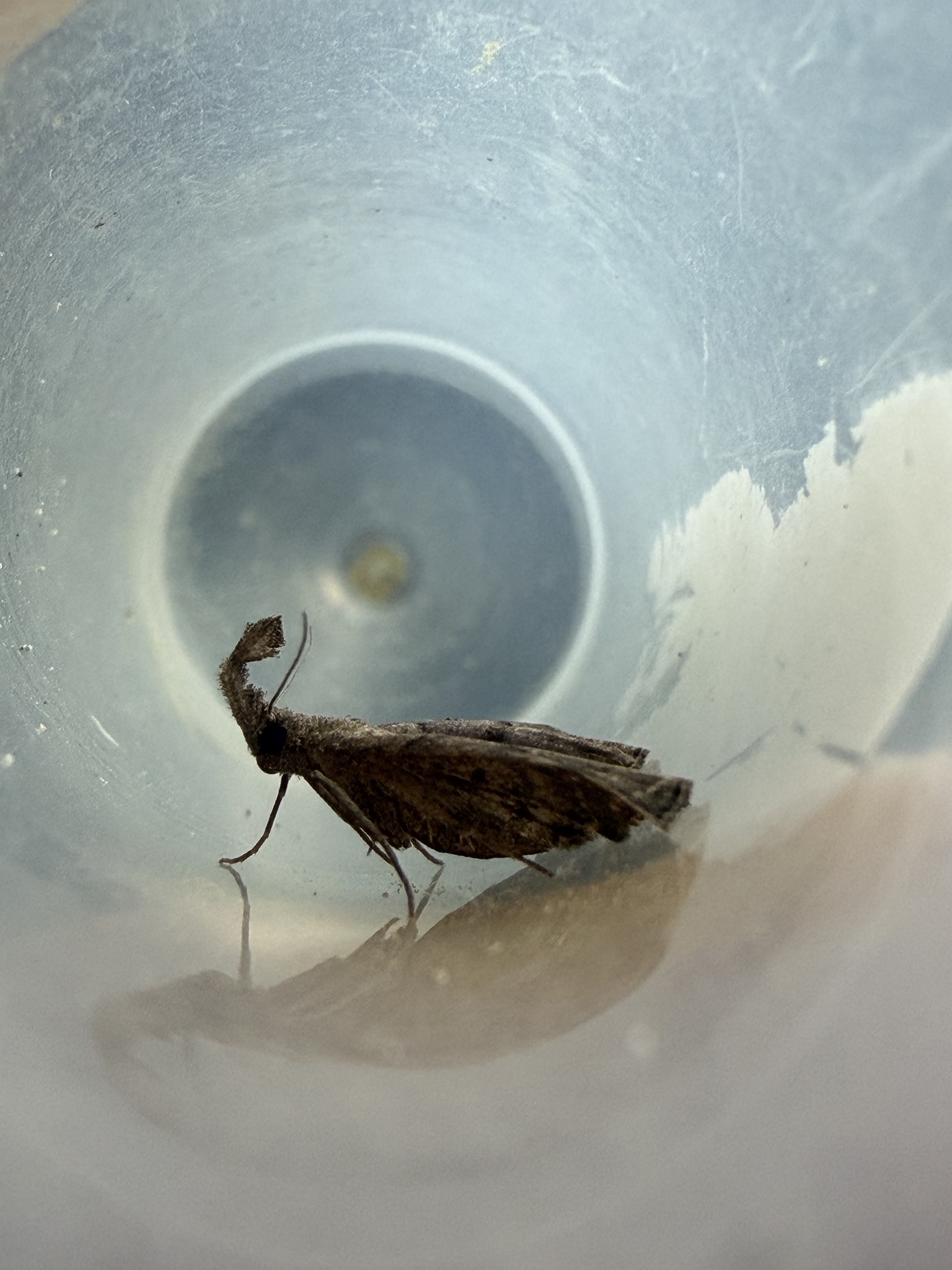
On the evening of September 18, on the grounds of Shady Side Academy in Fox Chapel, this small moth had settled on a pale, faintly gritty surface and pulled its wings flat against its body in the low tent shape so many moths adopt when resting. Mottled brown and grey, with a slim body and long, thread-thin antennae, it looked less like an animal than a scrap of bark or a fleck of old leaf, which is very much the point.
It belongs to Palthis, a genus of litter moths in the subfamily Herminiinae, family Erebidae, order Lepidoptera. The name of the subfamily is literal. The caterpillars of most litter moths feed on dead, fallen leaves rather than living foliage, working their way through the leaf litter of woods and gardens. The adults are slender and long-legged, with wings that fold tightly back and a habit of resting low, on trunks, stones, or wherever the colour of the day happens to match them. Palthis is a small genus within that group, its members cut in the same muted browns and greys, often with fine dark lines drawn across the forewings.
That camouflage is exactly what makes them hard to admire and hard to identify. Litter moths run to muted browns and greys, and many species look much alike, so a photograph taken at rest is often enough to place one in the genus and no further.
For now this one is recorded at genus level, Palthis, after a community identification, and still awaits confirmation to species. It is a small reminder that a dead leaf on the ground is not wasted. For a whole group of moths it is dinner, and for the moths themselves it is the best disguise going.