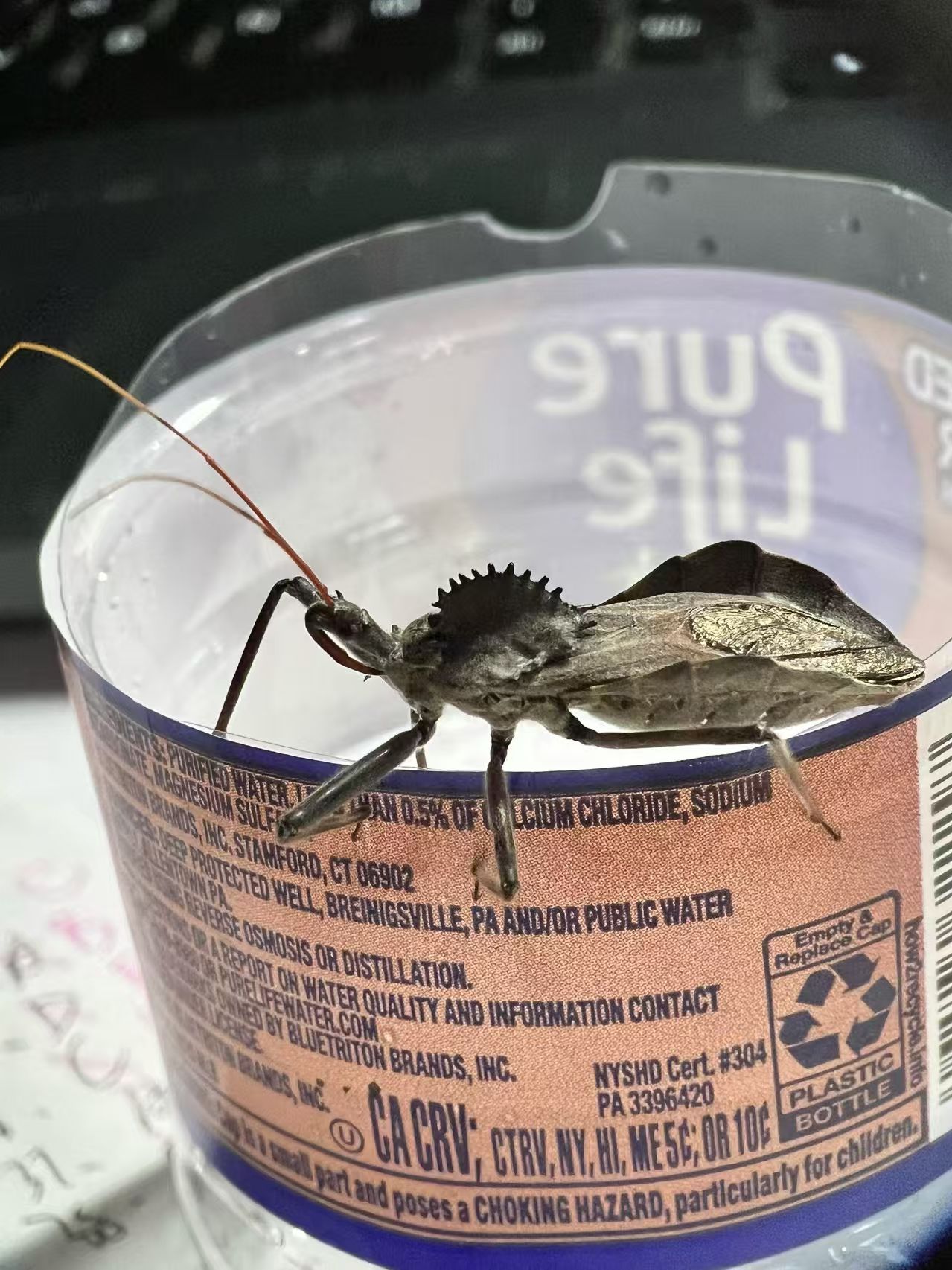
A Bug with a Cog on Its Back: Meeting the Wheel Bug in Pittsburgh
It was a warm afternoon in September 2025, on the campus of SSA in Pittsburgh, when I almost walked right past it. Something grey and oddly mechanical sat motionless on a leaf, and then I saw the giveaway: a perfect half-wheel of gear teeth rising from its back. Nature doesn’t usually build steampunk, but this time it made an exception.
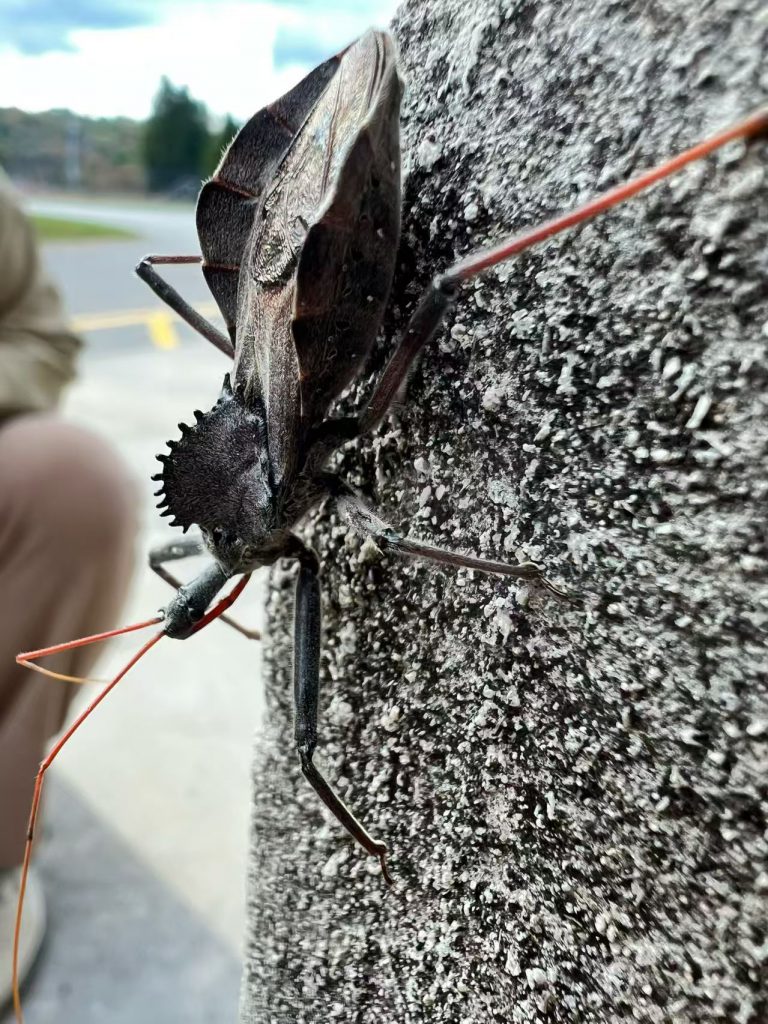
That cog is the calling card of the wheel bug, Arilus cristatus (Linnaeus, 1763), a giant of the assassin bug family Reduviidae (order Hemiptera). The species name cristatus means “crested.” And what a crest it is. No other North American insect wears a gear on its thorax, so once you’ve seen one, you’ll never confuse it with anything else.
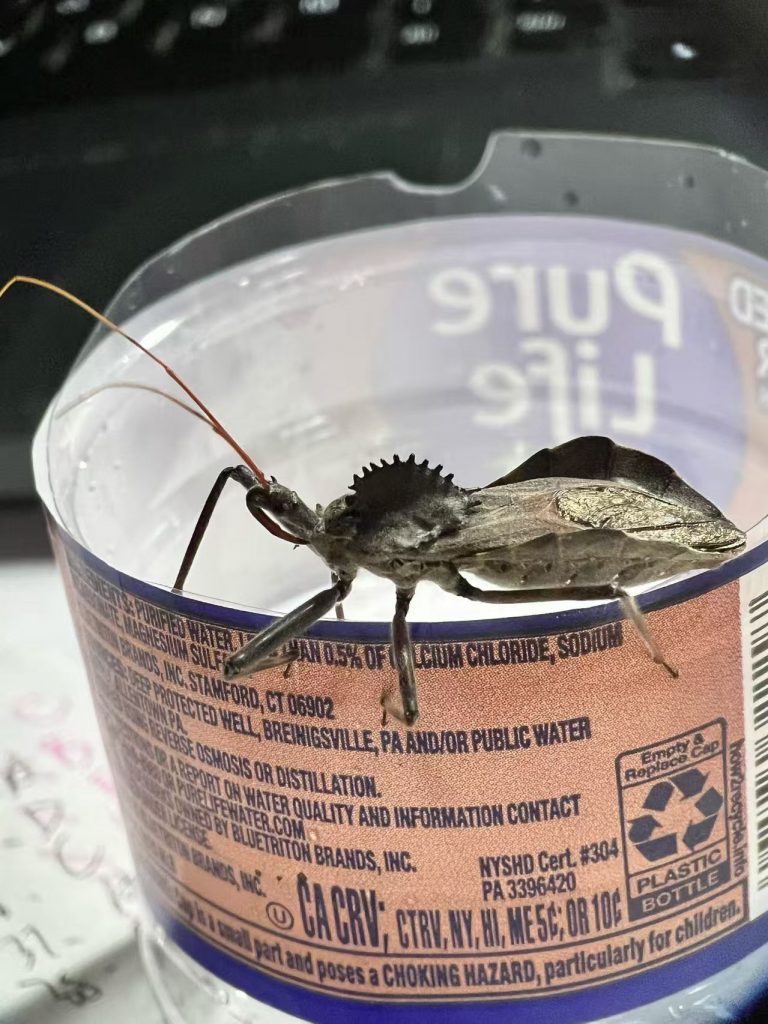
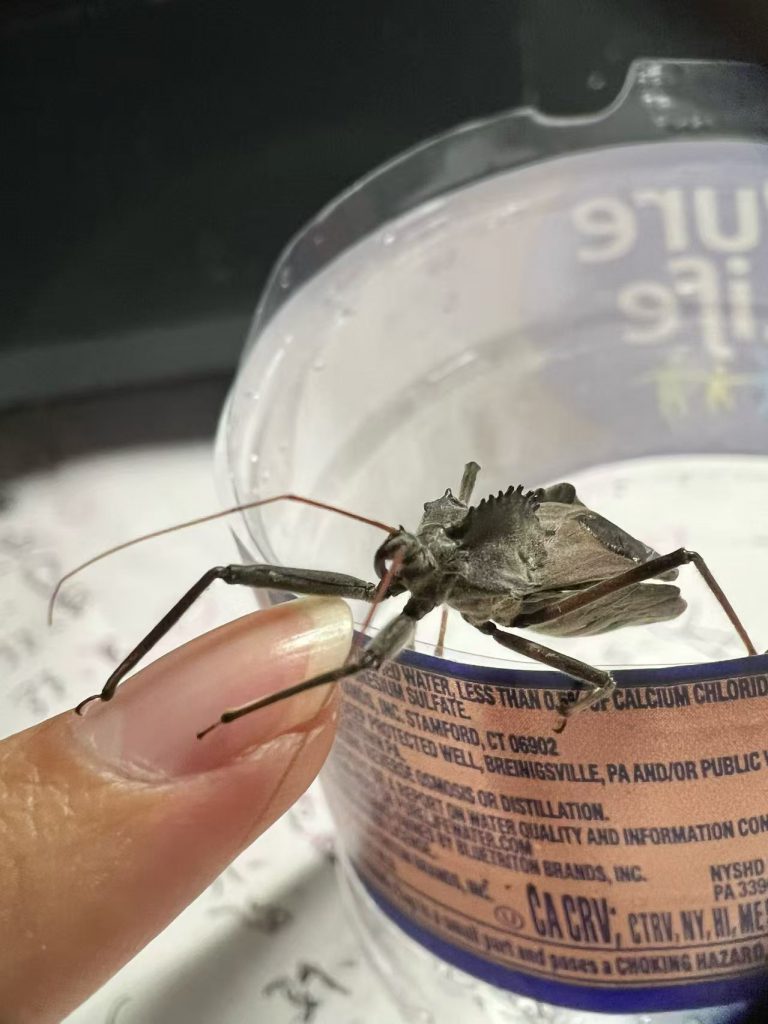
Wheel bugs are ambush predators with a serious toolkit: raptorial front legs built for grabbing, and a dagger-like beak (rostrum) that stabs, injects digestive saliva, and then slurps up the liquefied insides. Caterpillars, sawfly larvae, Japanese beetles: all fair game. Gardeners quietly love them, because one wheel bug is a tiny, walking pest-control squad.
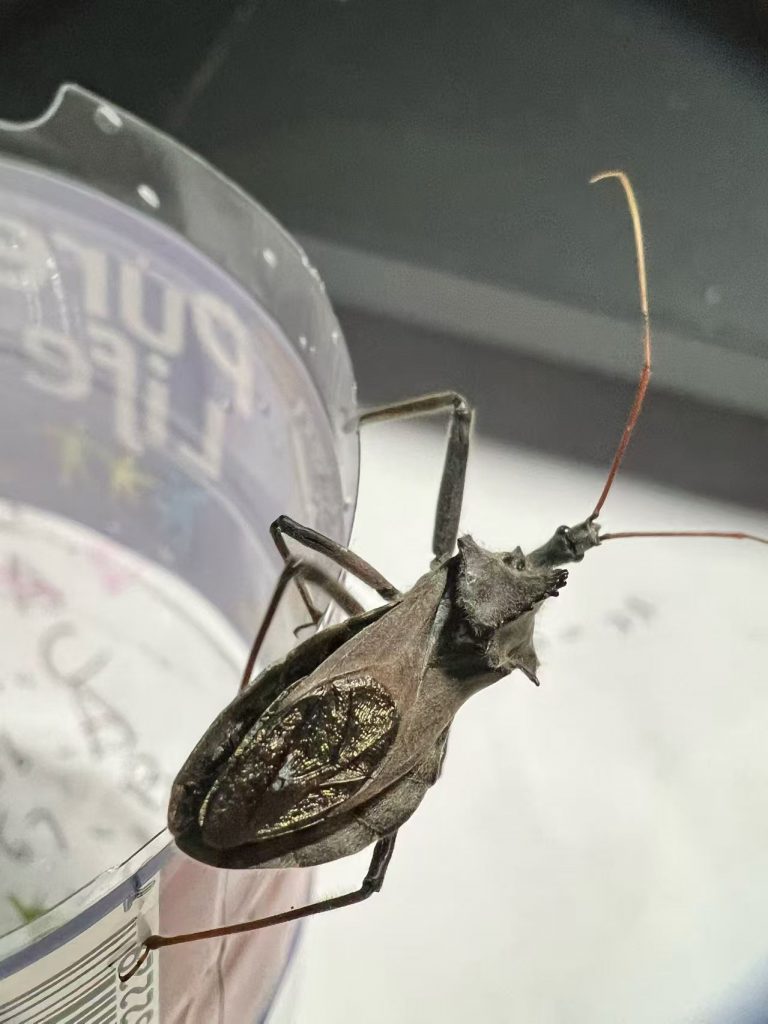
But here’s the warning every field guide shouts in bold: do not pick one up barehanded. Its bite is reported to hurt considerably more than a bee sting. It won’t chase you, it just wants to be left alone. But if you squeeze it, you will learn the meaning of regret.
The wheel bug’s life story is just as dramatic. Nymphs hatch in spring as small, red-bellied gangs that hang out together, then slowly turn grey as they grow. Adults appear in late summer and autumn, which is exactly the season of my Pittsburgh encounter. After mating, the female glues a honeycomb-like hexagonal egg mass onto a twig, where the next generation waits out the winter.
So if you ever spot a grey insect wearing a gear on its back, don’t touch it. Just nod. It’s not a robot. It’s one of the most efficient assassins in the garden, and it’s been doing this job since long before any of us invented the wheel.
What is the order of this insect?
Great question! The wheel bug (Arilus cristatus) belongs to the order Hemiptera, commonly known as the true bugs. Within Hemiptera, it is placed in the family Reduviidae (the assassin bugs), and its subfamily is Harpactorinae. As a hemipteran, it has piercing-sucking mouthparts (the rostrum you can see folded under its head) and incomplete metamorphosis: it develops from nymph to adult without a pupal stage. So to summarize the full classification: order Hemiptera, family Reduviidae, genus Arilus, species Arilus cristatus.
Great write-up — that gear-shaped crest is one of those things that looks too deliberate to be real. Do you know if the “wheel” actually does anything for the bug, or is it just an odd bit of exoskeleton with no known function? I have also always wondered about the bite: is the pain mostly the saliva/enzymes, or does the size of that rostrum do most of the damage?
On the crest, the honest answer is that nobody has demonstrated a function. It is unique to the species and instantly diagnostic, so people have suggested mate or species recognition, or protection, or simply that it is a byproduct of how the thorax is built, and I am not aware of any experiment that separates those. It is one of those structures where the diagnostic value is certain and the adaptive story is still open.
On the bite, it is the saliva. The rostrum is thin, and the puncture itself is not the main event; what hurts is the cocktail of digestive enzymes and cytolytic compounds injected into the tissue, which is the same chemistry the bug uses to liquefy its prey. That is why the pain builds, spreads and lasts far longer than a needle wound would suggest, and why the swelling can persist for days. The size of the rostrum only determines how easily the bug can get the saliva in.