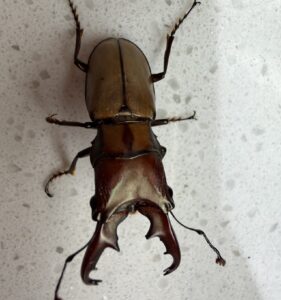
A stag beetle on pale ground
The ground was pale and granular, like dried white clay, when something big and glossy broke up its blankness. The beetle stood out sharply: a body banded in brown and black, and a pair of enormous curved mandibles swinging out from the head like hooks. It was completely still, as if posing, and the camera could come as close as it liked.
This is Cyclommatinus assamensis assamensis, a stag beetle of the family Lucanidae, order Coleoptera. The species name points to Assam, the region of northeastern India just beyond the hills, and the same subspecies carries into the mountain forests around Medog. The forests here are rich in stag beetles, and a few days of walking can turn up several different species, each one stranger than the last. Stag beetles lead slow lives: the larvae spend a year or more chewing through decaying wood, while the adults, once they finally emerge, feed on sap and soft fruit and live for a comparatively short season.
Those great mandibles are the male’s calling card. They are used in wrestling matches with rival males over feeding sites and mates, and despite their theatrical look they are tools of shoving and lifting rather than biting. The jaws open wide enough to look dangerous, but a stag beetle would rather walk away than fight a hand.
Watching one hold its ground on that pale earth, I thought of all the patient years of wood-eating hidden behind a few weeks of polished armour. Then it walked, slowly and deliberately, toward the nearest cover, and the pale ground was blank again.
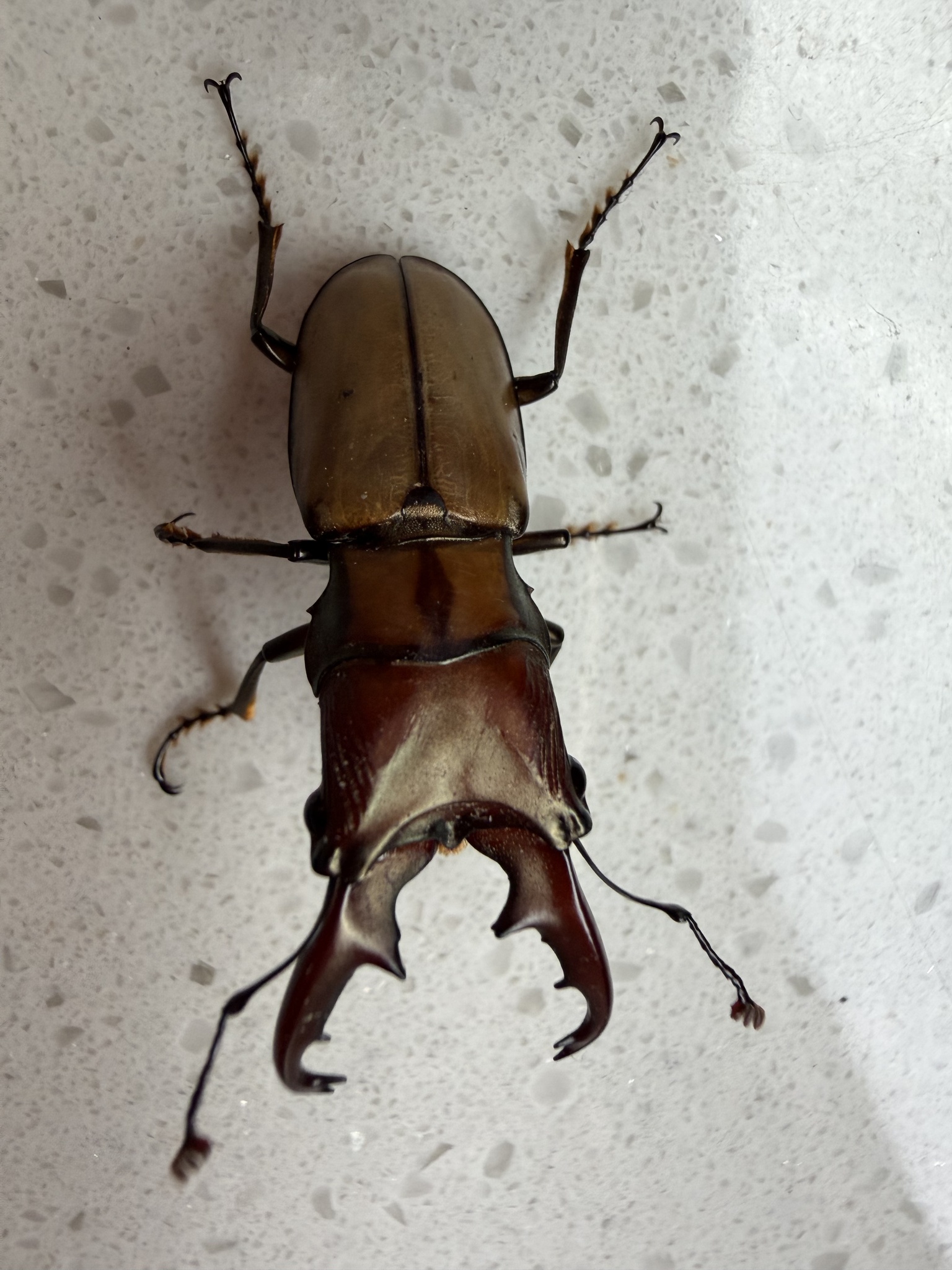
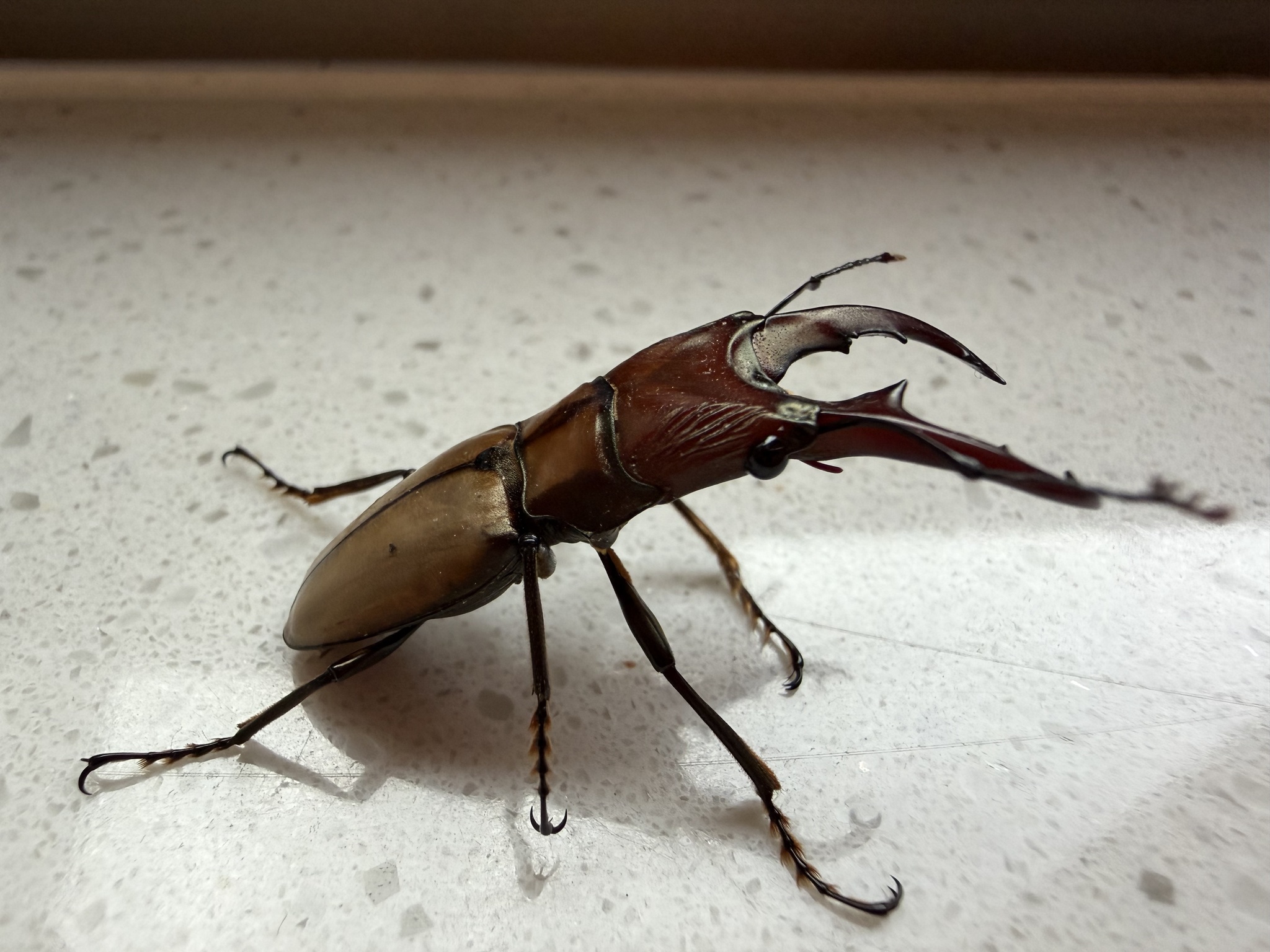
Great photos. How do you actually tell this subspecies apart from the other Cyclommatinus assamensis subspecies — is it mainly the mandible shape, or do the body proportions differ too?
In practice it is mandibles first, proportions second, and locality as the tiebreaker. Stag beetle subspecies in this group are separated mostly on the armature of the male mandibles, the number and placement of the teeth, the shape of the tips, and how strongly the head and pronotum are sculpted, and body proportions come in as support rather than as the primary character. Females are harder, and a lot of the subspecies work leans on males for that reason.
The honest caveat is that the subspecies limits in Cyclommatinus are not settled. The characters are gradual rather than clean, and a series is often needed to be sure, so a single photo can get you to “assamensis group” far more reliably than to a particular subspecies.