A moon-marked stag beetle, up close
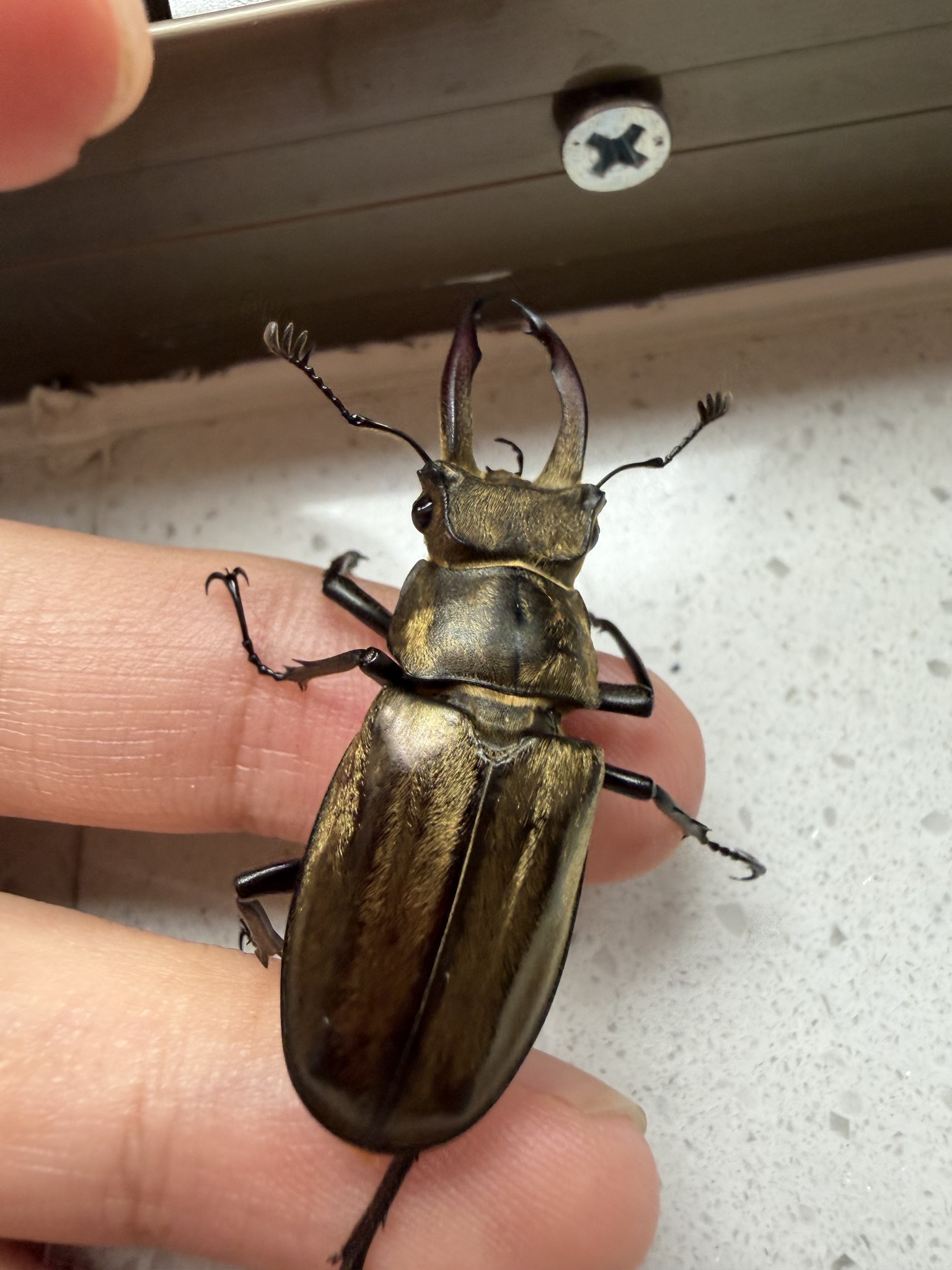
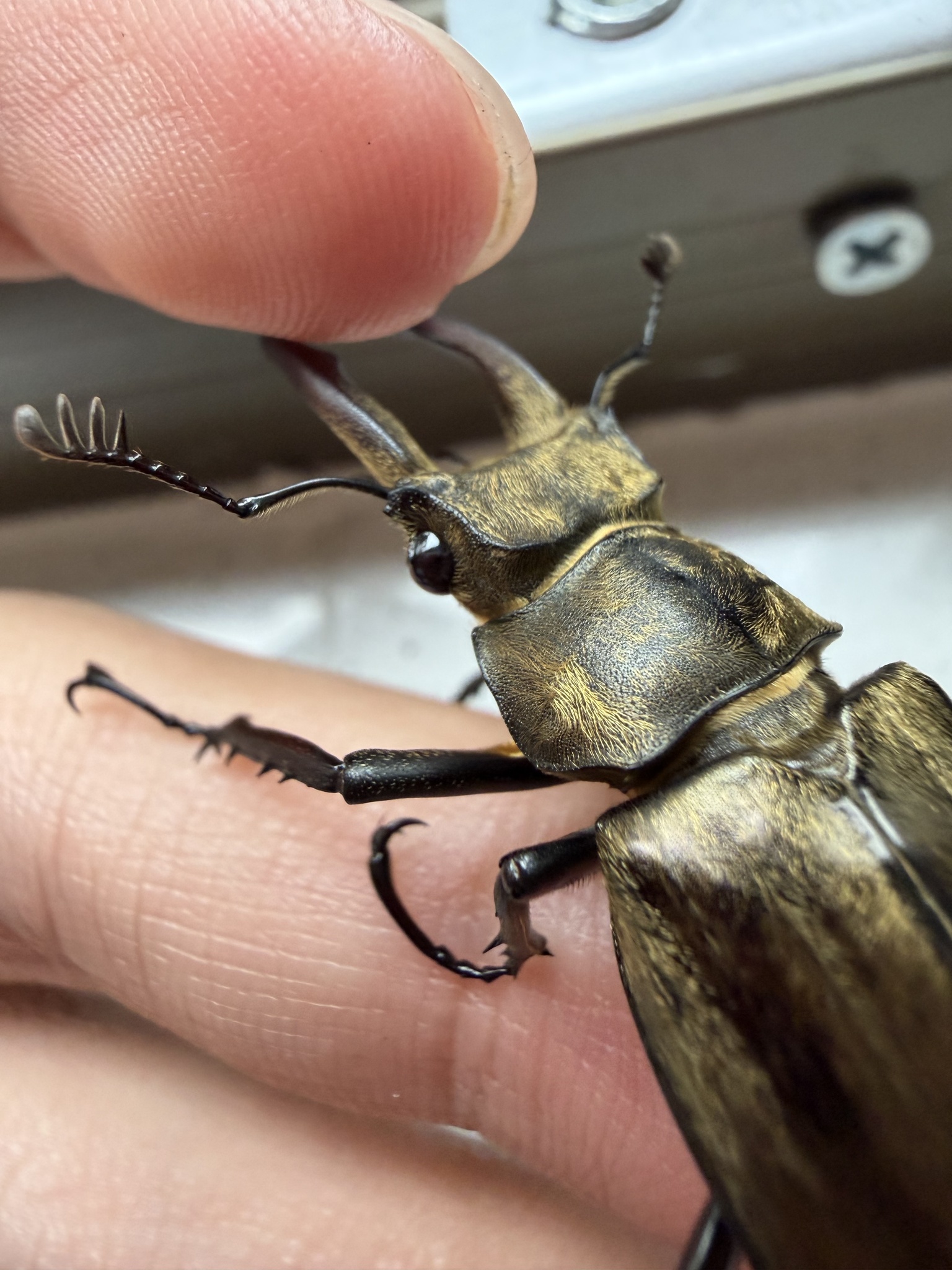
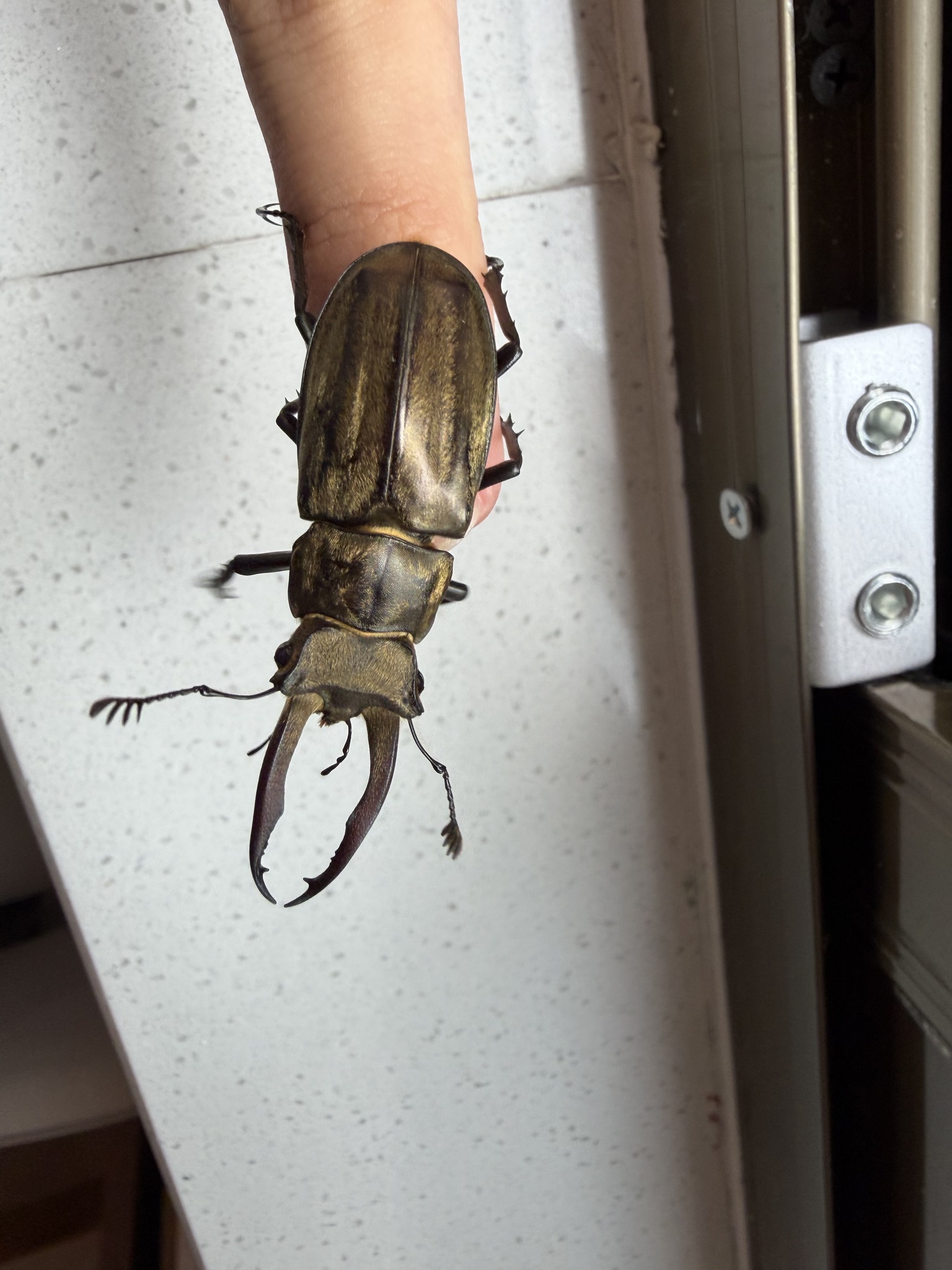
It clambered across my hand without hurry, deep brown and glossy, with long antennae and heavy curved front legs that gripped my skin like small grappling hooks. Behind it the pale wall and its single screw looked enormous by comparison, a reminder of how small even a big beetle is next to the human world. It paused, raised its head, and let me take as many pictures as I wanted, its antennae moving in slow sweeps and tasting the air between poses.
This is Lucanus lunifer franciscae, a stag beetle of the family Lucanidae, order Coleoptera. The name lunifer is Latin for moon-bearer, a fitting label for a creature of the damp night forest, where the adults move about after dark and the wet air carries the smell of sap and rotting wood. The subspecies name franciscae honours a person, a common practice among the describers of Himalayan stag beetles. Lucanus is the classic stag beetle genus, the same line that produced the famous European Lucanus cervus, and its species are among the largest beetles of the Himalayan foothills.
Like other stag beetles, the larvae grow slowly inside dead wood, and the adults are short-lived, spending their weeks feeding on sap and searching for mates. The big mandibles of the males are used in pushing contests between rivals, less dangerous than they look. Females of the group have smaller jaws and are less showy, but their shells are just as glossy.
I let it walk onto a wooden railing and watched it amble off. For a few seconds my hand had been the stage for one of the forest’s quiet celebrities.