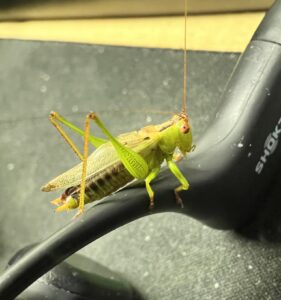
A green hitchhiker on the last warm days
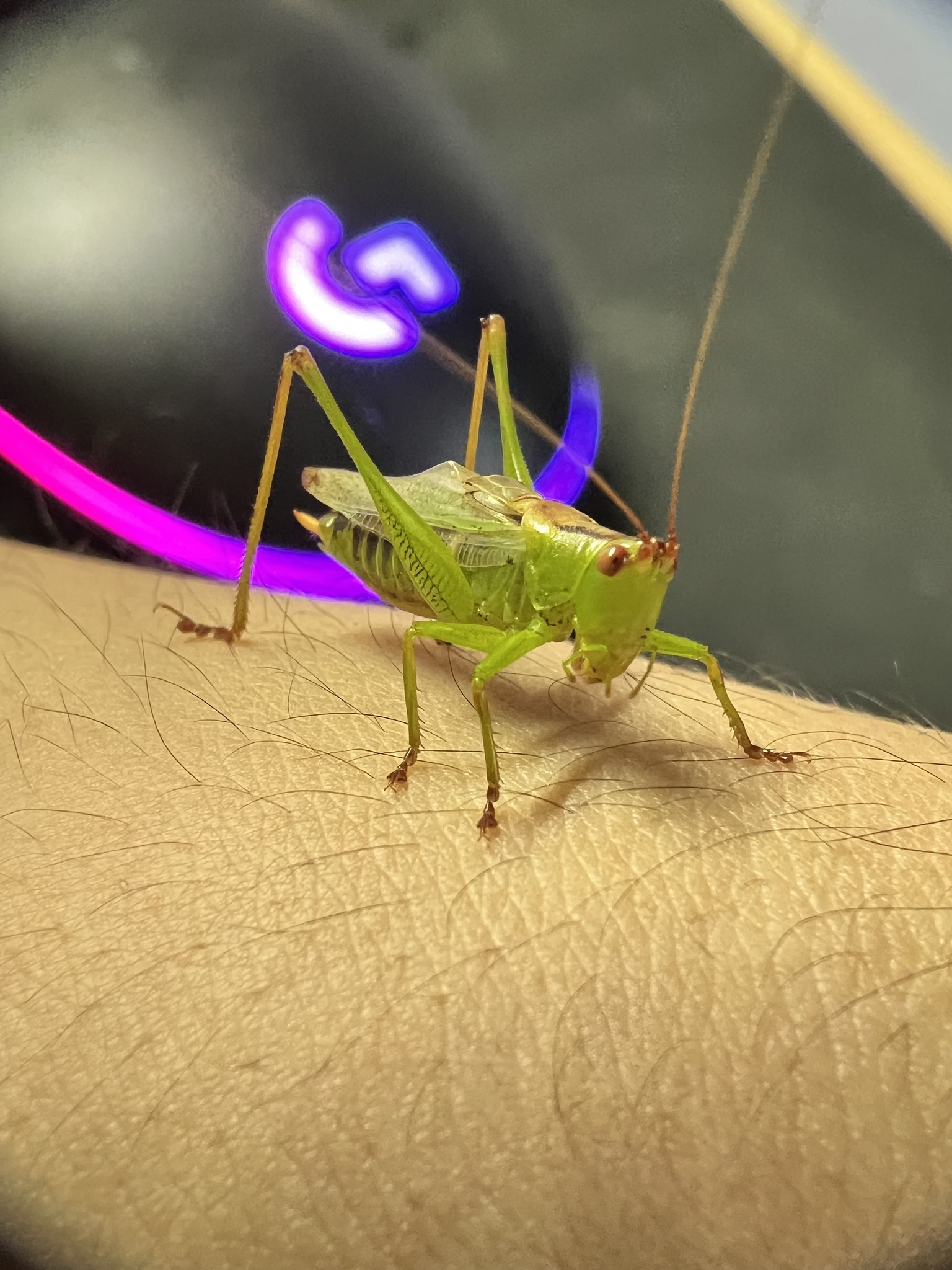
On October 21 in Pittsburgh, a bright green katydid was clinging to a black plastic fitting on a piece of outdoor equipment, as if it had hitched a ride there and was waiting for the next leg of the trip. It let me move it to my hand without protest, and there it sat, legs splayed, antennae sweeping, a small piece of summer that had not yet been told summer was over.
This is Orchelimum silvaticum, the long-spurred meadow katydid, a member of the katydid family Tettigoniidae in the order Orthoptera. The genus Orchelimum holds about 21 species, nearly all of them North American, and most of them at home in exactly the kind of grassy, weedy edges that surround school grounds. The bright green body, long antennae and neatly folded wings are the look of the group, and this one has been identified to species by the community, awaiting final confirmation. The species name silvaticum means “of the woods,” a nod to its fondness for the overgrown margins where fields meet forest.
By late October, most meadow katydids are gone. The adults appear in mid-summer, sing through August and September, and the first hard frost finishes them. A katydid out on October 21 had survived the season almost to its end, which is why it felt worth photographing: every warm day in late autumn is borrowed time for an insect like this.
Meadow katydids are singers, though their songs are less musical than musical-sounding. Males rub their forewings together at dusk, producing a buzzing, raspy call that carries across a field of grass. In the fall their chorus is a way to tell the season is turning: it starts strong in August, thins out in October, and stops entirely at frost. This one was silent when I met it, but it had clearly made it through the autumn so far, and that was impressive enough.
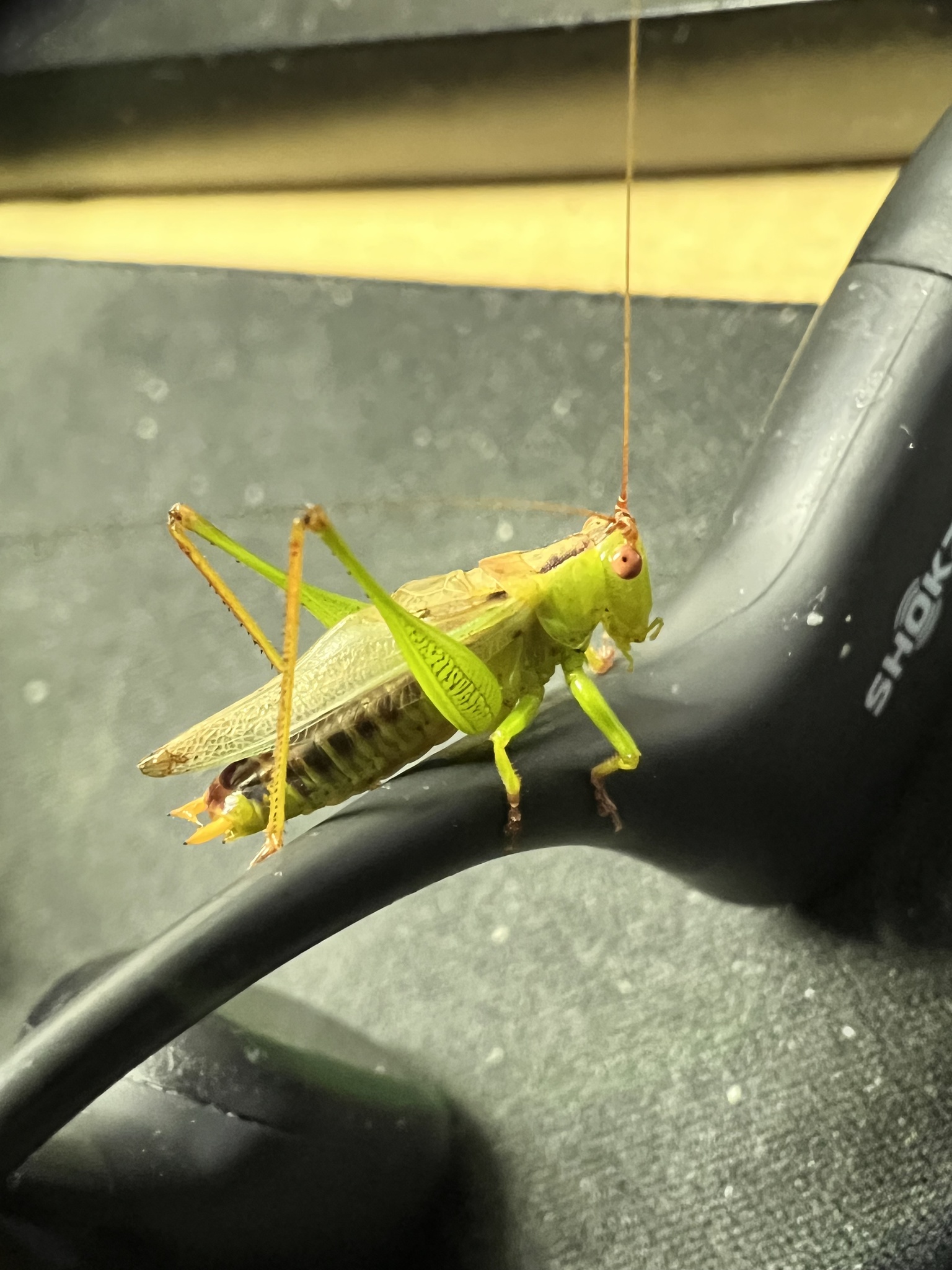
Great late-season find — an Orchelimum still out on October 21 in Pittsburgh is genuinely pushing it. Couple of things I have wondered about: where does the “long-spurred” in the common name come from — is it a spur on the male hind tibia, or something in the cerci/ovipositor used for ID? And in the field, how do you separate silvaticum from something like O. vulgare without a recording — mostly by song, or do the ovipositors differ enough to be useful? Last thing: since frost ends the adults, I assume they overwinter as eggs — do those eggs need a cold spell before they will hatch, or will they go on the first warm stretch? Nice shot of it on the equipment, by the way.
On the spur, I will be straight with you: the name refers to a spur that serves as an identification character in this genus, and I would want the key open in front of me before naming the exact structure. In Orchelimum the characters that actually do the work are the male cerci and the female ovipositor, and both differ enough between silvaticum and vulgare to be useful with a hand lens once you have seen a pair side by side.
On separating them without a recording, song is the honest answer for live animals. The ovipositors do differ, but the differences are gradual, and you need the insect in the hand with good light and ideally a comparison series. Habitat helps a little, since silvaticum leans to taller, woodier edge vegetation while vulgare likes damper, opener grass, but the two overlap and I would not settle a record on habitat alone.
On the eggs, yes, they need the cold. Temperate Tettigoniidae that pass the winter as eggs generally have a chilling requirement before the embryos complete development, which is why a warm spell in January does not produce nymphs and why everything hatches in a burst in spring. I do not know the exact requirements for this species, but the group pattern is a real cold requirement rather than simple warmth accumulation. And yes, frost ends the adults.