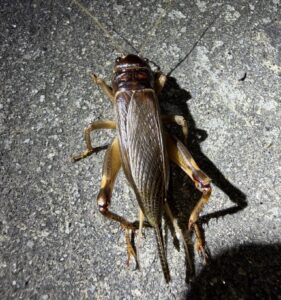
A heavyweight cricket on the grey concrete
It sat on the bare concrete in the late June heat of Medog, so still that I nearly stepped on it before my eyes registered what the shape was. The body was a deep blend of brown and black, the wings translucent and finely veined, and a pair of antennae stood straight up like twin whips testing the air. It held its ground as I crouched, and only the slow rise and fall of its sides showed it was alive at all.
This is Tarbinskiellus portentosus, a true cricket of the family Gryllidae, order Orthoptera. The name portentosus comes from Latin and means prodigious or monstrous, and for a cricket that is no exaggeration: this is one of the largest crickets in Asia, a heavy-bodied singer built on a scale that makes garden crickets look like understudies. The antennae that stood so upright are longer than the body, and like all crickets this one hears through small ear drums, or tympana, set on the front legs just below the knee. Like all crickets, too, the males sing by stridulation, rubbing the forewings together, and a male this size can throw his voice surprisingly far on a humid night.
Crickets are mostly omnivorous scavengers of plant matter and small insects, and a species this large has the jaws to make a meal of a surprising range of things. Around villages it is a familiar visitor, drawn to warm, damp corners where something is always edible, and in parts of Asia it is well known to cricket keepers, who value the biggest and loudest singers.
I left it to its afternoon on the concrete. Somewhere beyond the village it would be calling by dark, a big voice claiming the night for itself.
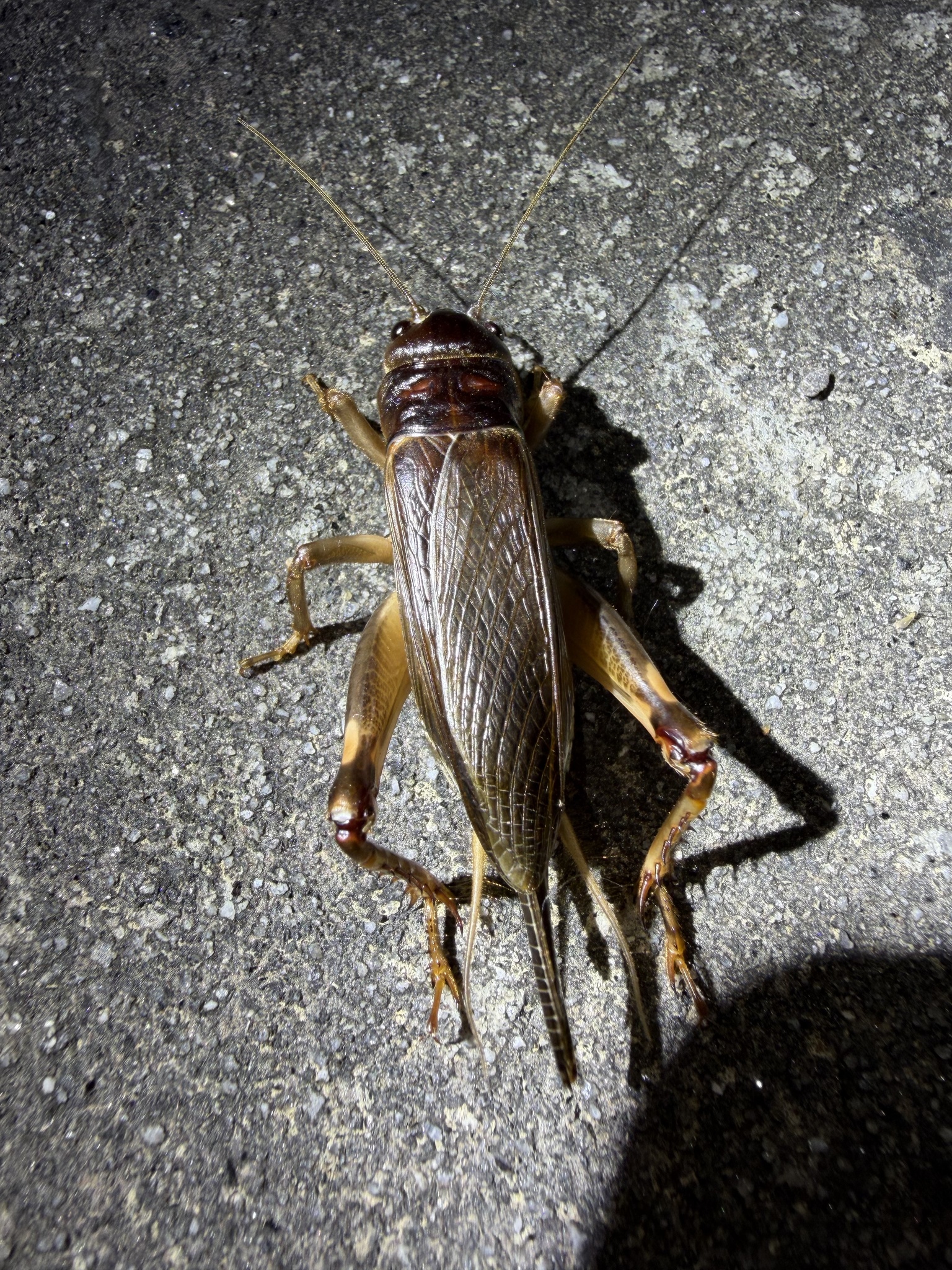
好文!花生大蟋在南方常被养来斗蟋,请问在野外怎么快速分辨雌雄,是看尾部有没有产卵管吗?
对,腹端那根产卵管就是最快的判据。雌虫腹端会伸出一根直而硬的针状产卵管,明显突出腹末,侧面看就是多了一根尖刺;雄虫腹末是圆钝的,只有一对短尾须。注意尾须雌雄都有,两根、能活动,别把雌虫的产卵管当成多出来的第三根。
翅也能辅助:雄虫前翅有发音器(音锉和镜区),翅脉纹路显得硬而乱,而且只有雄虫会叫;雌虫前翅脉纹大致平行、没有音锉,一般不发声。所以听到在洞里叫的,基本就是雄的。
体型和体重不能当判据。印度那格利兰 2024 年的一篇饲养观察(JOTT 16(6): 25400-25409, DOI: 10.11609/jott.8508.16.6.25400-25409)测到成体雄虫平均 2.94 g、雌虫 2.98 g,几乎没差别,按个头挑很容易挑错。
另外这种蟋蟀是穴居的,洞能挖到 80 cm 深,野外多半是先听到雄虫在洞口叫,再顺着声音找。要斗蟋或者留着听叫,就认有发音器、会唱的那只;想繁殖的话再回头找腹末带针的雌虫。