A black-and-orange cicada resting by a rock wall
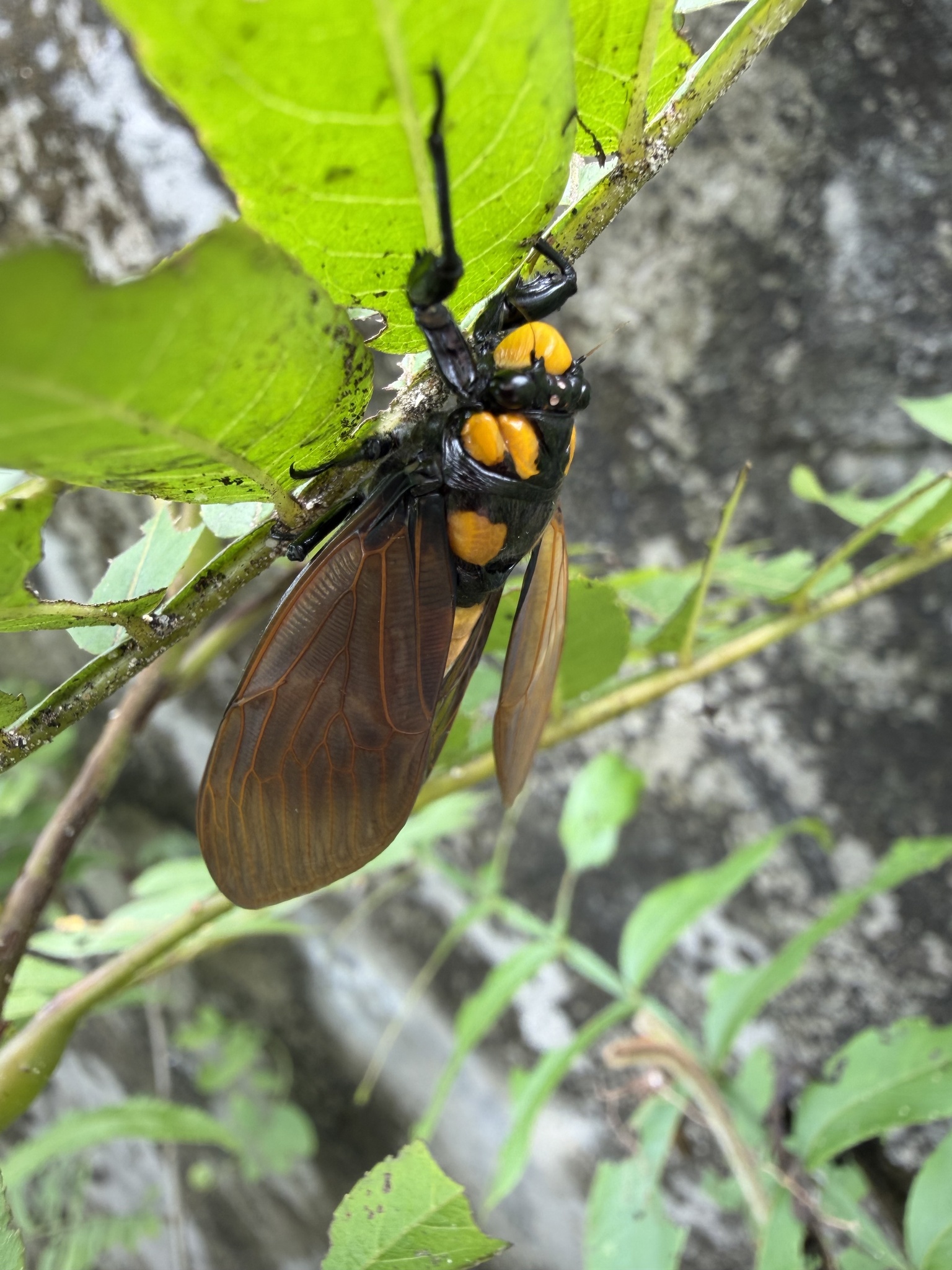
Medog, 30 June. On a green leaf in front of a rough gray rock face sat a cicada dressed in black and orange, its transparent wings veined with brown. Its antennae were long and thin, and it stayed perfectly still. Cicadas usually announce themselves with sound; this one was doing the opposite, silent and patient, as if the song could wait until I had gone.
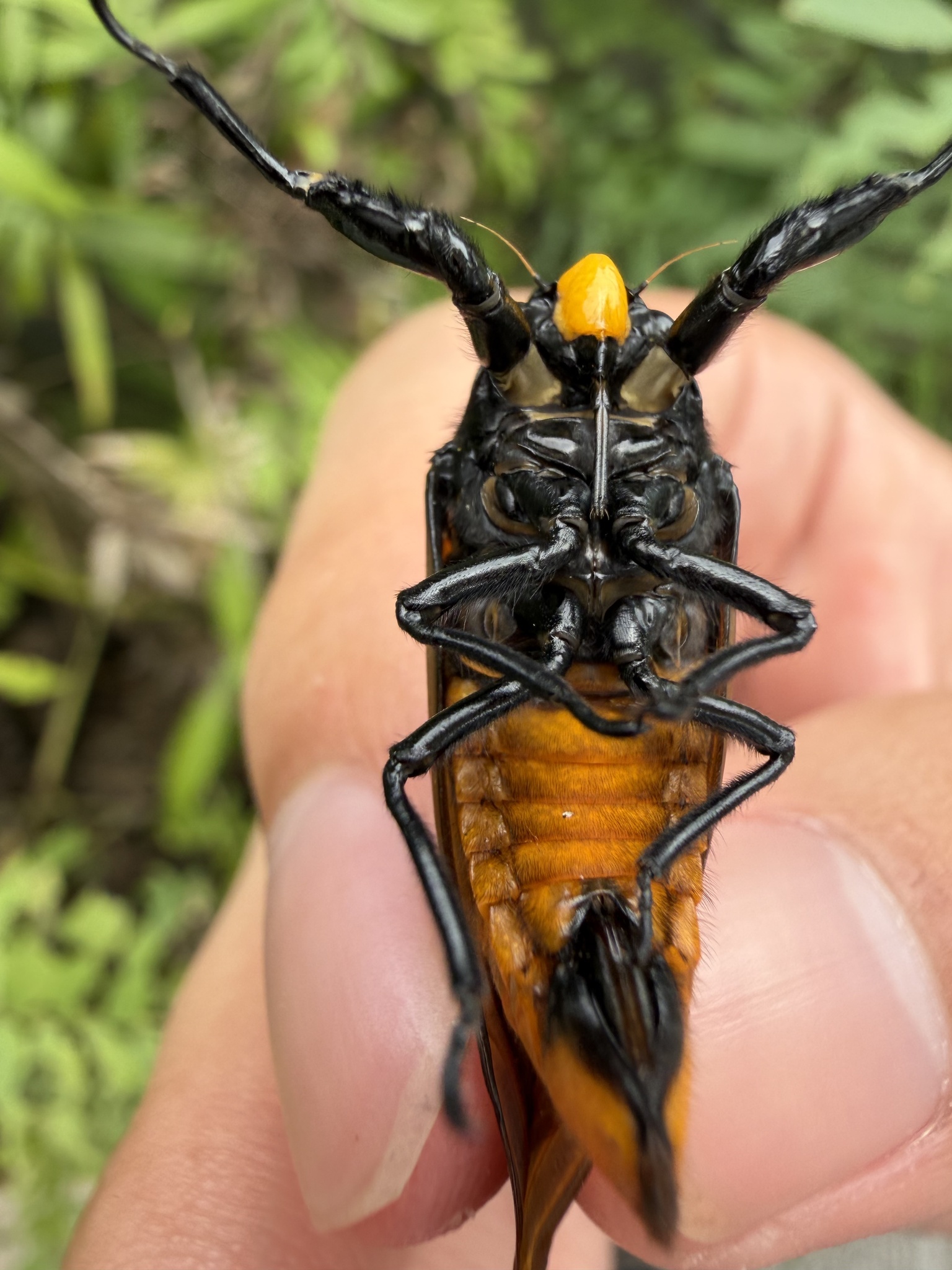
This is Graptotettix guttatus, a member of the cicada family Cicadidae in the order Hemiptera. The species name guttatus means “spotted” or “dotted” in Latin, and the orange markings scattered across its dark body earn that name well. Medog is known for this kind of surprise, a wet, forested pocket of the Himalaya where the insect life runs richer than almost anywhere else in Tibet.
Cicadas are among the most accomplished singers in the insect world. Males produce their buzzing calls with specialized drum-like membranes called tymbals on the sides of the abdomen, and every species has its own tune, some of them loud enough to carry across a valley. The nymphs live underground for years, drinking sap from roots, before climbing out to shed their skins and take to the air.
As adults they feed on plant sap through piercing mouthparts rather than eating solid food, which is why a cicada can sit in one spot for hours. This one did exactly that, doing nothing but being quietly beautiful, and I was happy to match its patience.