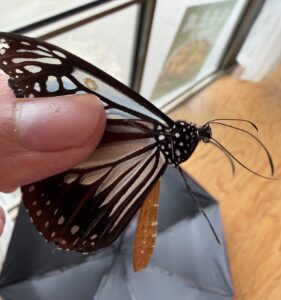
A chocolate tiger, calm in the hand
On 29 June 2026, in the hills above Gelin Village, Beibeng Township, Medog County, this butterfly was nectaring slowly when it let me approach. It was so settled that I could cup it gently for a close look before it sailed off into the trees, unhurried and unbothered.
The community identification places it as Parantica melaneus, the chocolate tiger, a member of the danaid group (the crows and tigers) within the brush-footed family Nymphalidae. Its Chinese name is 黑绢斑蝶. The English name fits the pattern on the upper side: deep brown-black wings crossed by bold white streaks and a row of pale marginal spots, a warning colour scheme shared with the related tigers and crows that feed on poisonous milkweed relatives as caterpillars and carry the toxins into adulthood.
Medog sits at the eastern end of the Himalaya, where the ranges of many danaid butterflies from the south and east overlap with Himalayan fauna, and chocolate tigers are at home in just this kind of warm, forested country. They fly with a slow, sailing glide that makes them easy to follow, and they habitually stop with wings spread, showing off the pattern that gives them their name.
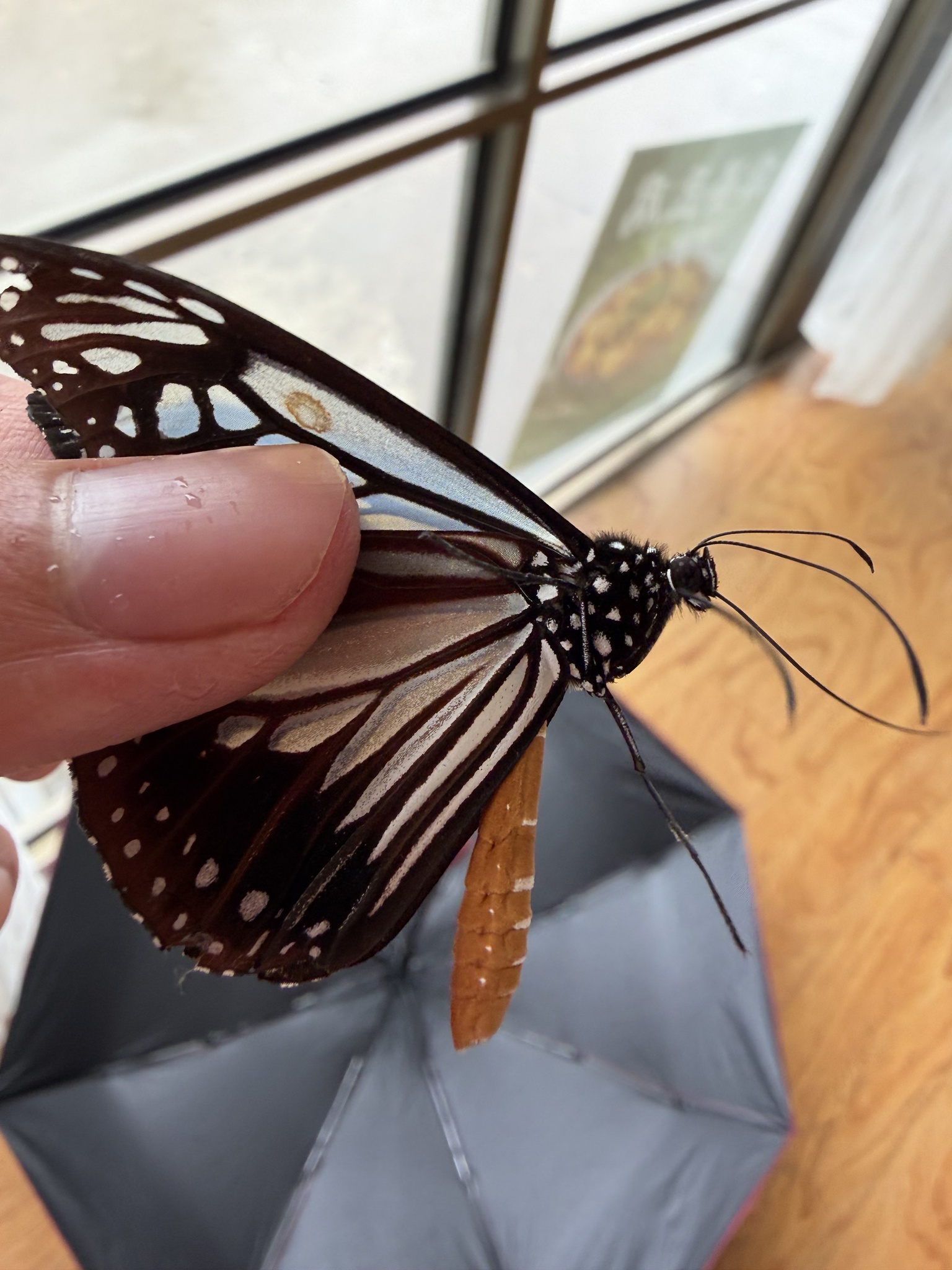
This one was identified to species by the community but has not yet reached research grade, so the record is worth keeping an eye on. Even at genus level it was clearly something special; the confirmation just gave the moment a name.
Nice find — I had read that danaids like this carry toxins they get as caterpillars from milkweed relatives, but does that hold for the Medog population too, or do the local larvae use different host plants there?
The principle holds, but the plants are different ones. Danaids like this sequester pyrrolizidine alkaloids from their larval host plants, and in the old world tropics the hosts are Apocynaceae vines such as Tylophora and Marsdenia rather than the Asclepias milkweeds you are picturing from North America. Same plant family, different genera, much the same chemical outcome.
For the Medog population specifically I cannot give you a host record. I have not seen published rearing data from that area, so the safest statement is that the genus uses those vines and that toxin sequestration is characteristic of the group, rather than that I know which plant this individual came off.