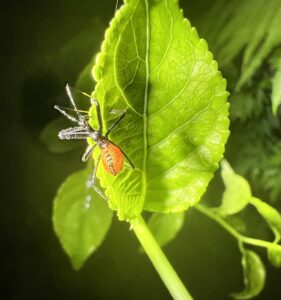
The assassin bug with a cog on its back
On June 18 in Pittsburgh, a large, grey insect was climbing a sunflower stem, and I recognized it from ten feet away. It was the wheel bug, the one insect in North America that wears a semicircular crest of teeth on its back, like a gear from a clock that has come to life. It moved in the deliberate, unhurried way of a hunter that knows nothing in the garden is faster than it is.
It was Arilus cristatus, the North American wheel bug, a member of the assassin bug family Reduviidae in the order Hemiptera. The species name cristatus means “crested,” and the crest is unmistakable: a half-wheel of small spines on the thorax that no other bug in the region has.
Assassin bugs are predators, and the wheel bug is a serious one, stabbing other insects with its curved beak and injecting saliva that dissolves the prey from the inside. In gardens it is genuinely beneficial, keeping caterpillars and other plant feeders in check. The flip side is that the same beak delivers a famously painful bite if you mishandle one, so I photographed it and kept my fingers well clear.
For an insect built like a tank, it has a delicate secret: the adults are strong fliers and sometimes turn up at porch lights, and it ranks among the largest assassin bugs in North America. A cog-toothed hunter patrolling the garden, best admired from a respectful distance. I will be watching for its nymphs next summer, tiny dark versions of the same design, already wearing a hint of the crest that will one day mark them as adults.
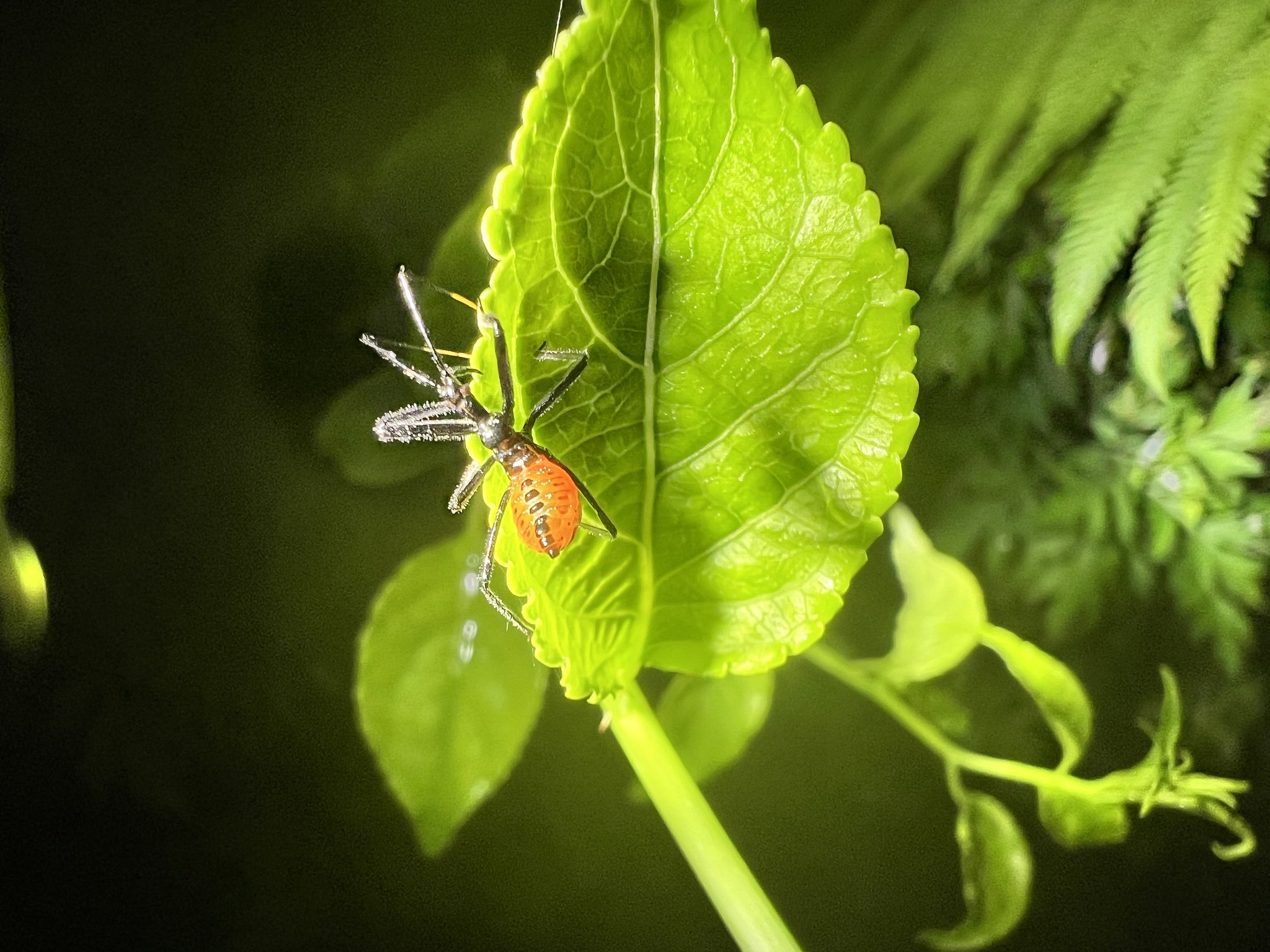
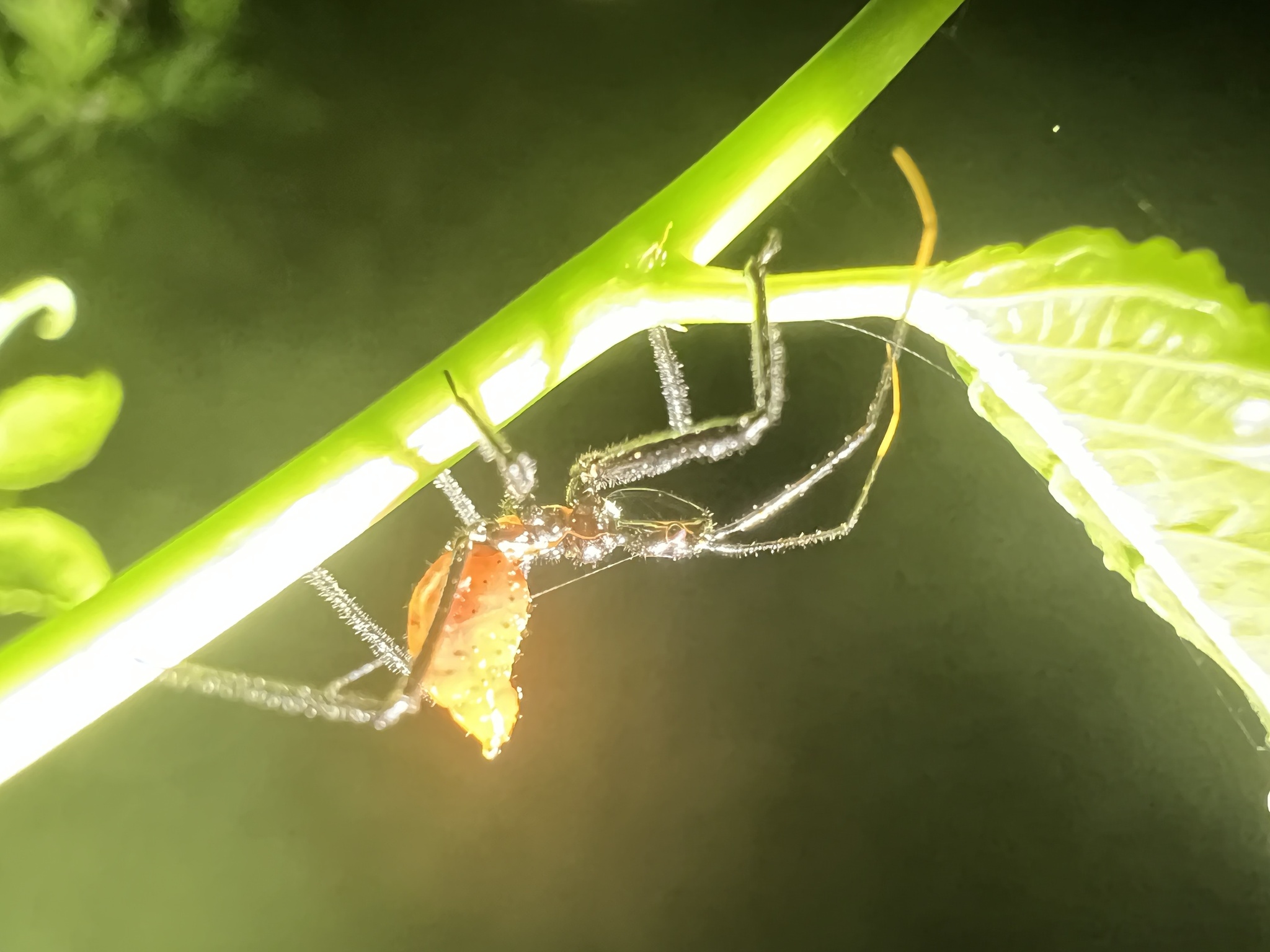
Great post! I’ve always wondered about that cog-shaped crest — does it actually serve a function (defense, mate recognition, something else), or is it mostly just a visual signature? Do males and females differ in crest size at all? Also curious about the life cycle: you mentioned watching for nymphs next summer, so do they overwinter as eggs rather than as nymphs or adults?
Short answer on the crest: nobody has actually shown what it does. It is the one mark that separates the wheel bug from everything else in the region, so most of the literature treats it as a species signature rather than a tool, and there is no evidence it works as armor, since the beak does the defending. Both sexes carry it. I am not aware of any reliable difference in crest size between males and females, though females do average a bit larger overall, as they do in most assassin bugs.
On the life cycle you guessed right, it is eggs. They overwinter as eggs in that brownish barrel-shaped cluster cemented to bark or a twig, hatch in spring, run through the nymphal stages over the summer, and reach adulthood around mid-summer. There is one generation a year here and the adults die off in the fall, so the nymphs to look for next summer come from eggs laid this season, not from adults hiding somewhere.