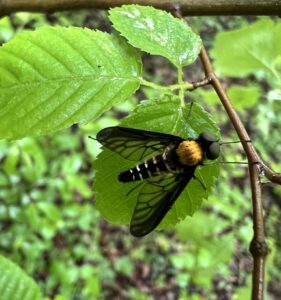
A fly dipped in gold
On a late-May morning in Pittsburgh, a tiny fly landed on a leaf in front of me and sat still, which is unusual enough among flies to be worth a look. The look was worth it: its back gleamed like polished brass in the morning sun. It was the kind of stillness that makes you check whether the insect is real, and the kind of color that makes you glad it is.
It was Chrysopilus thoracicus, the golden-backed snipe fly, a member of the family Rhagionidae in the order Diptera. The genus name means “golden-haired,” and the thorax of this species is a rich, metallic gold, which is where both the scientific and common names come from, and the name does not exaggerate. The dark abdomen and clear wings set the gold off nicely.
Snipe flies get their odd common name from their habit of perching on foliage and darting out to snatch small insects, a style of hunting that reminded early naturalists of the snipe, a bird that flushes suddenly from cover. The larvae live in soil and leaf litter, where they are small predators in their own right, and some snipe flies also visit flowers, taking small insects on the wing.
Most people swat flies without a second thought, but this one earns a second look. Gold, in Greek, is chrysos, and this fly wears it where it counts, on its back, and I count the sighting as one of the brighter moments of that May morning.
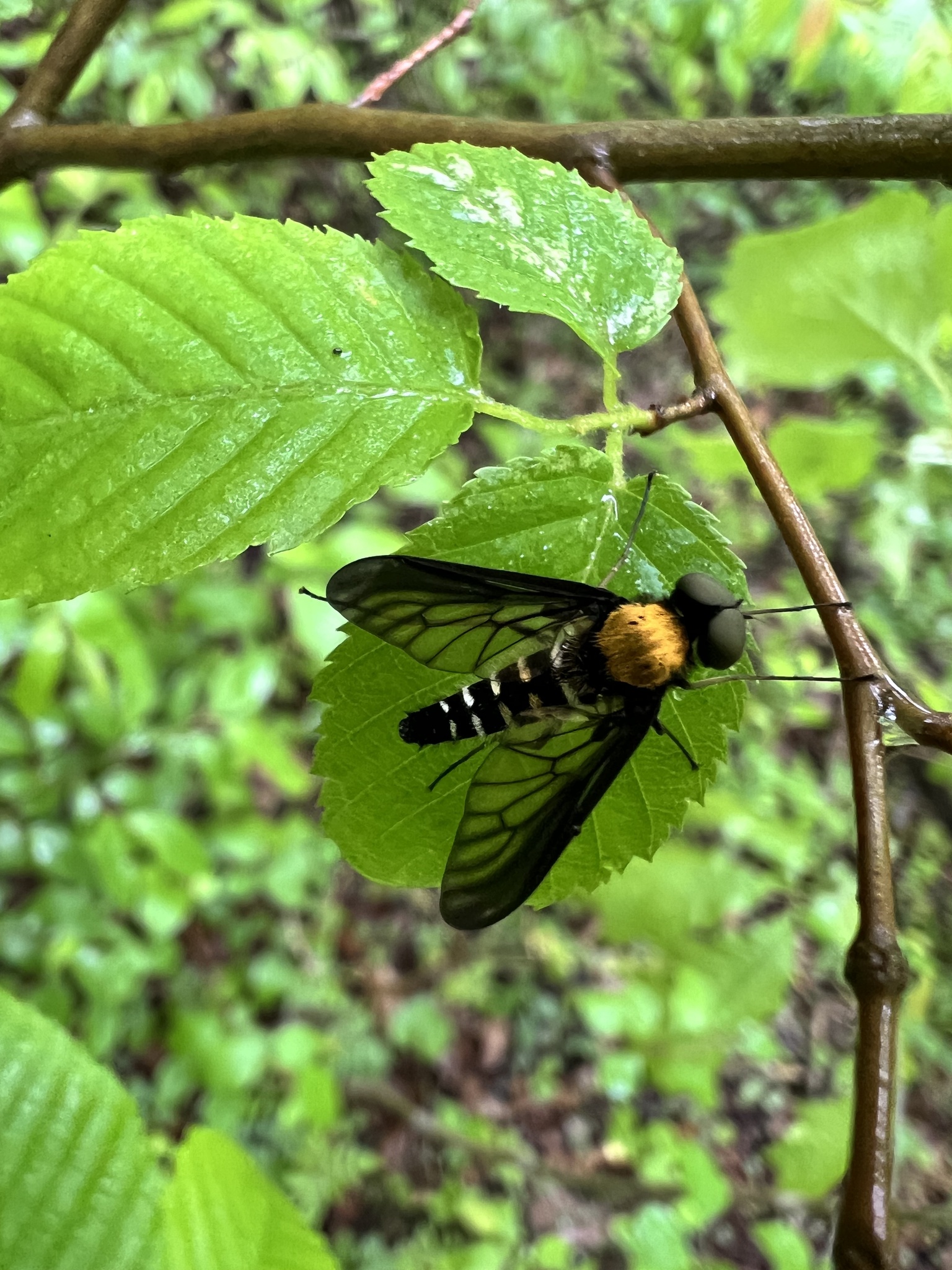
Fascinating! I spotted one of these on a hike last summer and spent ages trying to identify it — that metallic gold back is so distinctive. Do you know whether the golden color serves an actual purpose, like camouflage or signaling to mates, or is it more of a lucky accident of evolution?
Honest answer: nobody has run an experiment on this species as far as I know, so everything below is inference. The gold is not pigment in the usual sense, it comes from dense golden setae on the thorax that catch the light, which is why it reads as metallic in a shaft of sun. If the color has a job, signaling seems more likely than camouflage: in late spring males hover in sunbeams along woodland edges doing a little up-and-down dance, and a bright reflective back is a good way for two small, fast flies to spot each other against dappled shade. Both sexes are golden, which fits species recognition better than a male-only mating ornament. On a green leaf it actually makes them pop out rather than disappear, so I would be surprised if hiding is the point. Unproven either way, but a fun one to watch for.