A research synthesis by Xuanye (Peter) Liu
Abstract
Phoretic mites depend on larger insects, especially beetles, as vectors for dispersal to fragmented habitats. Although mites have been documented occupying a variety of attachment sites on beetle hosts, whether they show a consistent preference for particular body regions globally remains unresolved. In this study, we synthesized published records of phoretic mite distributions between two major attachment regions: the subelytral region and the ventral abdomen. We compiled data from 12 studies, including 12 beetle species across 5 families, and quantified the relative proportion of mites occupying each body region. Overall, mites were more frequently associated with the subelytral region than the ventral abdomen in most studies, although the strength of this preference differed substantially among host groups. Notably, mites become more attached to the subelytral region when the number of mite species is large. These results indicate that the subelytral region functions as a widespread and sheltered microhabitat for phoretic mites across diverse beetle hosts, while variation in host morphology and ecological traits may influence the degree of attachment-site specialization. This synthesis offers insights into beetle-mite relationships and potentially contributes to future control of harmful mites during their phoretic state.
Introduction
Phoresy
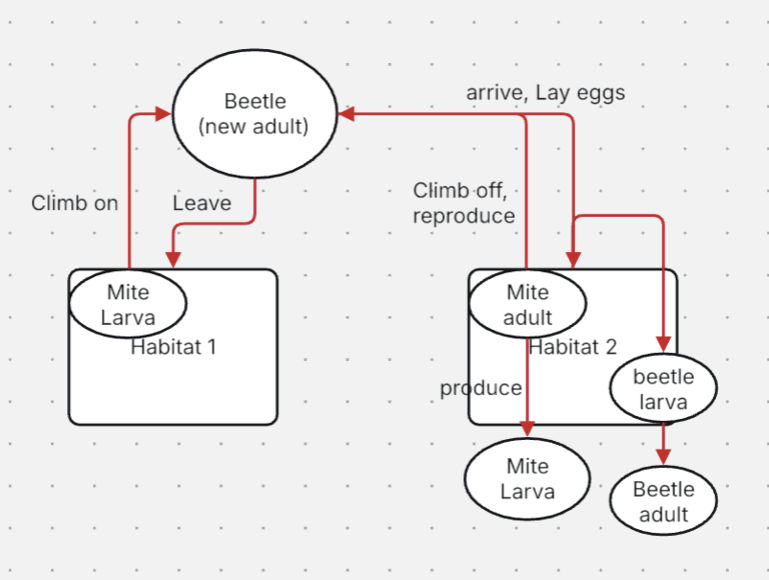
Phoresy is a temporary symbiotic relationship in which a smaller organism attaches to a larger animal for dispersal (Seeman & Walter, 2023; Bartlow & Agosta, 2020). Mites practice phoresy because their small size and limited mobility make long-distance dispersal difficult (Borges, 2022), and they rely on larger animals to reach fragmented and limited resources such as rotting logs (Seeman & Walter, 2023; Liu et al., 2016). Beetles are among the most common carriers of phoretic mites (Seeman & Walter, 2023), as the size difference between mites and beetles allows several individuals to board the same “vehicle”, ensuring mating opportunities at the destination (Borges, 2022). Mites may prefer certain hosts, often using chemical cues such as cuticular hydrocarbons and volatiles to identify suitable hosts (Borges, 2022; Bartlow & Agosta, 2020). In some systems, female carriers are preferred to ensure access to rich nesting sites (Borges, 2022). Phoresy is an intermediate stage between free-living and parasitic lifestyles, requiring host-finding and attachment but not feeding or breeding on the host (Seeman & Walter, 2023). Transitions from phoresy to parasitism are common, and the mite community associated with bark beetles is a complex multi-trophic system involving multiple species of mites, fungi, and beetles (Seeman & Walter, 2023). Furthermore, phoretic mites can impact their carriers by hindering movement, feeding on host tissues, or vectoring pathogenic fungi (Seeman & Walter, 2023). Thus, the beetle-mite system provides a valuable model for understanding the evolution of dispersal, symbiosis, and parasitism.
Beetle Structure & Body Plan
Beetles, or Order Coleoptera, possess body segments similar to all other insects; their bodies are divided into head, thorax, and abdomen (Animal Corner, n.d.).
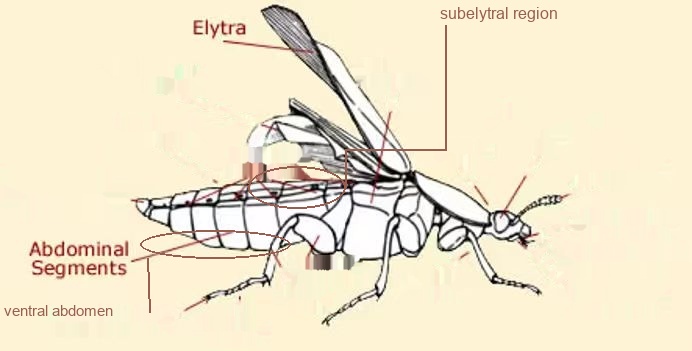
This order is characterized by its unique hard forewings, called elytra, that protect its membranous hindwings from external threats (Rivera et al., 2021). According to previous research, the structure of the elytra differs between tree-dwelling beetles, that are capable of long-distance flight, such as Trypoxylus dichotomus, and ground-dwelling beetles, such as Phloeodes diabolicus (Rivera et al., 2021). While tree-dwelling beetles have thinner, lighter elytra with large voids to prioritize weight reduction and flexibility for flight, the terrestrial beetles have thicker, denser elytra (Rivera et al., 2021). More specifically, different beetles have elytra that differ in moisture content and color pigment (Huang et al., 2025). These variations can further lead to differences in hardness and elasticity (Huang et al., 2025). In this article, the terms “subelytral” and “ventral abdomen” refer to the region under the elytra and the region under the abdomen, respectively.
Mite Preference
The attachment-site preference of phoretic mites is ecologically significant because it reflects fundamentally different dispersal strategies. On the burying beetle Nicrophorus vespilloides, Poecilochirus carabi attaches mainly to the ventral thorax, whereas Macrocheles nataliae attaches almost exclusively to the ventral abdomen (Sun et al., 2024). This spatial partitioning is mediated by biomechanical adaptations: P. carabi uses large adhesive pads to attach to smooth cuticle, while M. nataliae grips abdominal setae with its chelicerae (Sun et al., 2024). Each species attaches most strongly to its preferred site, confirming that attachment location maximizes security (Sun et al., 2024). Mites occupying exposed locations like the abdomen can readily transfer between hosts, and Poecilochirus deutonymphs preferentially switch to reproductively active beetles at carcasses and pheromone-emitting males (Schwarz & Koulianos, 1998). This host-switching allows mobile mites to disperse early on parent beetles and achieve multiple generations per host generation (Schwarz & Koulianos, 1998). In contrast, mites that disperse on beetle offspring must synchronize their generation time with that of their host (Schwarz & Koulianos, 1998). Thus, mites under the elytra typically adopt a stationary phoretic phase for secure transport, while those on the abdomen are adapted for active host-switching, making attachment-site preference a key trait for understanding phoretic ecology (Sun et al., 2024; Schwarz & Koulianos, 1998).
Hypothesis
Given the ecological and evolutionary significance of attachment-site choice, understanding whether mites consistently prefer sheltered locations across the globally diverse beetle-mite systems remains a critical unanswered question. While case studies have documented species preferences for either the subelytral region or the abdomen (Sun et al., 2024; Schwarz & Koulianos, 1998; Konwerski et al., 2019), no study has quantitatively synthesized these patterns across multiple beetle and mite taxa. Phoresy has evolved multiple times independently across mite lineages, suggesting that similar selective pressures, such as the need for secure attachment during host dispersal, may drive convergent adaptations (Seeman & Walter, 2023; Klimov et al., 2021). If natural selection favors attachment sites that maximize dispersal success, then mites should predominantly evolve a stationary phoretic strategy and remain securely attached under the elytra rather than occupying exposed abdominal surfaces. Specifically, we hypothesize that (1) the proportion of mites found under the elytra significantly exceeds that found on the abdomen across studies, and (2) the strength of this subelytral preference is affected by interspecific competition between mites and host traits such as taxonomy and geographic region.
Methods
Literature Search
A systematic literature search was conducted to identify studies reporting quantitative data on the distribution of phoretic mites on beetle hosts. The search was performed in Oberlin Library using combinations of the following keywords: “beetle” AND “mite” AND (“associate” OR “interaction” OR “elytra” OR “abdomen” OR “phoresy” OR “phoretic”). Additional relevant studies were identified by searching the reference lists of retrieved articles.
Inclusion Criteria
Studies were included if they met the following criteria: (1) they reported quantitative data on the number of phoretic mites found on adult beetles; (2) they provided absolute counts of mites per location, or sufficient information (e.g., percentages with total mite counts) to calculate absolute counts; (3) they were based on naturally collected beetles, not laboratory-raised ones; (4) the number of infested/studied beetles reaches or exceeds 10; (5) they demonstrated place of collection. Studies were excluded if they (1) reported no target locations or only combined locations (e.g., “thorax and abdomen” without separation); (2) did not distinguish between dorsal and ventral abdomen or under elytra and elytra surface; (3) only reported qualitative data on location that mites prefer.
Data Extraction
From each eligible study, we extracted the following information: (1) study identifier (first author and year); (2) beetle species; (3) geographic location; (4) sampling season and month; (5) total number of beetles examined/infested; (6) number of mites found in the subelytral region; (7) number of mites found on the ventral abdomen; (8) total number of mites recorded; (9) number of mite species included. Where data were reported separately for individual mite species, we pooled all mites across species within each study to obtain a single count for the subelytral region and a single count for the ventral abdomen. Our analysis focused on the overall mite community of each beetle species rather than mite species-level patterns.
Data Synthesis & Visualization
For each study, we calculated the proportion of mites found in the subelytral region and on the ventral abdomen. These proportions were calculated as:
Subelytral proportion (%) = (Nsubelytral / Ntotal) × 100
Abdomen proportion (%) = (Nabdomen / Ntotal) × 100
where Nsubelytral is the number of mites under the elytra, Nabdomen is the number on the ventral abdomen, and Ntotal is the sum of mites from both locations.
To visualize the relative distribution of mites between the subelytral region and the ventral abdomen across studies, we constructed a scatter plot. For each study, the proportion of mites found on the ventral abdomen was plotted on the x-axis, and the proportion found in the subelytral region was plotted on the y-axis. A 1:1 reference line (y = x) was added to the plot to indicate equal distribution between the two body regions. Points falling above this line indicate a greater proportion of mites in the subelytral region, while points below the line indicate a greater proportion on the ventral abdomen.
To determine how mite species richness, temperature, and host infection rate impact subelytral and ventral abdominal distribution, scatter plots are drawn for each of these variables, with lines of best fit indicating the trend.
Additionally, to account for variation in sample size across studies, we calculated weighted means for the proportion of mites in the subelytral region and the proportion on the ventral abdomen. Each study was weighted by the number of beetles examined. The weighted mean was calculated as:
Pweighted = Σ(Pi × Ni) / ΣNi
where Pi is the proportion of mites in a given body region in study i, and Ni is the number of beetles examined in that study.
Results
A total of 12 studies met our inclusion criteria and were included in the data synthesis. 19 data points were extracted from these 12 studies. The studies were published between 2012 and 2025 and included 12 beetle species from five families: Curculionidae (bark beetles), Cerambycidae (longhorn beetles), Scarabaeidae (scarab beetles), Tenebrionidae (darkling beetles), and Dryophthoridae (palm weevils). Geographically, the studies covered eight countries across temperate, subtropical, and tropical regions. Sample sizes ranged from 10 to 25,252 beetles per study (median = 140). The total number of mites recorded across all studies was 136,572, of which 24.6% were found in the subelytral region and 12.5% on the ventral abdomen.
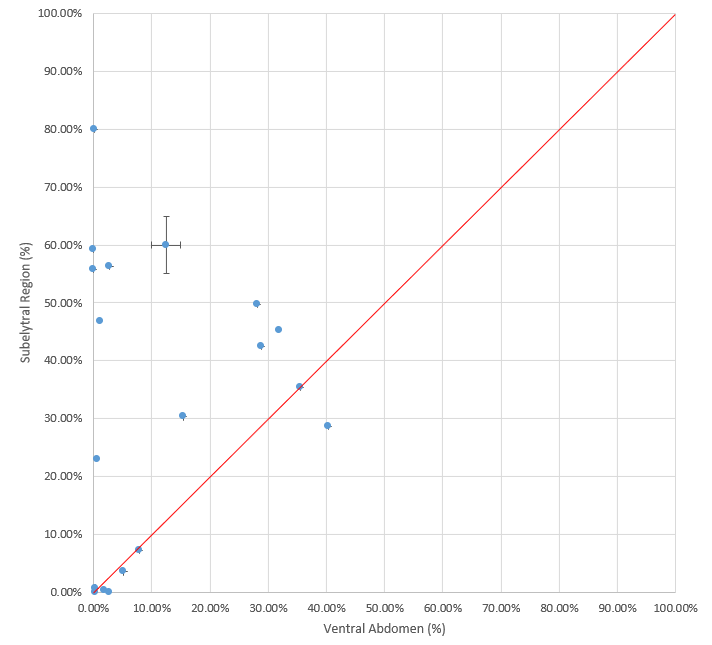
The plot reveals a clear, consistent pattern: most data points lie above the 1:1 line, indicating a general preference for the subelytral region over the ventral abdomen. Several studies reported extremely low or zero mite abundances on the ventral abdomen, with correspondingly high proportions in the subelytral region. For example, one study found approximately 59% of mites under the elytra and 0% on the abdomen, while another found approximately 56% under the elytra and less than 3% on the abdomen. The strongest subelytral preference was observed in a study where approximately 60% of mites were found in the subelytral region with only about 2.5% on the ventral abdomen.
In contrast, only a few studies showed weaker preferences, with some data points approaching the 1:1 line. For instance, one study reported approximately 15% of mites in the subelytral region and 2.8% on the abdomen, while another showed approximately 30% under the elytra and 2.8% on the abdomen. Notably, no studies fell substantially below the reference line, indicating that no study in our synthesis reported a strong preference for the ventral abdomen over the subelytral region.
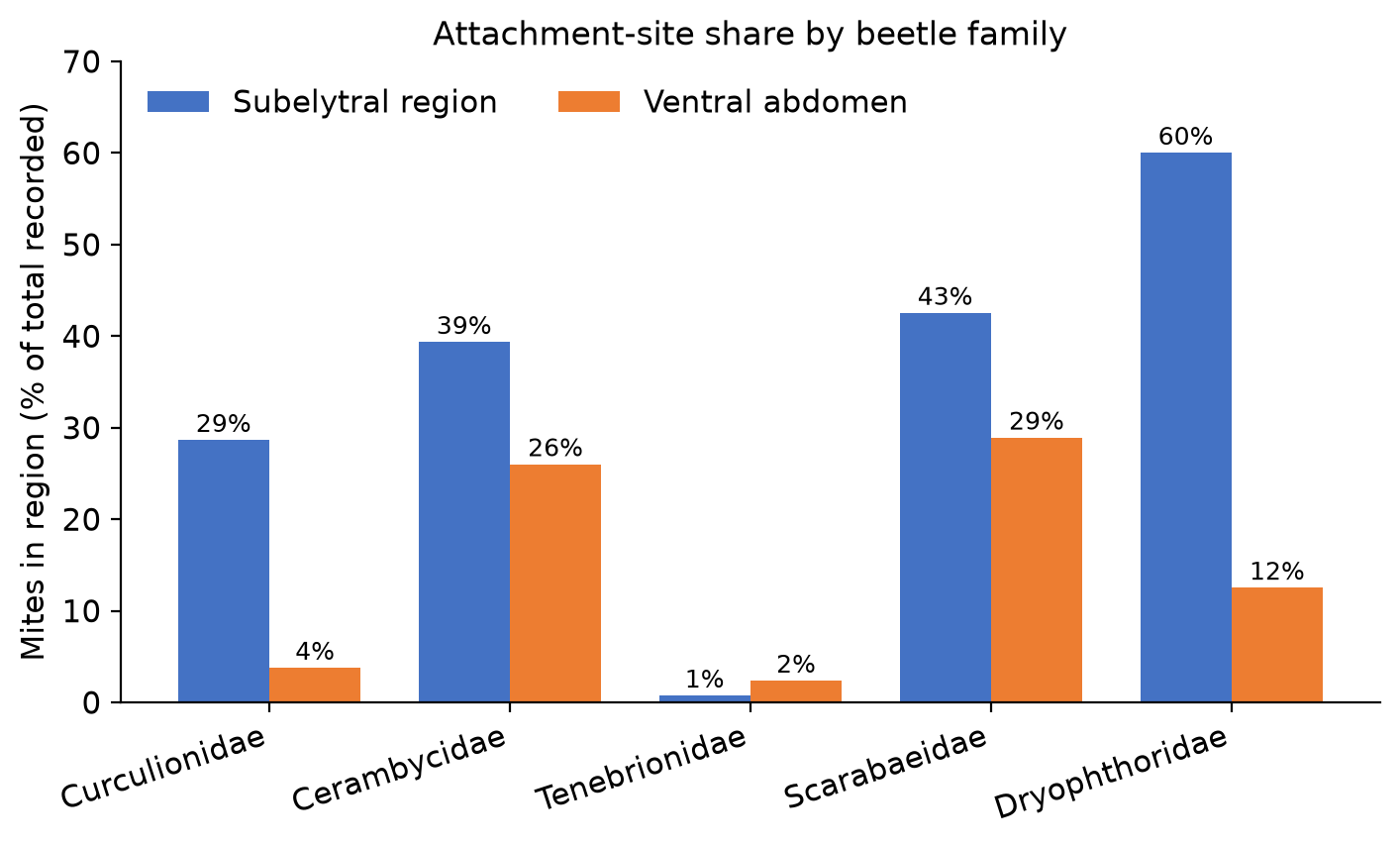
Figure 4 compares the percentage of mites found in two distinct body locations: beneath the elytra (blue bars) and on the ventral abdomen (orange bars). The y-axis shows the percentage of total mites in that beetle family, and each family is represented by a pair of bars. The figure shows that mites are under the elytra more frequently than on the ventral abdomen in four of the five families: Dryophthoridae (60% vs. 13%), Scarabaeidae (43% vs. 29%), Cerambycidae (39% vs. 26%), and Curculionidae (29% vs. 4%). However, Tenebrionidae only have a small percentage (1% vs. 2%) in both regions, indicating that the majority are on other parts of the beetle.
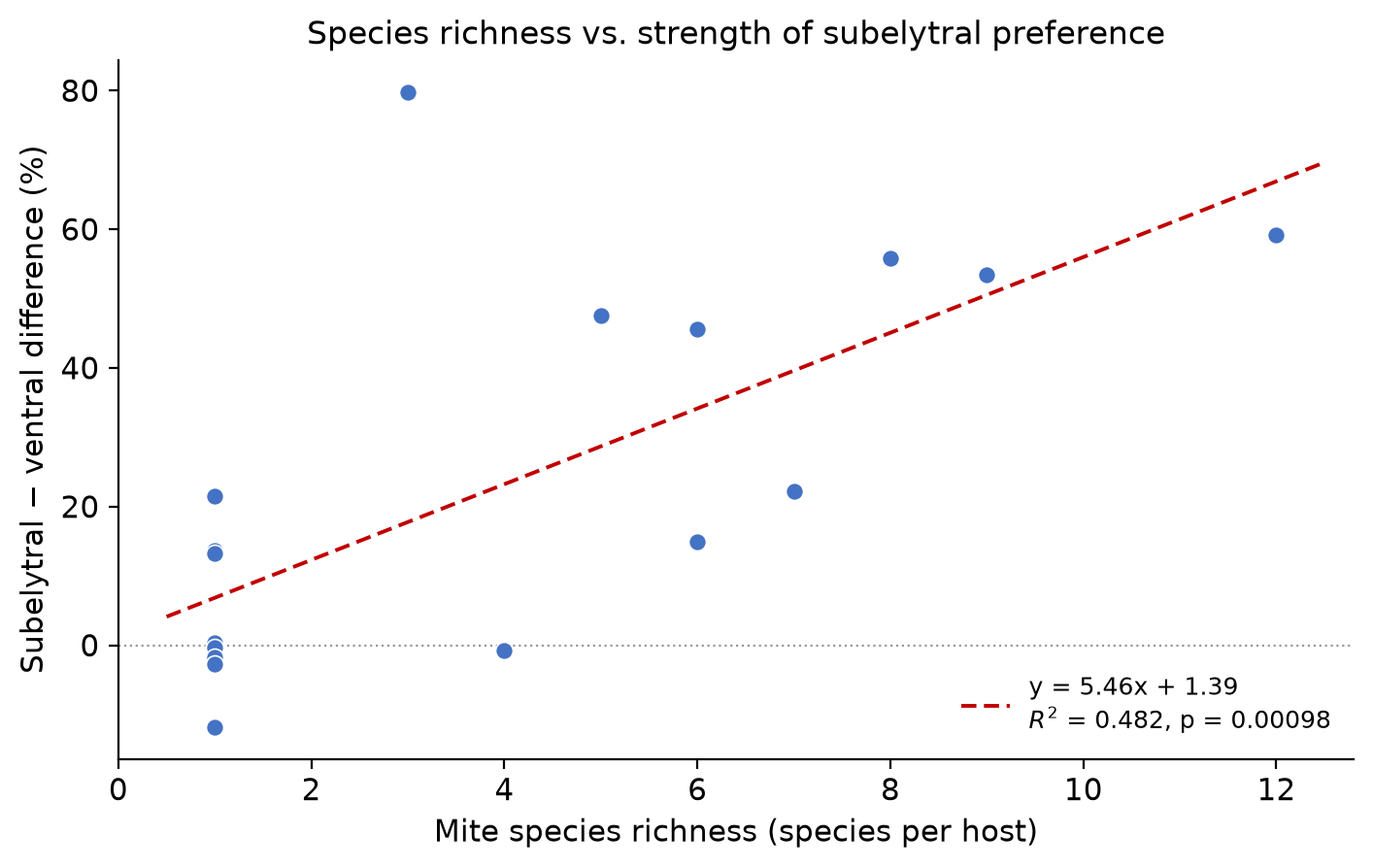
Figure 5 is a scatter plot showing the relationship between mite species richness and percentage difference. Each data point represents one sampling unit, with mite species richness plotted on the horizontal axis (ranging from 1 to 12) and the corresponding percentage difference plotted on the vertical axis (ranging from −11.8% to 79.8%). The data points are distributed across the plot, showing a general positive trend.
A linear regression model was fitted to the data. The regression equation is:
Y = 0.0546X + 0.0139
where Y = percentage difference and X = mite species richness. The fitted regression line is overlaid on the scatter plot, showing a positive slope, indicating that higher mite species richness is associated with higher percentage differences.
The model yields an R2 value of 0.482, meaning that approximately 48.2% of the variance in percentage difference can be explained by mite species richness.
To determine whether the observed R2 is statistically significant, the following steps were performed:
- Null hypothesis (H0): There is no linear relationship between mite species richness and percentage difference. The alternative hypothesis (H1) is that the slope is not zero.
- Significance level (α): A significance level of α = 0.05 was set for hypothesis testing.
- Test statistic: An F-test was conducted for the overall regression model, with degrees of freedom df1 = 1 (regression) and df2 = 17 (residual). The computed F-statistic is F = 15.80. Alternatively, the t-test for the slope coefficient yields t = 3.975 with the same degrees of freedom (df = 17).
- P-value: The p-value associated with the F-test (Significance F) is p = 0.000978. The same p-value is obtained from the t-test for the slope coefficient (P-value for X Variable 1 = 0.000978).
Since the obtained p-value (0.000978) is less than the significance level of 0.05, the null hypothesis is rejected. Furthermore, because p < 0.001, the result is considered highly statistically significant. The R2 value of 0.482 is statistically significant (F1,17 = 15.80, p = 0.000978, R2 = 0.482, n = 19). There is strong evidence of a positive linear relationship between mite species richness and percentage difference, with the regression slope being significantly different from zero.
Discussion
Our results demonstrate a consistent pattern that phoretic mites generally prefer the subelytral region over the ventral abdomen. In the majority of data points (12 points), mites were more abundant under the elytra than on the ventral abdomen (Figure 3), since most data points fall above the y = x reference line. There is also a positive relationship between mite species richness and the strength of subelytral preference (Figure 5). To be specific, studies with higher mite diversity show that mites are concentrated in the subelytral region of the beetle, and the number of mites under the elytra far exceeds that on the ventral abdomen.
1. Why Do Mites Prefer the Subelytral Region
The subelytral region offers several key advantages that explain why many mite species prefer to attach there. First, the region offers physical protection. Mites that inhabit the subelytral space are shielded from external mechanical disturbances and predators, as evidenced by the fact that some mite lineages undergo their entire life cycle while inhabiting the space beneath the elytra of their hosts (Mortazavi et al., 2018). This enclosed environment allows mites to develop and reproduce with less risk of dislodgement or predation.
Second, the subelytral cavity maintains higher humidity and buffers temperature fluctuations. Potential functions of the subelytral chamber include a reduction of transpiratory water loss and a thermal buffer for heat flow from the elytra to the abdomen (Slobodchikoff & Wismann, 1981). Expired air from the tracheal system humidifies the air within the subelytral cavity, creating a microclimate with higher water vapor pressure than the drier external atmosphere (Schilman et al., 2008). This humid environment benefits mites by reducing the stress they would otherwise face when exposed to dry air during transport.
2. Factors That Influence Mite Preference
Despite the apparent advantages of the subelytral region, mite preference for this location varies considerably across studies. This inconsistency can be explained by three main factors: host evolutionary history, mite interspecific competition, and mite intraspecific competition.
Evolutionary perspective: The degree of subelytral specialization differs among beetle families. Bark beetles (Curculionidae: Scolytinae) show strong associations with phoretic mites (Figure 4), with entire mite communities specialized to inhabit the subelytral spaces of these beetles (Seeman & Walter, 2023). Scarab beetles (Scarabaeidae) exhibit moderate preferences, as seen in Circellium bacchus, where the subelytral cavity is sealed, and the mesothoracic spiracles serve as the major site for gas exchange, while the subelytral cavity plays a different role in respiration (Duncan, 2003). Burying beetles (Silphidae: Nicrophorus) and darkling beetles (Tenebrionidae) show weak or no consistent subelytral preference (Figure 4); for example, Poecilochirus carabi preferentially attaches to the ventral side of the thorax rather than the subelytral region, while Macrocheles nataliae is found ventrally at the hairy base of the abdomen (Sun et al., 2024). This variation likely reflects differences in the duration of parental care and life cycle synchronization between mites and their beetle hosts (Sun & Kilner, 2024).
Mite interspecific competition: The species richness and identity of mites present on a host strongly influence subelytral attachment patterns. Different mite species exhibit species-specific preferences for attachment sites. Sun et al. (2024) found that P. carabi attached with large adhesive pads to the smooth thorax cuticle, whereas M. nataliae gripped abdominal setae with their chelicerae, demonstrating that biomechanical adaptations mediate spatial niche partitioning. Sun & Kilner (2024) further demonstrated that when multiple mite lineages coexist on the same host, interspecific competition forces different lineages to select distinct attachment sites to minimize direct conflict. However, our findings suggest an alternative pattern: higher mite species richness is associated with a stronger preference for the subelytral region, rather than increased spatial dispersion across different body parts (Figure 5). We propose that this reflects a competitive crowding effect. When multiple mite species coexist on a single host, interspecific competition intensifies, driving mites to preferentially occupy the subelytral chamber—a spatially limited but environmentally favorable microhabitat that offers physical protection, higher humidity, and reduced desiccation risk (Slobodchikoff & Wismann, 1981; Schilman et al., 2008). Under highly competitive pressure, mites may actively seek this optimal attachment site to secure its physiological benefits, resulting in aggregated distribution beneath the elytra. Conversely, when competition is low, such as when only a single mite species is present, mites may disperse more freely across various body parts, as the risk of losing access to the subelytral region to competitors is minimal. This relaxed competitive environment allows mites to attach to less optimal but still adequate locations without significant fitness consequences. Although direct experimental evidence for this competitive displacement hypothesis remains limited, it is consistent with the general principle that resource limitation intensifies competition and drives organisms toward the most favorable microhabitats (Sun et al., 2024; Sun & Kilner, 2024).
3. Limitations
This study has several limitations. First, the number of studies meeting our inclusion criteria was limited, limiting statistical power. Second, methodological variation among studies, including differences in sampling, preservation, and definitions of body regions, may have affected comparability. Ethanol preservation, for example, can cause mite detachment and may underestimate mite numbers (Pernek et al., 2012; Gwiazdowicz et al., 2015). Third, geographic and taxonomic biases exist: most studies originated from temperate Europe and focused on bark beetles, limiting generalizability to other regions and beetle families. Fourth, pooling mites across species may have obscured species-level variation in attachment preferences. Finally, the study synthesizes case studies and cannot establish causality. Experimental studies are needed to test the mechanisms underlying attachment-site selection. Despite these limitations, our study provides the first quantitative synthesis of mite attachment-site preferences and offers a foundation for future research.
4. Future Directions
This study suggests several directions for future research. First, additional studies from tropical and subtropical regions are urgently needed, as most of existing data come from temperate Europe, and it remains unclear whether the observed subelytral preference holds under different climatic conditions where temperature and humidity regimes differ substantially. Similarly, understudied beetle families such as Scarabaeidae, Silphidae, and other non-curculionid groups need further investigation to determine whether the observed patterns generalize across beetle groups.
Second, experimental studies are needed to test the causal mechanisms underlying attachment-site preferences. Manipulative experiments such as elytra removal to eliminate the subelytral space, controlled humidity experiments to test the role of desiccation risk, or behavioral choice assays to examine active site selection by mites would provide critical insights into the mechanisms driving the patterns we have observed. Additionally, experiments manipulating mite community composition could test whether interspecific competition intensifies subelytral occupation, as suggested by the positive relationship between mite species richness and subelytral preference observed in this study.
Third, the evolutionary origins of subelytral preference merit further investigation. Phoresy has evolved multiple times independently in mites, and the subelytral region appears to have been repeatedly selected as an optimal attachment site (Seeman & Walter, 2023). Fossil evidence from amber deposits, such as the early Cretaceous fossil mites described by Klimov et al. (2021), offers a unique window into the evolutionary history of phoretic associations. Further paleontological studies could reveal when and how subelytral attachment first evolved, and whether it has been lost or gained multiple times across mite lineages.
Fourth, we should explore the practical applications of our findings. Knowing that phoretic mites predominantly hide under the elytra has direct implications for forest health monitoring, quarantine inspection, and biological control programs. We recommend that monitoring and isolation protocols explicitly include subelytral examination as a standard procedure to improve detection accuracy. For biocontrol programs utilizing predatory mites, post-release assessments should include subelytral inspection to accurately evaluate mite establishment and dispersal success, as assessments based solely on external body surfaces may underestimate attachment success. By simply redirecting inspection effort to the subelytral region, monitoring accuracy can be improved without additional time, equipment, or cost.
References
- Al-Deeb, M. A., Muzaffar, S. B., & Sharif, E. M. (2012). Interactions between phoretic mites and the Arabian rhinoceros beetle, Oryctes agamemnon arabicus. Journal of Insect Science, 12(1), 1–14. https://doi.org/10.1673/031.012.12801
- Bartlow, A. W., & Agosta, S. J. (2021). Phoresy in animals: Review and synthesis of a common but understudied mode of dispersal. Biological Reviews, 96(1), 223–246. https://doi.org/10.1111/brv.12654
- Borges, R. M. (2022). Phoresy involving insects as riders or rides: Life history, embarkation, and disembarkation. Annals of the Entomological Society of America, 115(3), 219–231. https://doi.org/10.1093/aesa/saab051
- Błoszyk, J., Gutowski, J. M., Gwiazdowicz, D. J., & Mądra, A. (2013). Phoresy of Trichouropoda shcherbakae Hirschmann, 1972 (Acari: Mesostigmata) on beetles of the genus Tetropium Kirby, 1837 (Coleoptera: Cerambycidae) in Białowieża Forest, Poland. Central European Journal of Biology, 8(10), 986–992. https://doi.org/10.2478/s11535-013-0226-5
- Dilipkumar, M., Ahadiyat, A., Mašán, P., & Chuah, T. S. (2015). Mites (Acari) associated with Rhynchophorus ferrugineus (Coleoptera: Curculionidae) in Malaysia, with a revised list of the mites found on this weevil. Journal of Asia-Pacific Entomology, 18(1), 169–174. https://doi.org/10.1016/j.aspen.2014.12.006
- Duncan, F. D. (2002). The role of the subelytral cavity in water loss in the flightless dung beetle, Circellium bacchus (Coleoptera: Scarabaeinae). European Journal of Entomology, 99(3), 253–258. https://doi.org/10.14411/eje.2002.034
- Duncan, F. D. (2003). The role of the subelytral cavity in respiration in a tenebrionid beetle, Onymacris multistriata (Tenebrionidae: Adesmiini). Journal of Insect Physiology, 49(4), 339–346. https://doi.org/10.1016/S0022-1910(03)00018-0
- Hofstetter, E. M., Knee, W. H., & Khaustov, A. A. (2023). Phoretic mite assemblage of the pinyon pine beetle, Ips confusus (Curculionidae: Scolytinae), in Arizona. Acarologia, 63(2), 480–490. https://doi.org/10.24349/upy5-taez
- Huang, K., Shi, Y., & Wu, W. (2025). Mechanical properties of beetle elytra and biomimetic structures: A review. Analytical Chemistry: A Journal, 4(1), 7–8.
- Izraylevich, S., & Gerson, U. (n.d.). The hypopus of Hemisarcoptes coccophagus: Distribution and apolysis. Acarologia, 333–339.
- Klimov, P. B., Vorontsov, D. D., Azar, D., Sidorchuk, E. A., Braig, H. R., Khaustov, A. A., & Tolstikov, A. V. (2021). A transitional fossil mite (Astigmata: Levantoglyphidae fam. n.) from the early Cretaceous suggests gradual evolution of phoresy-related metamorphosis. Scientific Reports, 11, 15113. https://doi.org/10.1038/s41598-021-94367-2
- Knee, W., Hartzenberg, T., Forbes, M. R., & Beaulieu, F. (2012). The natural history of mites (Acari: Mesostigmata) associated with the white-spotted sawyer beetle (Coleoptera: Cerambycidae): Diversity, phenology, host attachment, and sex bias. The Canadian Entomologist, 144(5), 711–719. https://doi.org/10.4039/tce.2012.57
- Konwerski, S., Gutowski, J. M., & Błoszyk, J. (2019). Analysis of the phoretic relationships between mites of the genus Trichouropoda Berlese (Parasitiformes: Uropodina) and the longhorn beetle Plagionotus detritus (Linnaeus) (Coleoptera: Cerambycidae) based on multiannual observations in Białowieża Primeval Forest, Central Europe. International Journal of Acarology, 45(1–2), 29–40. https://doi.org/10.1080/01647954.2018.1538257
- Konwerski, S., Gutowski, J. M., & Błoszyk, J. (2020). Patterns of phoretic Uropodina mites (Acari: Mesostigmata) on longhorn beetles (Coleoptera: Cerambycidae) in Białowieża Primeval Forest, Central Europe. Diversity, 12(6), 239. https://doi.org/10.3390/d12060239
- Liu, S., Li, J., Guo, K., Qiao, H., Xu, R., Chen, J., Xu, C., & Chen, J. (2016). Seasonal phoresy as an overwintering strategy of a phytophagous mite. Scientific Reports, 6, 25483. https://doi.org/10.1038/srep25483
- Mortazavi, A., Hajiqanbar, H., & Lindquist, E. E. (2018). A new family of mites (Acari: Prostigmata: Raphignathina), highly specialized subelytral parasites of dytiscid water beetles (Coleoptera: Dytiscidae: Dytiscinae). Zoological Journal of the Linnean Society, XX, 1–55. https://doi.org/10.1093/zoolinnean/zlx113
- Paraschiv, M., Martínez-Ruiz, C., & Fernández, M. M. (2018). Dynamic associations between Ips sexdentatus (Coleoptera: Scolytinae) and its phoretic mites in a Pinus pinaster forest in northwest Spain. Experimental and Applied Acarology, 75(4), 369–381. https://doi.org/10.1007/s10493-018-0272-9
- Paraschiv, M., & Isaia, G. (2020). Disparity of phoresy in Mesostigmatid mites upon their specific carrier Ips typographus (Coleoptera: Scolytinae). Insects, 11(11), 771. https://doi.org/10.3390/insects11110771
- Pernek, M., Wirth, S., Blomquist, S. R., Avtzis, D. N., & Moser, J. C. (2012). New associations of phoretic mites on Pityokteines curvidens (Coleoptera, Curculionidae, Scolytinae). Central European Journal of Biology, 7(1), 63–68. https://doi.org/10.2478/s11535-011-0096-7
- Rivera, J., Murata, S., Hosseini, M. S., Trikanad, A. A., James, R., Pickle, A., Yaraghi, N., Matsumoto, N., Yang, W., Parkinson, D. Y., Barnard, H. S., Zavattieri, P., Arakaki, A., & Kisailus, D. (2021). Structural design variations in beetle elytra. Advanced Functional Materials, 31(48), 2106468. https://doi.org/10.1002/adfm.202106468
- Schilman, P. E., Kaiser, A., & Lighton, J. R. B. (2008). Breathe softly, beetle: Continuous gas exchange, water loss and the role of the subelytral space in the tenebrionid beetle, Eleodes obscura. Journal of Insect Physiology, 54(1), 192–203. https://doi.org/10.1016/j.jinsphys.2007.09.004
- Schwarz, H. H., & Koulianos, S. (1998). When to leave the brood chamber? Routes of dispersal in mites associated with burying beetles. Experimental and Applied Acarology, 22(11), 621–631. https://doi.org/10.1023/A:1006059106772
- Seeman, O. D., & Walter, D. E. (2023). Phoresy and mites: More than just a free ride. Annual Review of Entomology, 68, 69–88. https://doi.org/10.1146/annurev-ento-120220-013329
- Slobodchikoff, C. N., & Wismann, K. (1981). A function of the subelytral chamber of tenebrionid beetles. Journal of Experimental Biology, 90(1), 109–114. https://doi.org/10.1242/jeb.90.1.109
- Sun, S.-J., Chen, S., Federle, W., & Kilner, R. M. (2024). Biomechanical adaptations enable phoretic mite species to occupy distinct spatial niches on host burying beetles. Proceedings of the Royal Society B: Biological Sciences, 291(2024), 20240230. https://doi.org/10.1098/rspb.2024.0230
- Sun, S.-J., & Kilner, R. M. (2024). Competition among host-specific lineages of Poecilochirus carabi mites influences the extent of local adaptation. Ecology and Evolution, 14(5), e11345. https://doi.org/10.1002/ece3.11345
- Toma, D., Isaia, G., Manu, M., & Simon, D. C. (2025). Phoretic mite communities associated with Ips typographus and Ips duplicatus (Coleoptera: Scolytinae) in a Norway Spruce stand. Experimental and Applied Acarology, 95, 35. https://doi.org/10.1007/s10493-025-01053-3
Great synthesis! I am curious whether the subelytral preference is driven mainly by protection from the host’s grooming, or by the more stable humidity under the elytra. Did any of the 12 studies test those two explanations separately?
Good question, and the honest answer is that the synthesis does not settle it. The 12 studies were distribution records — where mites were found on beetles — not experiments, and none of them tested grooming versus humidity as competing explanations. So the subelytral preference is real in the data, but its cause is not partitioned.
My own reading is that the two are not really alternatives. The subelytral space offers both a stable, humid microclimate and physical inaccessibility to the host’s grooming legs and to some predators, and those advantages likely interact: humidity matters more where desiccation risk is high, grooming matters more where the host is an active groomer. Teasing them apart would need manipulative work — humidity-gradient choice assays, observation of grooming behaviour (or blocking it), mite removal and transfer experiments, and survival/desiccation trials at controlled humidity. None of the 12 studies did that.
One pattern worth noting: the finding that subelytral attachment strengthens as the number of mite species increases is at least as consistent with competition for space on the ventral surface as with either physiological explanation.