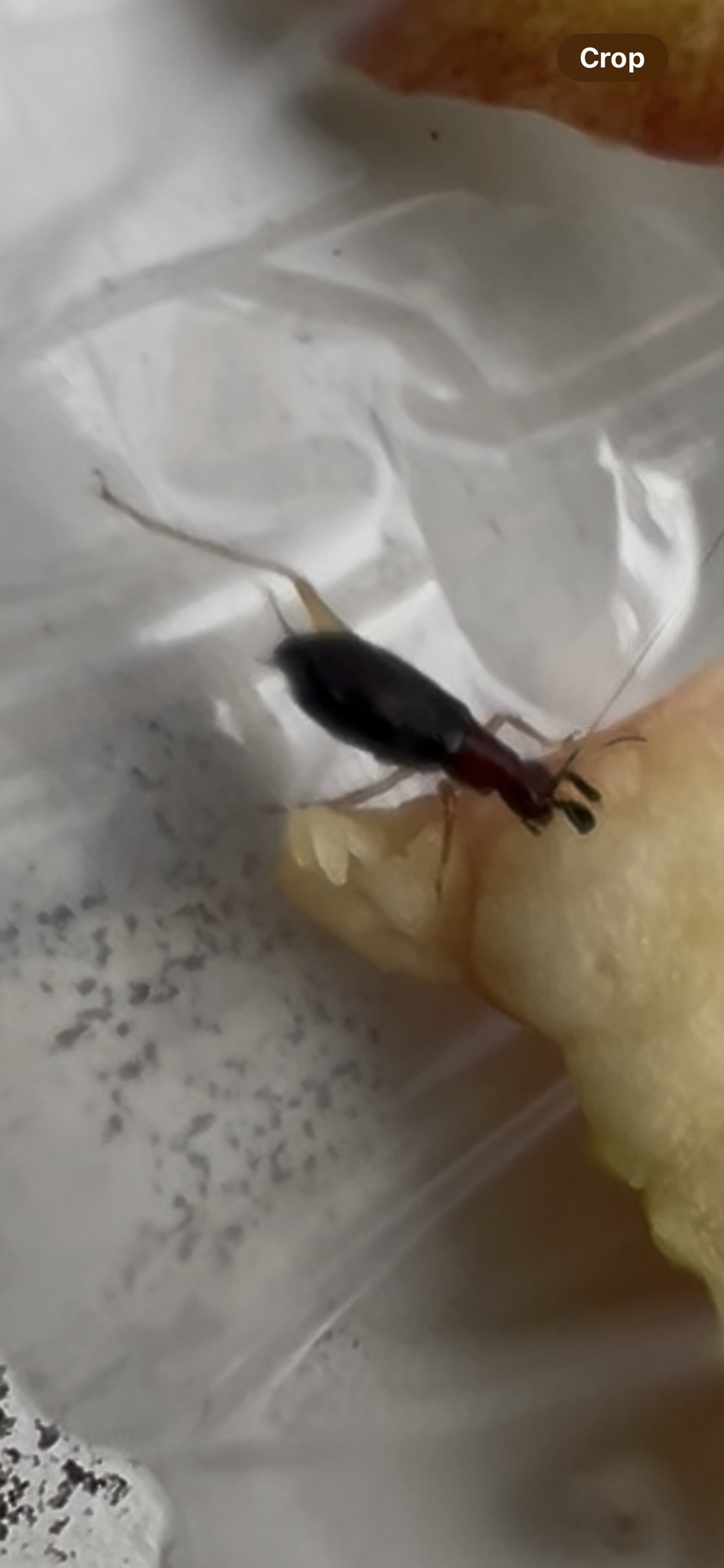
A red-headed cricket on a plastic bag
It was a crisp October afternoon in Pittsburgh when I found this little cricket perched on a plastic bag, of all things. The bag must have been warm, because the cricket was just sitting there, head raised, antennae swept forward like two thin feelers testing the air. It was small, maybe a centimetre and a half, and impossible to miss: a glossy black body capped with a bright red head.
This is Phyllopalpus pulchellus, the red-headed bush cricket, a member of the family Trigonidiidae in the order Orthoptera. The species name pulchellus means pretty little one in Latin, and honestly, that is exactly what it is. These are tiny crickets, smaller and slimmer than field crickets, and they spend their lives in low vegetation and leaf litter rather than out in the open.
The red head and black body make this species one of the easiest crickets to recognise, even for beginners. What makes it special is the sound: the males sing in short, high-pitched trills, often in broad daylight, which is unusual for crickets. In warm months their calls become a constant background hum in gardens and vacant lots across much of eastern North America.
Finding one on a plastic bag in the city felt like a small urban wildlife moment. A cricket does not care what surface it lands on, as long as it is warm and quiet. I left it there, still perched on the bag, still singing its invisible song.