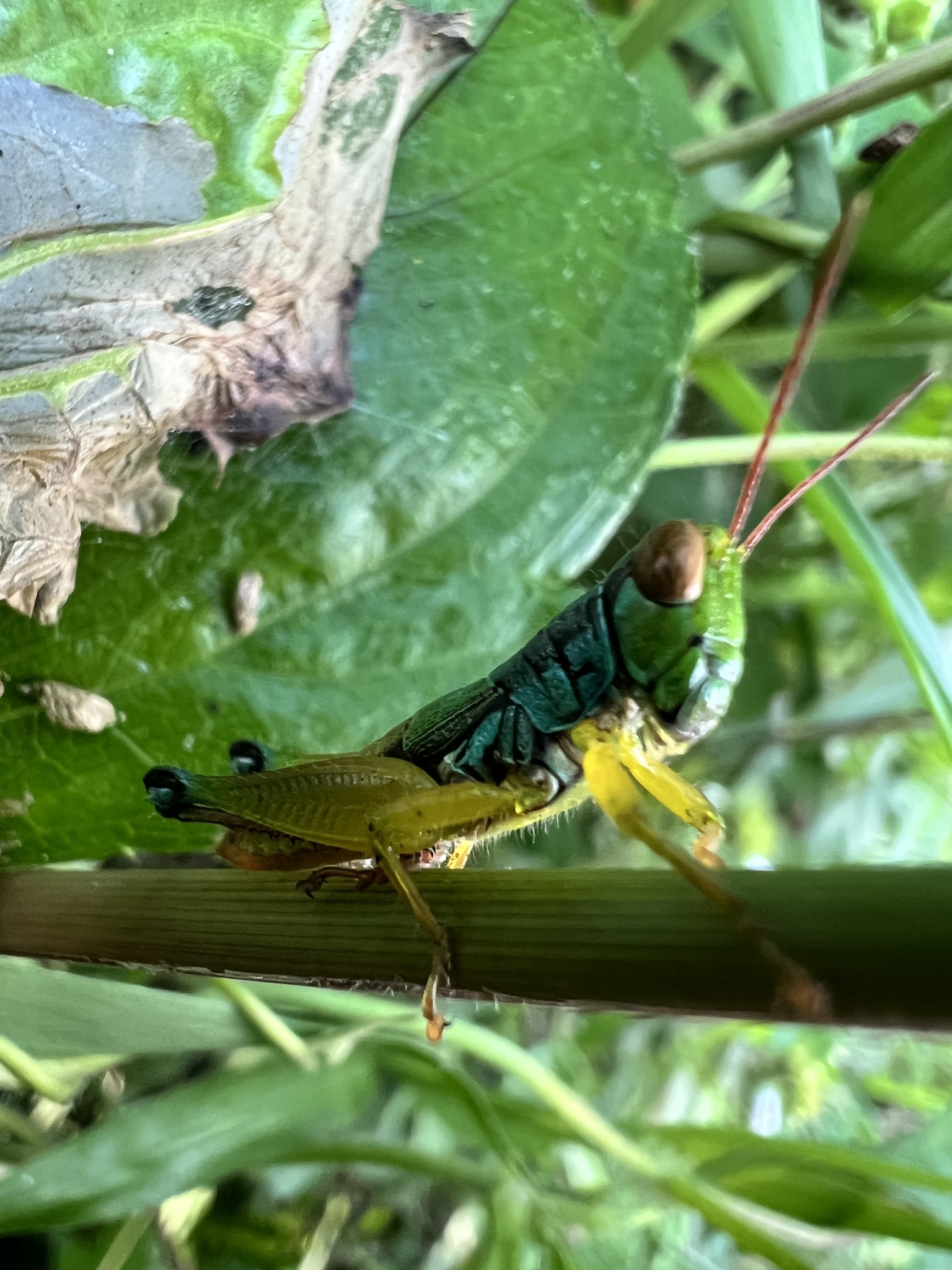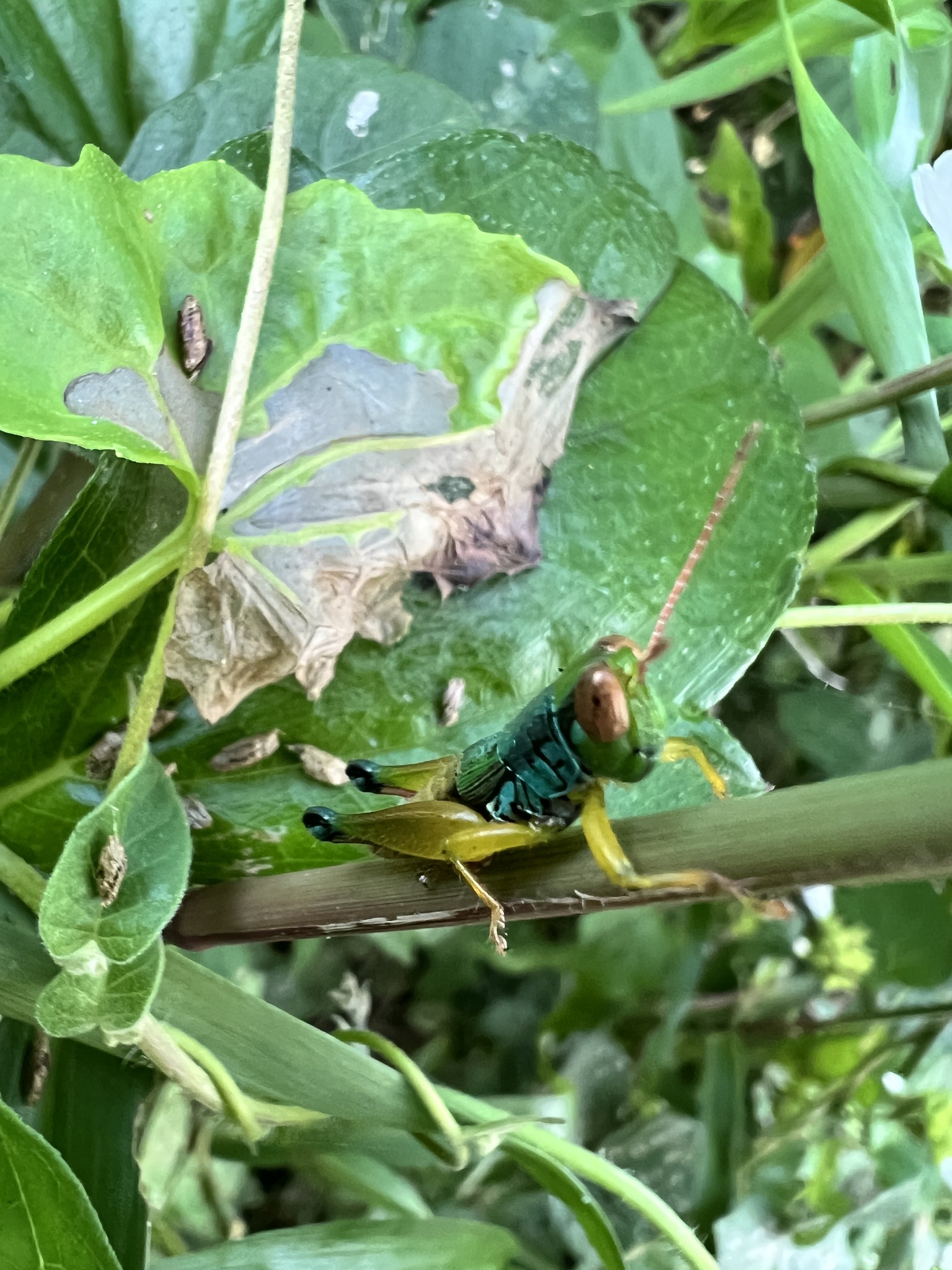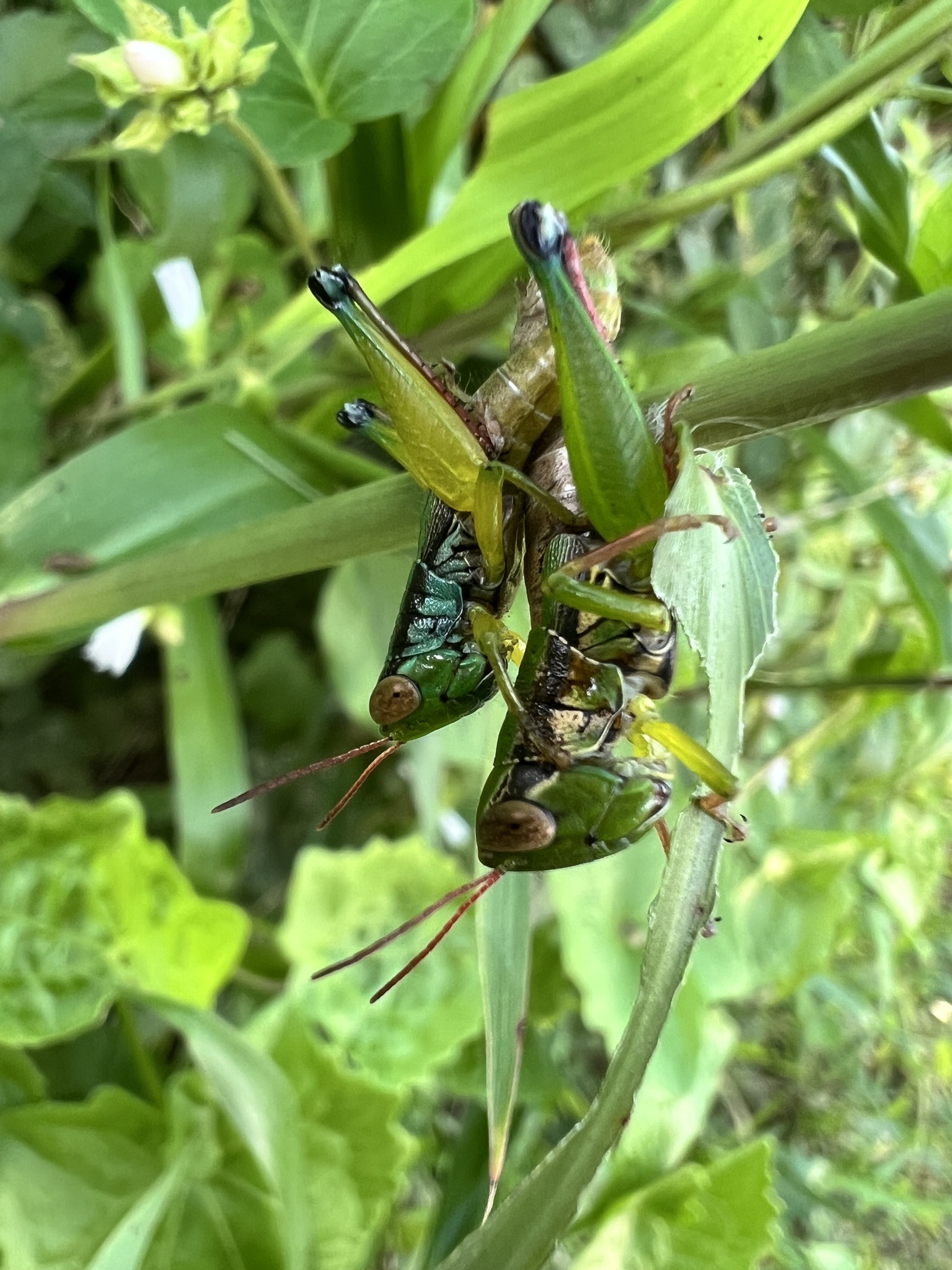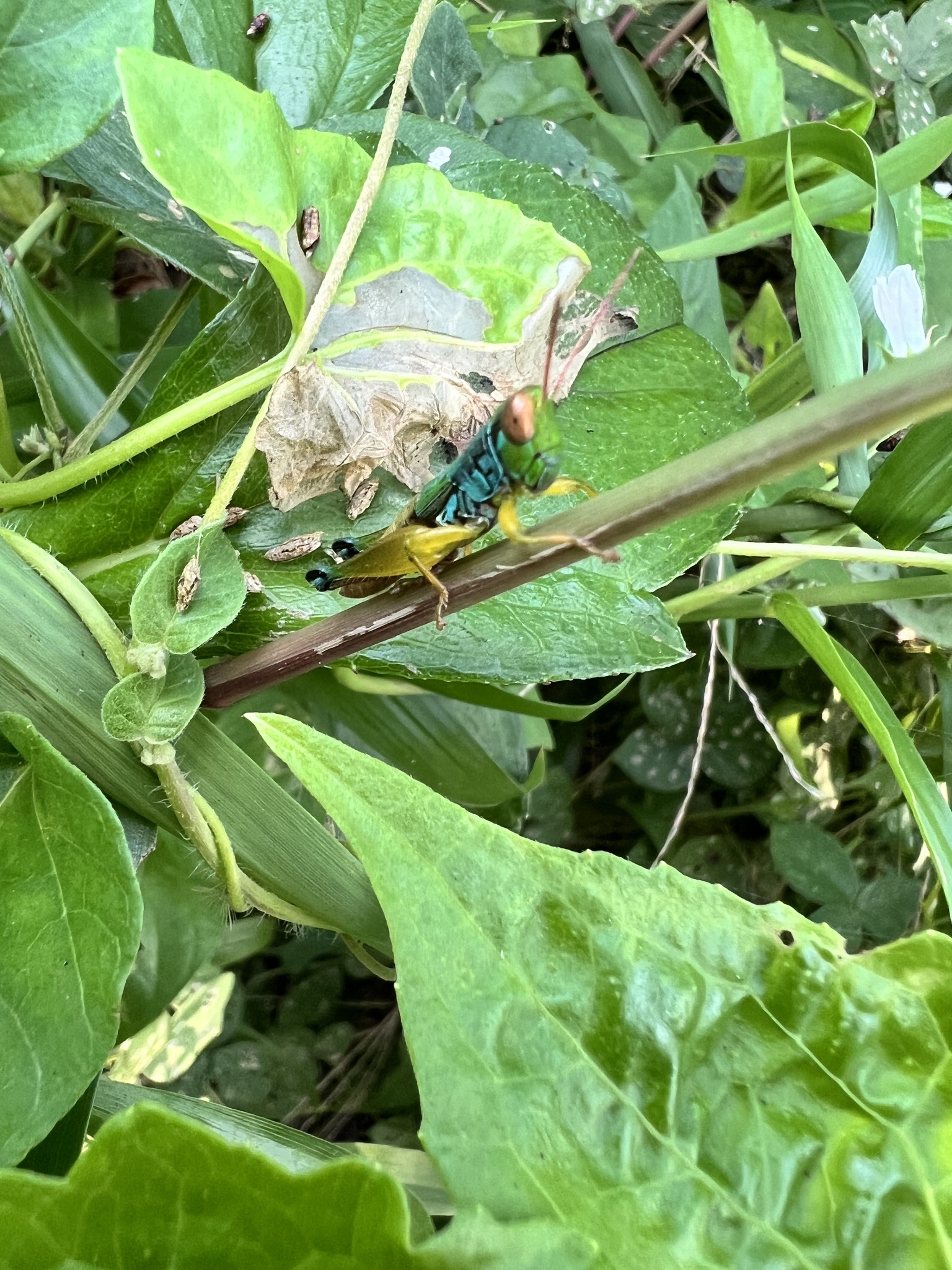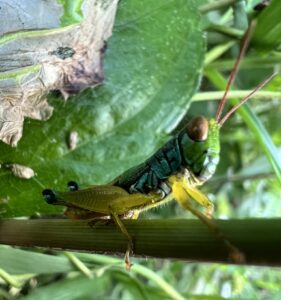
A green grasshopper with blue and yellow markings
This grasshopper was perched on a green stem in Lombok, surrounded by withering leaves and fresh green shoots. Its body was mostly green, marked with blue and yellow patches, and its long, reddish antennae curved forward like two delicate feelers. It stayed perfectly still as I approached, trusting its colour to hide it against the vegetation.
This is Caryanda spuria, a member of the family Acrididae in the order Orthoptera, the true grasshoppers. The genus Caryanda is a group of slender, medium-sized grasshoppers found across Asia, often associated with grasses and low herbs in forest clearings and hillsides. The species name spuria means false or spurious in Latin, a name that usually hints at a confusing similarity to another species, as if the original describers were not quite sure what they were looking at.
Grasshoppers like this one are the quiet engine of grassland ecosystems, converting plant material into food for birds, lizards and spiders. Their camouflage is remarkable: a green individual sitting on a green stem is nearly invisible until it moves, and this one only gave itself away when it shifted a leg. The long antennae of this species make it look almost delicate, but behind them sits a set of powerful jumping legs and a pair of jaws that can cut through tough leaves with ease.
The name spuria has always amused me, because it sounds like the scientist who named it was having a difficult day. There is nothing false about this grasshopper. It was very real, very green, and very good at hiding in plain sight.