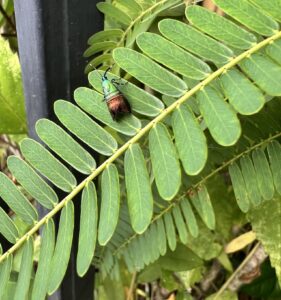
A tiny moth shimmering with metallic green
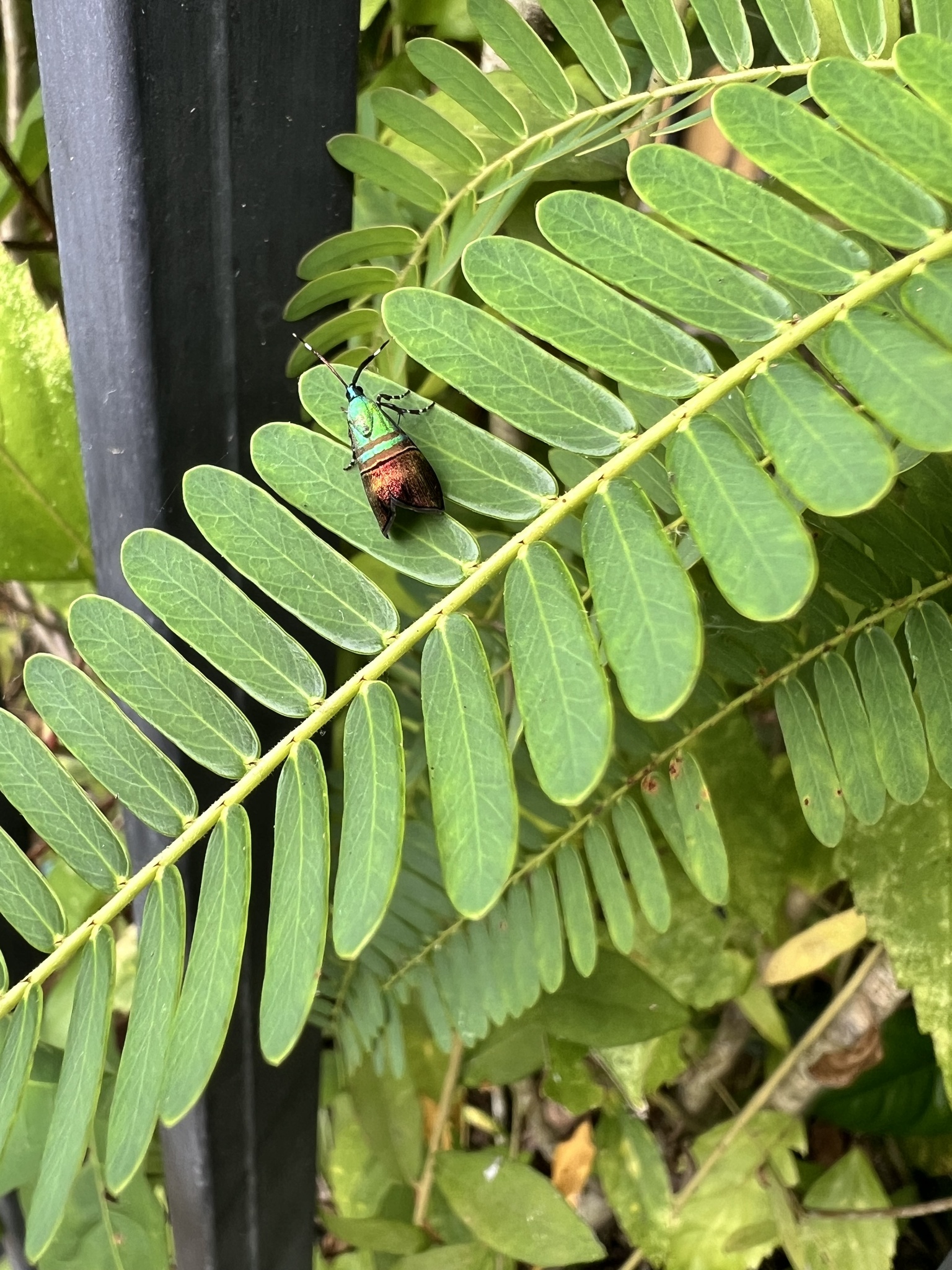
On a green leaf in Lombok, against a background of blurred plants and a dark railing, sat a moth so small I almost missed it. But the light caught it, and for a second it flashed metallic green and purple, like a scrap of jewellery dropped on the leaf. Its antennae were long and curved, and it held its wings flat, showing off colours that had no business being that bright.
This is Saptha beryllitis, a member of the family Choreutidae in the order Lepidoptera. Choreutids are known as metalmark moths, and the name is deserved: many species gleam with iridescent greens, blues and purples. The species name beryllitis points to beryl, the gemstone, an apt reference for a moth that shines like a jewel. This one was small, barely a centimetre across, but it packed more colour into its wings than moths ten times its size.
Metalmark moths are day-active, which is unusual for small moths, and they are often seen fluttering around low vegetation or resting on leaves with their wings spread flat. They are close relatives of the better-known leaf skeletonisers, and their caterpillars feed on a range of plants, often tying leaves together with silk.
Finding a jewel-toned moth resting calmly on a leaf is one of the small pleasures of tropical bug hunting. It costs nothing but a slow walk and a good eye, and the reward is a living gem the size of a fingernail. The iridescent colours of moths like this one come from the fine structure of the wing scales, which scatter light the way a soap bubble does, so the same wing can flash green in one moment and purple in the next.
Beautiful shots! I had no idea metalmark moths were day-active — I always assumed small moths were mostly nocturnal. Around what time of day do you usually spot them active, and do they tend to stay in the same area or flutter around quite a bit?
I found this one in the middle of the day, and that is typical for the family. Choreutids are proper sun-lovers: on bright days they are out from late morning through mid-afternoon, flitting around low vegetation, while on overcast or cool days you mostly do not see them at all. As for range, they are remarkably local. Their flights are short and fluttery, leaf to leaf, and they keep circling back to the same patch or even the same leaf, where they settle with their wings spread flat. This one sat long enough for me to get the shot, then moved maybe a meter and parked again.