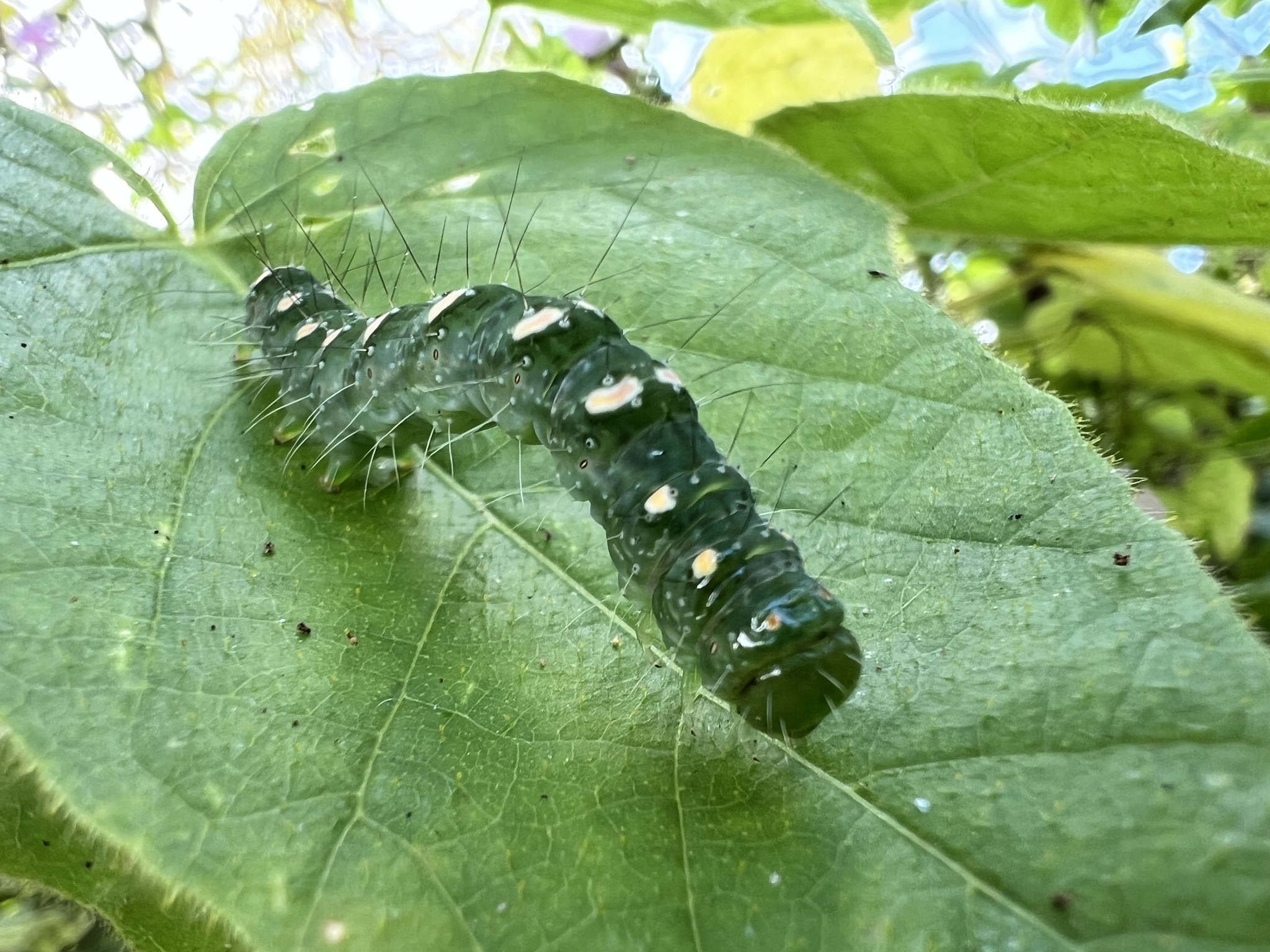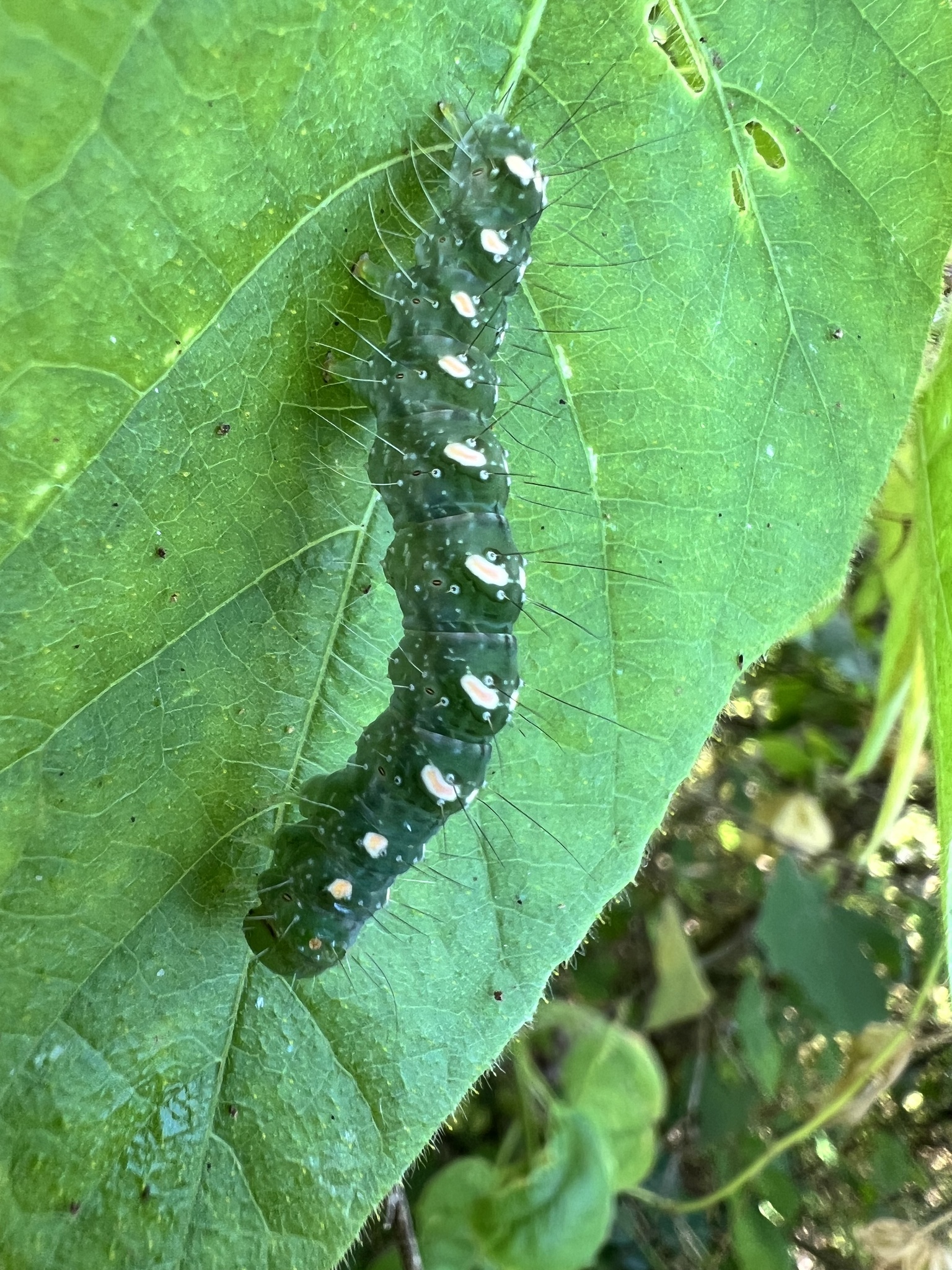
A green moth with white spots on a leaf
On a green leaf in Lombok, surrounded by soft-focus flowers and foliage, sat a moth whose wings were the same green as the leaf beneath it. Up close, though, the wings were covered in fine hairs and dotted with white spots, and the whole animal looked fuzzy, like a tiny moss creature taking a rest. It stayed perfectly still while I leaned in, and the camouflage worked so well that I had to double check it was really there.
This is Xanthodes transversa, the transverse moth, a member of the family Nolidae in the order Lepidoptera. The species name transversa refers to the transverse markings that cross the wings, and the genus name Xanthodes comes from the Greek for yellow, a nod to the pale or yellowish tones in its patterning. Nolidae is a large family of mostly small to medium moths, close relatives of the better-known owlet moths, and many of them are expert camouflagers.
Xanthodes transversa is a widespread tropical species, found across Asia and into Australia, where its caterpillars feed on plants such as cotton and other mallows. The adults rest by day with their wings spread flat, relying on their leaf-green colour to keep them hidden from birds and lizards.
Moths like this one are a good reminder that not all camouflage is grey and brown. In a green forest, being green is the smartest disguise of all, and this one wore it perfectly. It rested with its wings spread flat and its body pressed close to the leaf, and the fuzzy hairs along its back broke up its outline so well that I nearly walked away without ever seeing it at all.