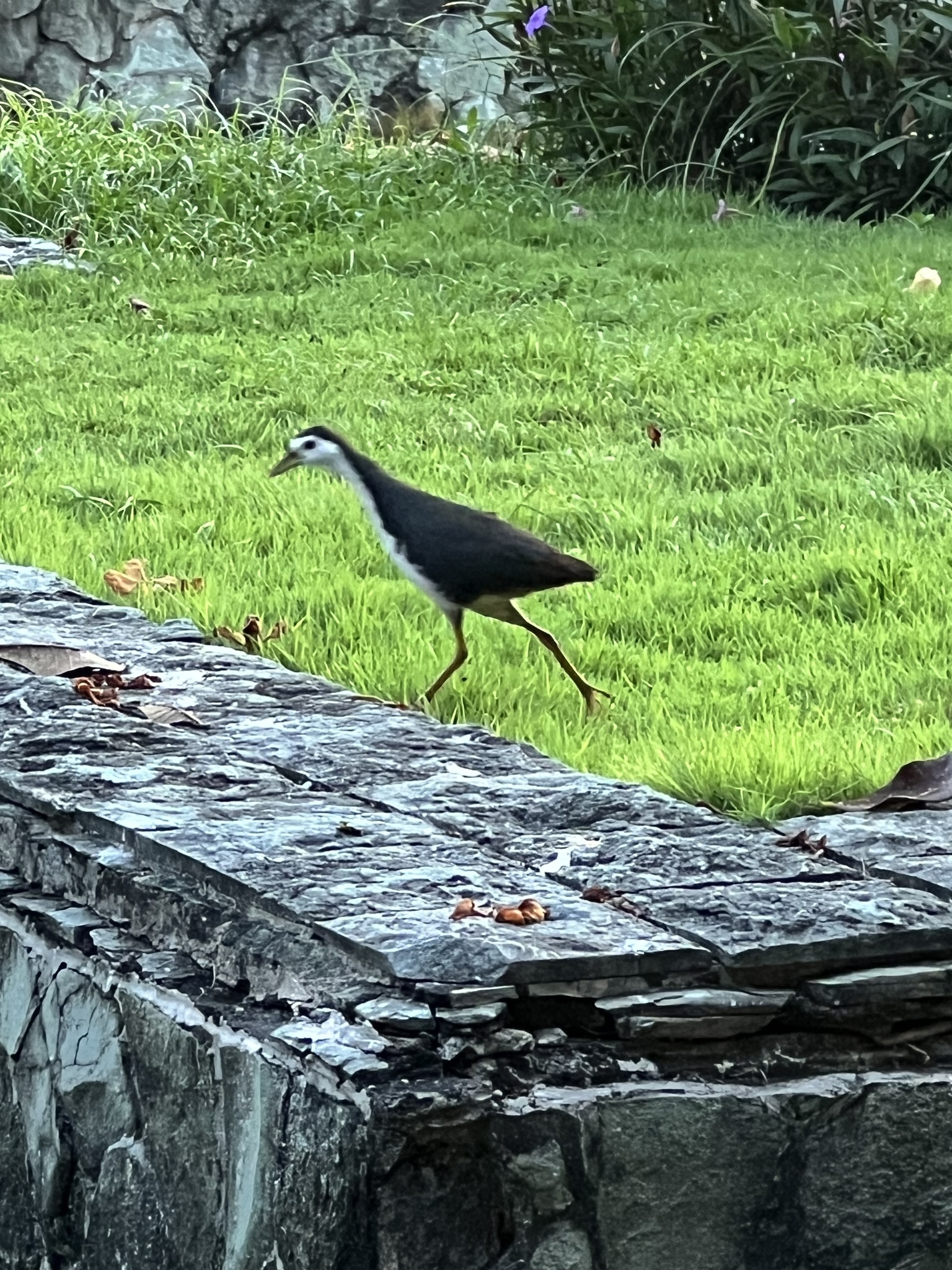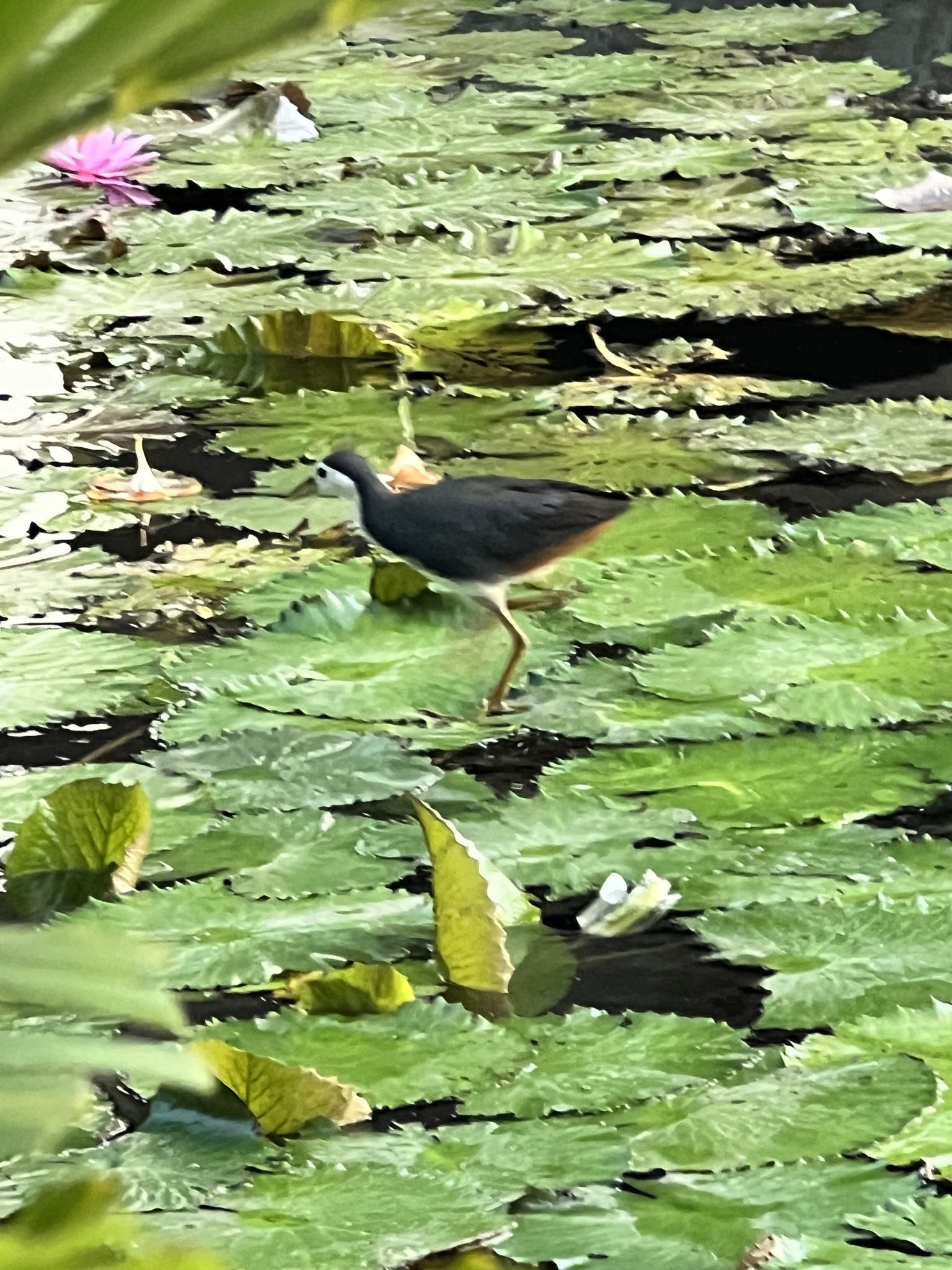
A white-breasted waterhen stepping through the grass
In Lombok, a white-breasted waterhen stepped out of the grass onto a patch of green, picking its way across the ground with the unhurried confidence of a bird that knows it owns the neighbourhood. It was black and white, with dark wings and long yellow legs, and it walked forward in that deliberate, high-stepping way waterhens have, pausing now and then to check on me.
This is Amaurornis phoenicurus, the white-breasted waterhen, a member of the family Rallidae in the order Gruiformes. The species name phoenicurus comes from the Greek for crimson-tailed, a reference to the warm reddish tones under its tail, which are easiest to see when the bird flicks its tail as it walks. Rallidae is the family of rails, crakes and coots, birds built for slipping through dense marsh vegetation.
Unlike many rails, which are famously shy and hard to see, the white-breasted waterhen is bold and comfortable around people. It is one of the most familiar birds of wetlands, rice paddies and even urban parks across much of Asia, often heard before it is seen, giving a loud, croaking call that carries surprisingly far. It feeds on insects, snails, seeds and whatever else it can find in the mud and shallows.
Watching this one strut through the grass, I was reminded that not every animal worth photographing has six legs. A waterhen on a mission is just as good a subject as any beetle, and it posed far more willingly.