A toad with a bad reputation
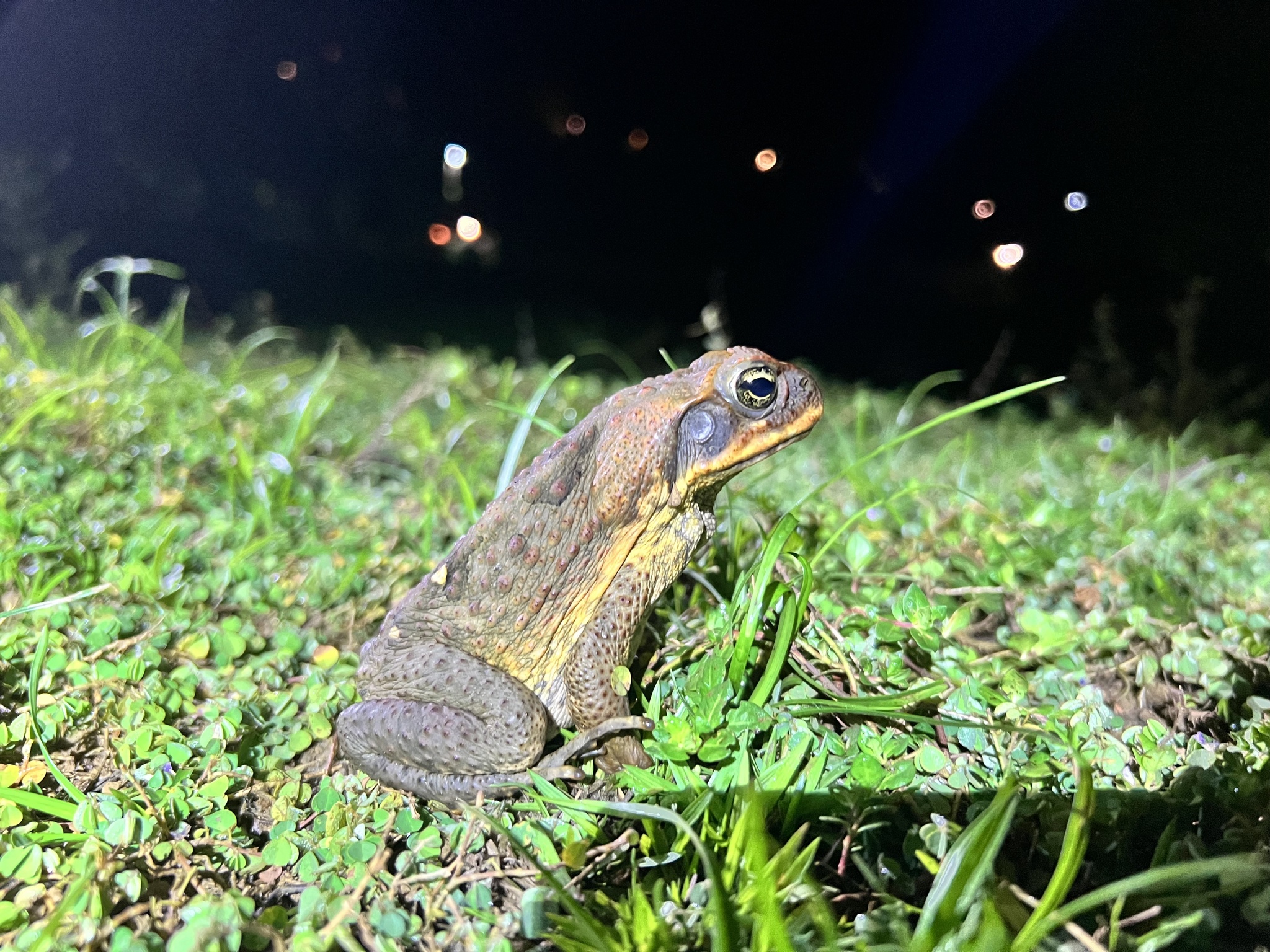
On a December evening in the Dominican Republic, a flashlight beam caught a shape squatting in the middle of the path, so still it could have been a lump of wet earth. It was a toad, and not a modest one: broad, warty, and the size of a small plate, regarding me with the bored dignity of an animal that has seen everything before. It sat there breathing slowly, and only when we stepped around it did it condescend to blink.
This is Rhinella marina, the cane toad, a member of the true toad family Bufonidae in the order Anura. It is one of the largest toads in the world, native to the tropical Americas and introduced by people to sugar-growing regions across the globe in a famous, well-documented attempt at pest control, which is how it earned the name “cane toad.” In the Dominican Republic it is a familiar night presence around gardens and roads, patient and utterly unbothered.
Behind the head sit the parotoid glands, the toad’s real defense: they secrete a milky toxin that makes the animal a dangerous mouthful for predators that do not know better. Everything about the cane toad is built around being left alone, from its warty skin to its habit of sitting motionless until the danger passes.
The species name marina means “of the sea,” a nod to its unusual tolerance of brackish water for a toad. A heavyweight that shrugs off salt, toxins, and bad press: few amphibians carry their reputation with such composure.