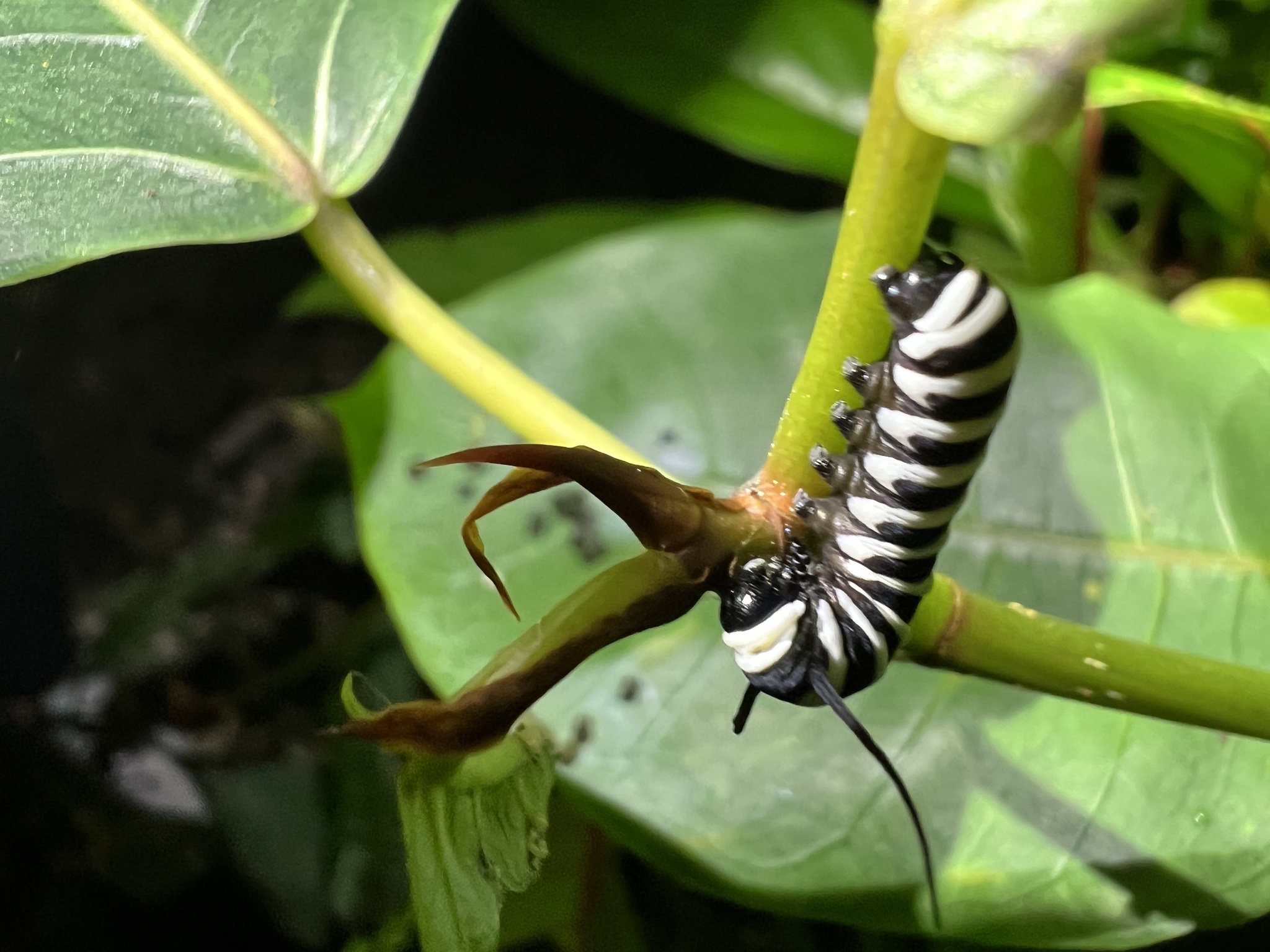
A butterfly that borrows another’s warning
In late December in the Dominican Republic, a large butterfly came gliding across the garden with the slow, confident wingbeats of something that knows it is safe. It settled on a leaf and sat with wings spread, showing off a bold pattern of black, orange and white that looked less like camouflage and more like a billboard. Up close, the tiger stripes and pale spots were unmistakable. It held the pose for a long moment, wings flat, before launching off into the trees. It was gone in two wingbeats, but the pattern stayed burned in my memory.
This is Lycorea halia cleobaea, the Hispaniolan tiger mimic-queen, a member of the brush-footed butterfly family Nymphalidae in the order Lepidoptera. It belongs to the group of butterflies related to the familiar milkweed butterflies, whose caterpillars feed on toxic plants and carry the poisons into adulthood, making the adults genuinely distasteful to birds.
That toxicity is what the bold pattern advertises. Bright warning colors say “do not eat me,” and other butterflies that are perfectly edible have evolved to copy the same costume, which is where the “mimic-queen” name comes from. A predator that has once tasted a defended queen butterfly learns to avoid the whole pattern, whether or not the insect wearing it is actually dangerous.
Evolution built an entire advertising industry out of this idea: one species produces the warning, and its lookalikes freeload on the message. Watching the real thing glide past is like seeing a signed original of a poster everyone has copied.