A frog that skips the pond
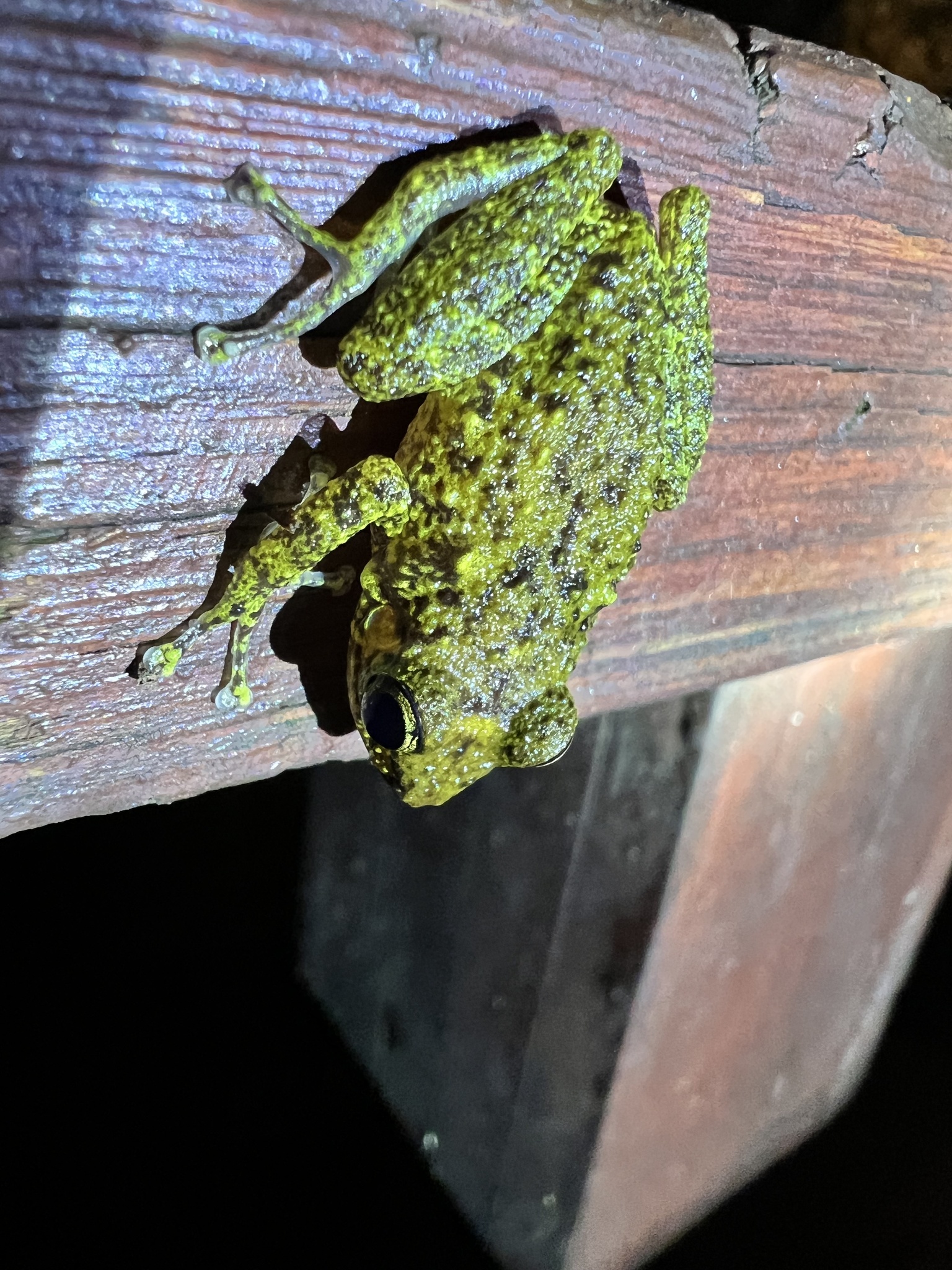
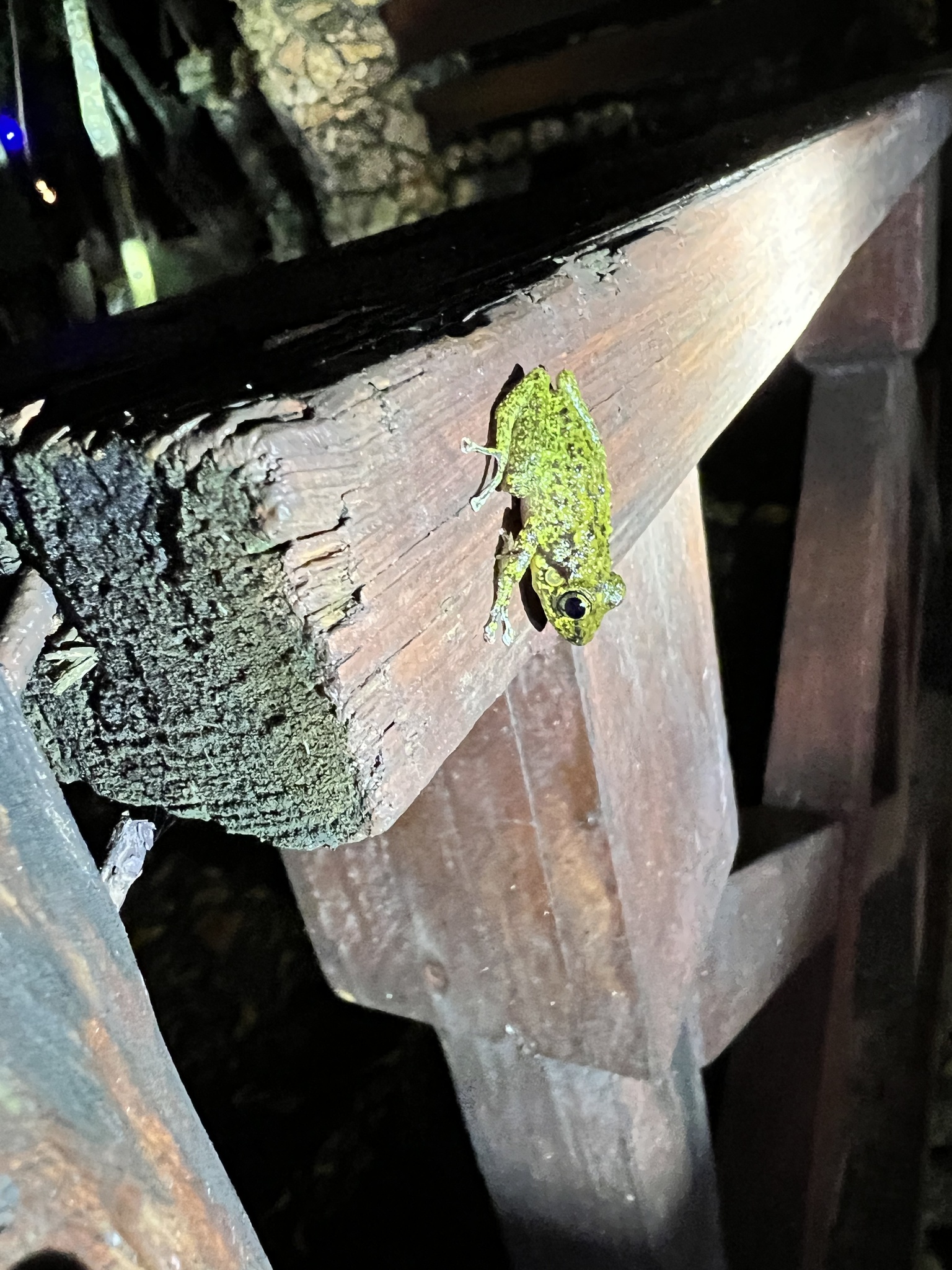
After an evening rain in the Dominican Republic, the leaf litter at the base of a hedge was full of small rustling sounds. One of them belonged to a tiny frog, barely longer than my thumbnail, with a yellowish wash over its back and unwebbed toes splayed out like tiny fingers. It sat in the open, damp and patient, while the flashlight held it in a circle of light. It did not try to jump or hide, apparently deciding that stillness was the better policy.
This is Eleutherodactylus flavescens, the yellow split-toed frog, a member of the family Eleutherodactylidae in the order Anura. It is one of a vast radiation of small frogs on the Caribbean islands, a group that has done something remarkable: it abandoned the pond entirely.
Most frogs need water to breed, but these frogs lay their eggs on land, in moist leaf litter and under rocks, and the eggs hatch directly into tiny froglets, skipping the tadpole stage completely. That is why the genus name combines the Greek words for “free” and “toe,” a reference to toes that need no webbing because there is no pond to swim in. The species name flavescens means “yellowish,” a plain description of its color.
On islands where standing water is scarce and seasonal, skipping the tadpole is not a curiosity; it is a survival strategy. A frog the size of a thumbnail, quietly rewriting the rules of amphibian development, deserves a second look.