A twig of the Antilles
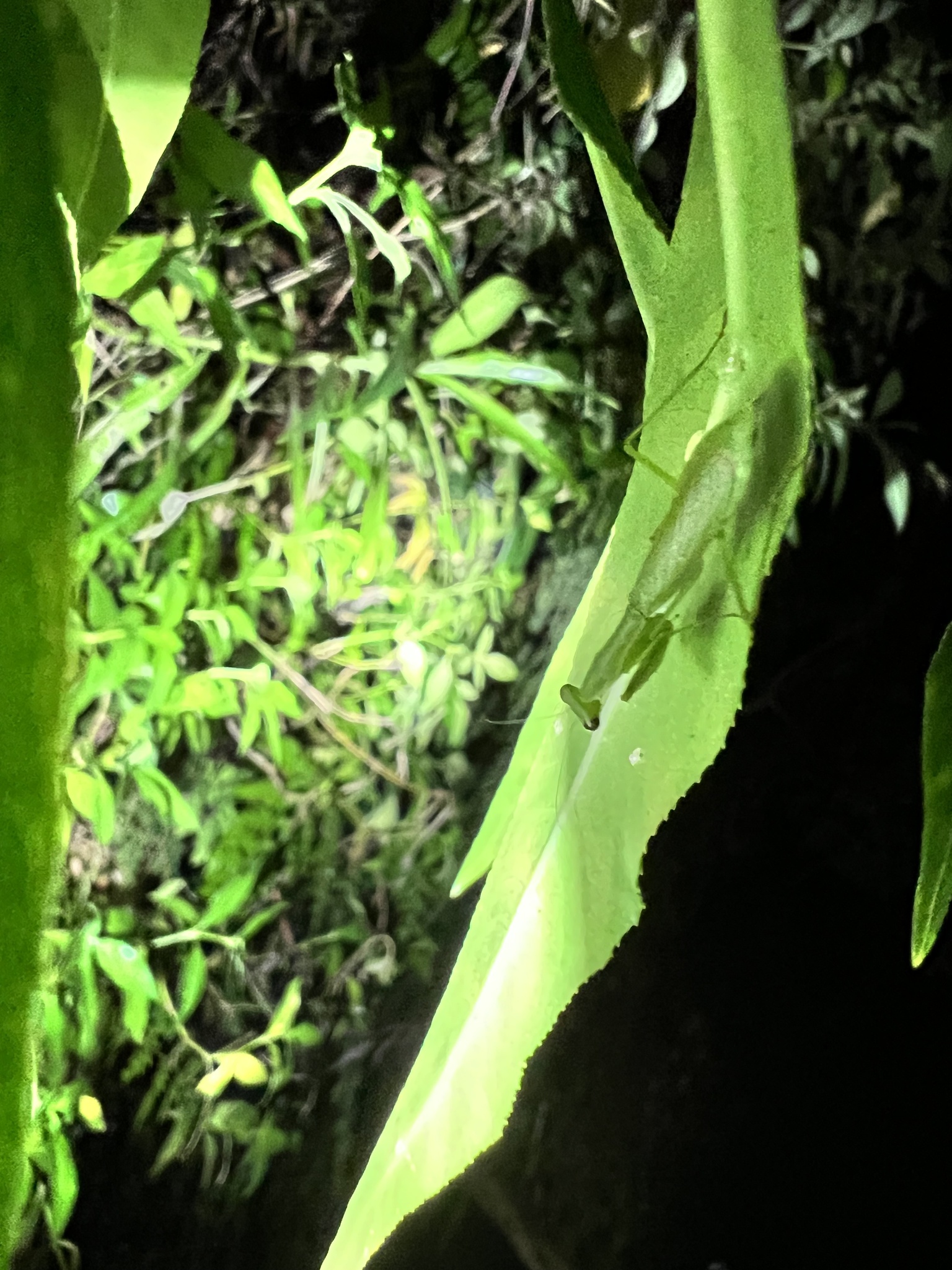
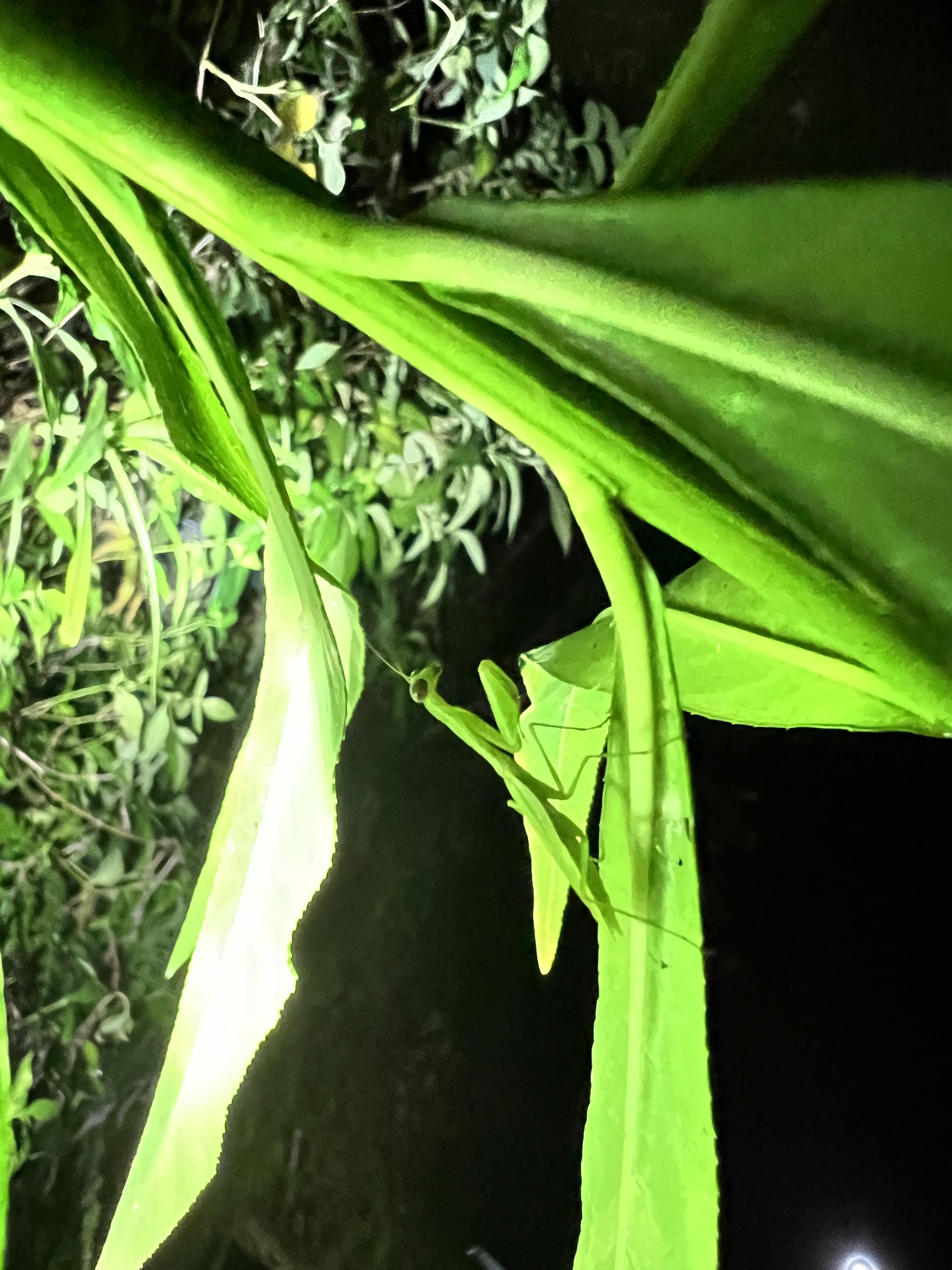
In the Dominican Republic in late December, I was checking a hedge branch by branch when a part of the twig detached itself and rearranged. It was a mantis, slender and brown, with a narrow body that disappeared against the stem it stood on. It had been sitting there the whole time, probably watching me watch the hedge, and only the slight repositioning of a foreleg gave it away. For a full minute it held the pose, and then, deciding I was not food, it relaxed and looked away, having lost interest in me entirely. The hedge was full of potential meals, and I was not one of them.
This is Callimantis antillarum, a member of the lichen mantis family Epaphroditidae in the order Mantodea. The family is best known for Caribbean species that mimic lichen and bark, and this slender Antillean mantis plays a variation on the theme: instead of flattening into a lichen crust, it stretches into a twig, holding perfectly still among the branches where it hunts.
Its strategy is patience. Small insects walking along the stems, flies landing nearby, anything that comes within reach of those folded forelegs, become the mantis’s business. It does not chase; it waits, and in the dense vegetation of the tropics, waiting is a full-time profession that pays well.
The species name antillarum means “of the Antilles,” a geographical label worn with pride. A twig that lives on twigs, named for the islands it belongs to: the whole identity of this mantis fits into three words.