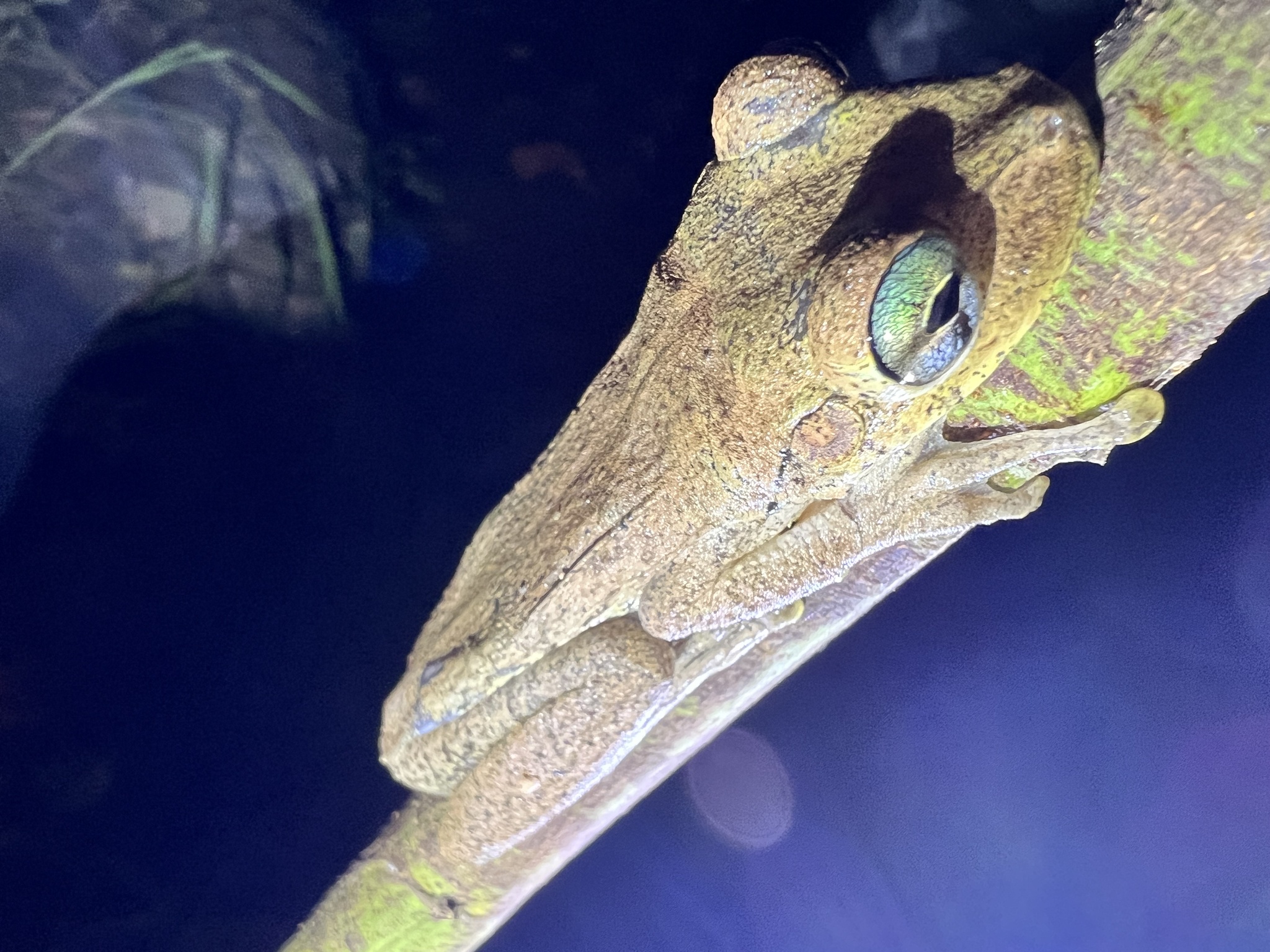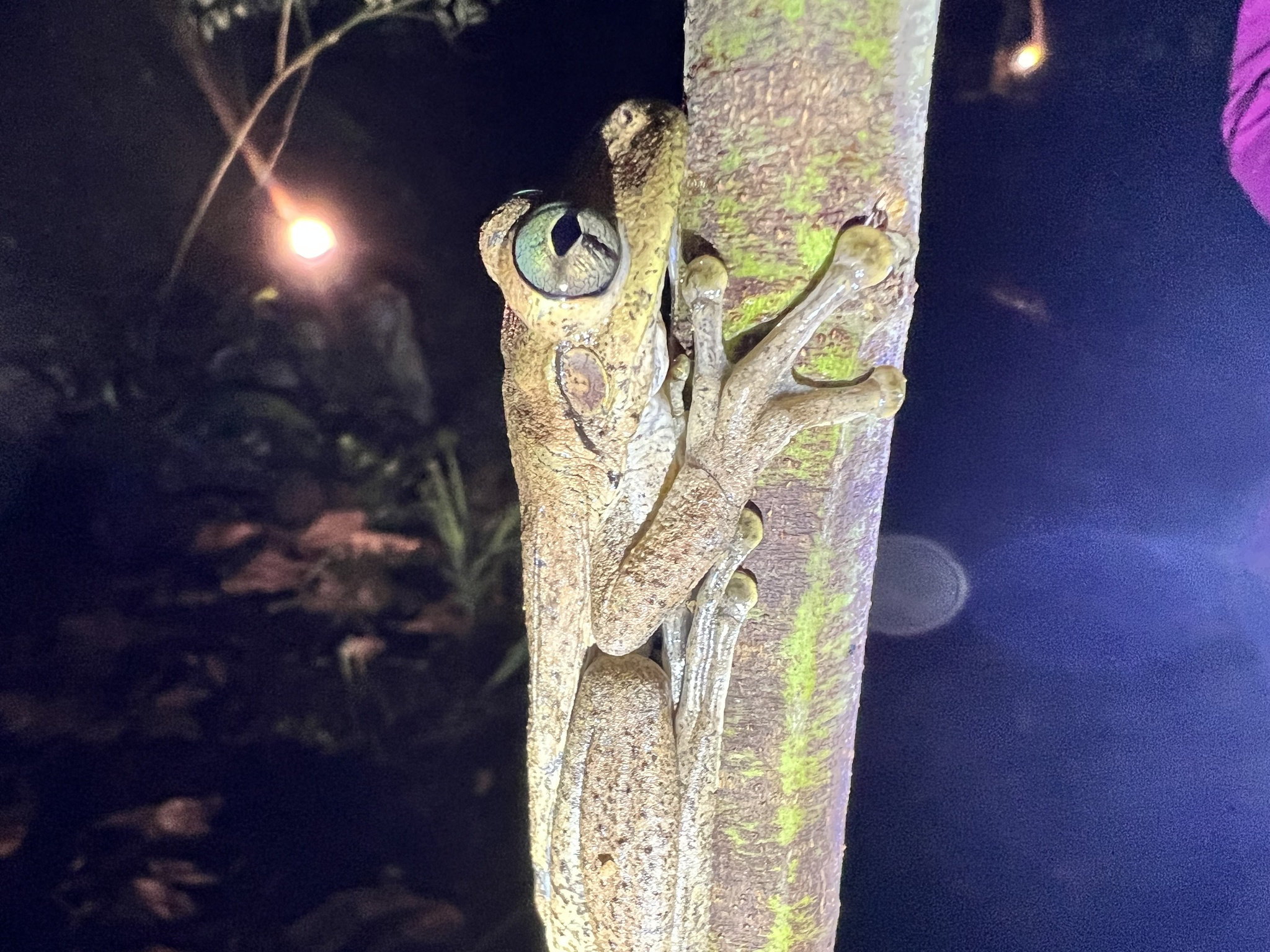
Three frogs, one loud night
The same wet December night in the Dominican Republic that produced two tree frogs produced a third, this one clinging to the outside of a window screen, calling into the darkness with the persistence of a metronome. It was the same species as its companions, but each individual had claimed a different perch: a leaf, a rain barrel, and now a screen, as if the garden had been divided into singing territories long before I arrived. The screen perch was the strangest of the three, but the frog seemed to find it perfectly normal.
This is Osteopilus dominicensis, the Hispaniolan common tree frog, a member of the tree frog family Hylidae in the order Anura. Its readiness to live around buildings and water containers is exactly why it is so common on Hispaniola, and why a single garden can host several calling males within a few meters. Each one repeats its call to hold its spot and attract a female, and the result is a layered chorus that fills the whole night.
As with its relatives, the name Osteopilus means “bone cap,” after the fused bony shield over the skull. It is a quiet anatomical quirk in a loud, common frog, the kind of detail you only notice after the third or fourth individual makes you curious enough to look closer.
Three encounters with the same species in one night could feel repetitive. Instead it felt like being given a backstage pass to the nightly routine of the island’s most vocal resident.