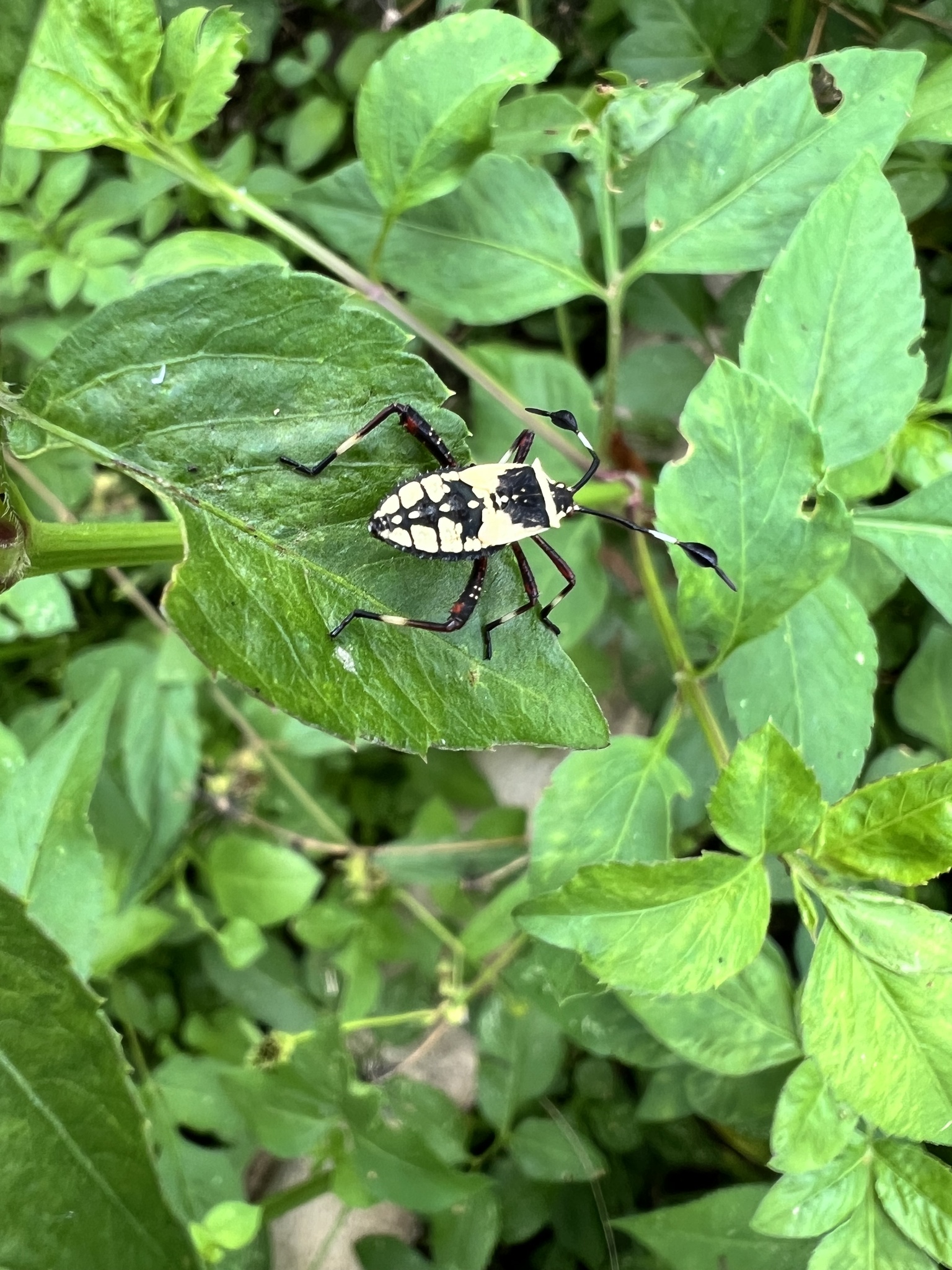
A thorn-armored bug on a warm Caribbean evening
It was late December in the Dominican Republic, and the dry-season warmth had brought the true bugs out in force. This one was sitting quietly, its gray-brown body easy to overlook against the weathered surface until I noticed the sharp spines jutting from its thorax. It did not seem to mind me leaning in for a closer look.
This is Acanthocerus cruciger, a member of the leaf-footed bug family Coreidae in the order Hemiptera. Coreids are sap-feeding bugs, most of them plant specialists, and many carry bold armor: spines, keels, or flattened expansions on their legs. Acanthocerus takes that theme to an extreme, with a pronotum armed like a small fortress.
The scientific name tells part of the story. Acanthocerus comes from Greek roots meaning “spine” and “horn,” while cruciger is Latin for “cross-bearer,” a reference to the cross-like arrangement of spines on its thorax. Like many coreids, it feeds by piercing plant stems and drinking the sap, a quiet occupation for such a heavily armored insect. The family’s nickname, leaf-footed bugs, comes from the leaf-shaped expansions many members carry on their hind legs, though not every species shows them.
Seeing it was a reminder that even an insect that spends most of its time probing plant stems can be dressed like a piece of medieval armor. It was the kind of encounter that defines Caribbean bug hunting: no chase, no drama, just a strange, well-armored creature sitting exactly where it chose. December in the Caribbean is a fine time to look for them: the dry season concentrates activity, and every hedgerow seems to hold something spiky and patient.