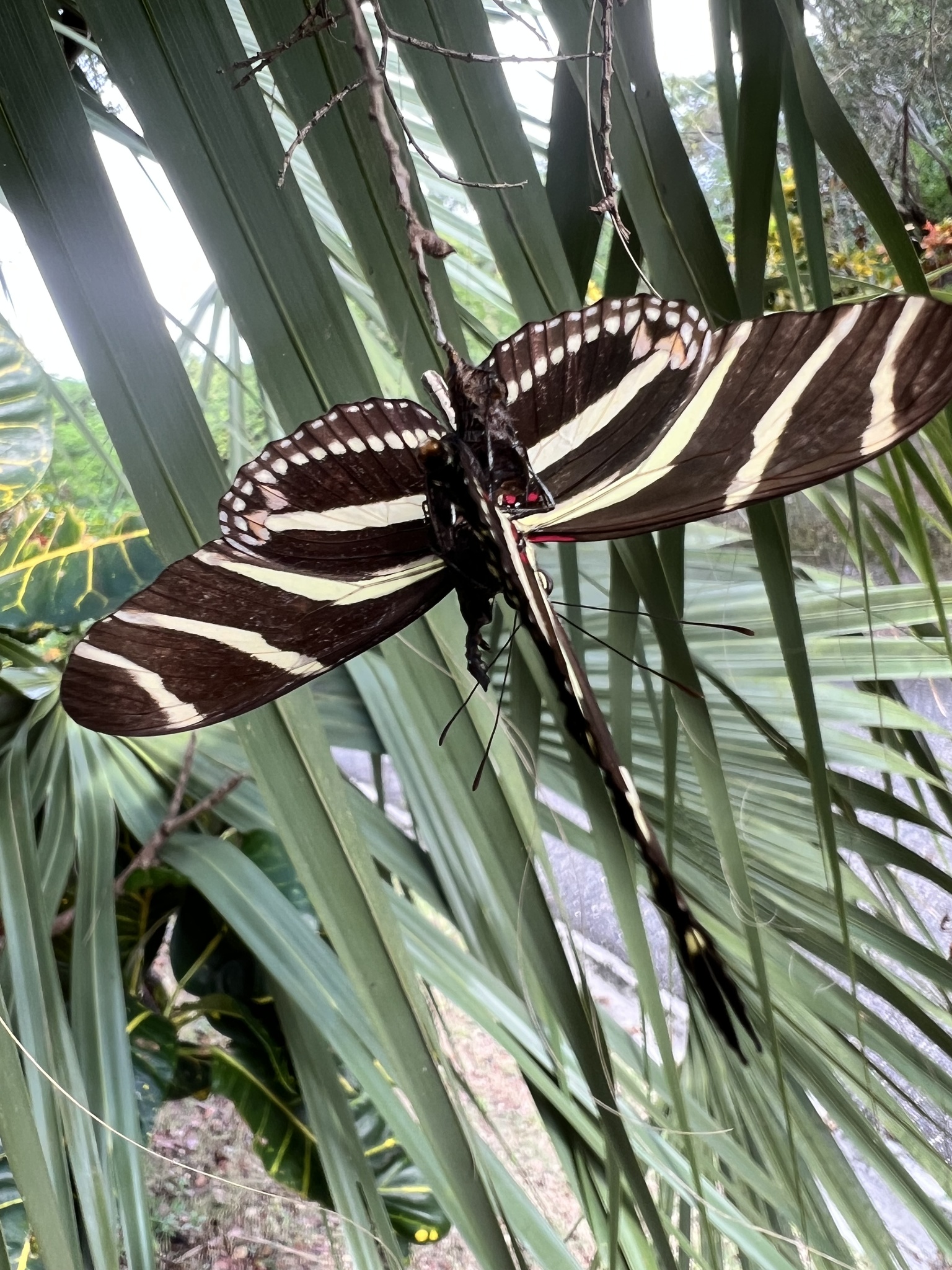
A zebra-striped butterfly drifting through the dry-season garden
In late December the Dominican Republic was warm and dry, and this butterfly drifted through the garden with the unhurried, confident flight that sets Heliconius apart. Its wings were jet black with bold pale stripes, and it stopped often, probing flowers and settling on foliage with its wings held open.
This is Heliconius charithonia churchi, the Hispaniolan Zebra Longwing, a subspecies of the zebra longwing in the brush-footed butterfly family Nymphalidae (order Lepidoptera). Its stripes break up its outline as it rests among dappled leaves, and its slow, deliberate flight makes it easy to follow by eye.
Zebra longwings have habits that make them famous among butterfly watchers. They gather in communal roosts at night, hanging together from the same branch, and they are among the very few butterflies that feed on pollen as well as nectar. Digesting pollen gives them amino acids that extend their adult lives for months, far longer than most butterflies manage. Their caterpillars feed on passion vines, whose toxic chemistry the adults seem to carry with them.
The churchi subspecies is at home on Hispaniola, where it is one of the larger and more familiar butterflies. Those long adult lives let individuals learn their home range, and Heliconius are known to return to the same flower patches and roosts day after day, flying regular routes like small commuters. Watching one work a flower, I understood why naturalists have been fascinated with this species for two centuries: it is common, confiding, and somehow looks like it knows exactly where it is going.