A meadow singer that carries an artist’s name
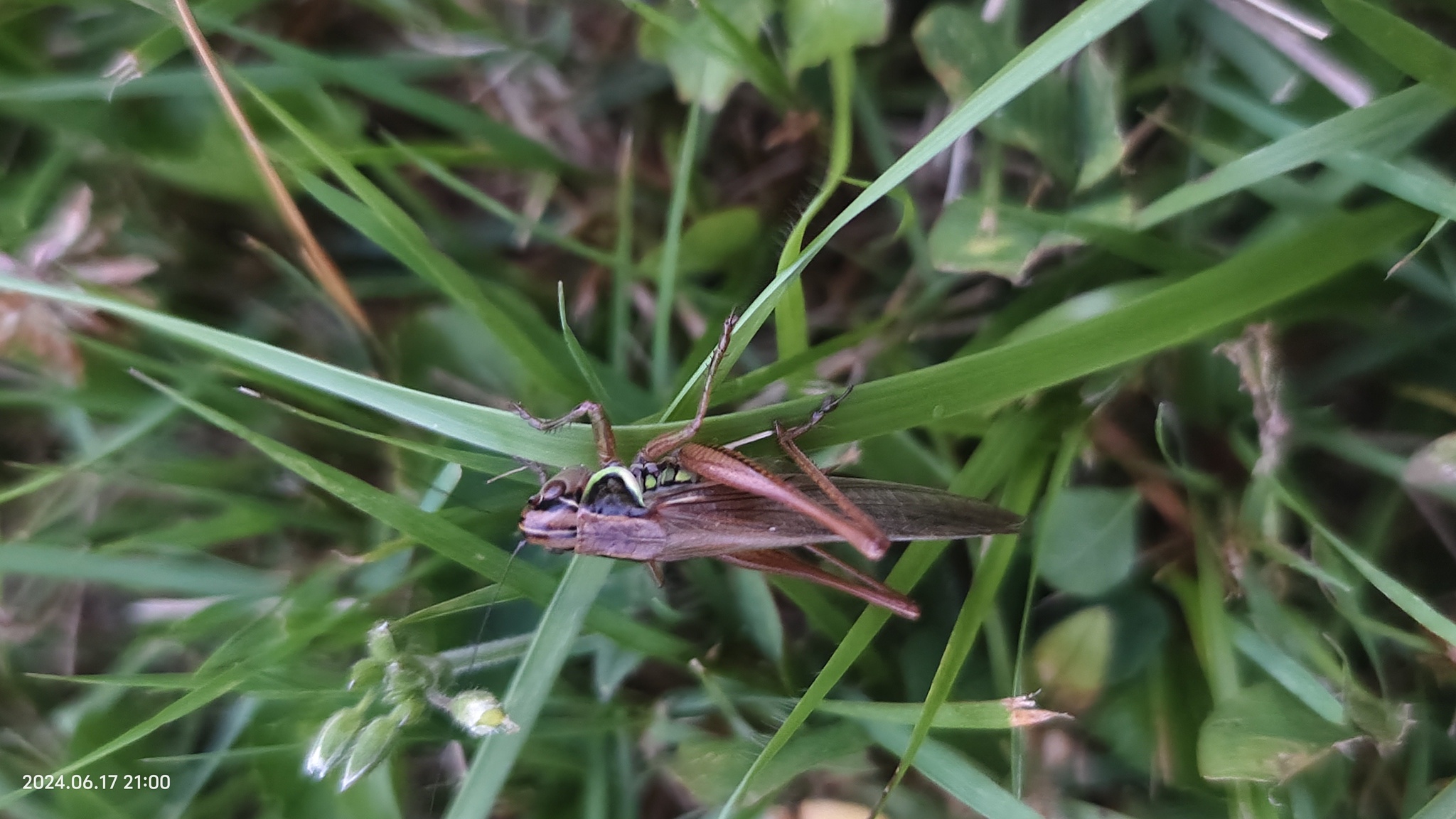
On a mid-June day in Pittsburgh, I was walking a grassy trail when the air filled with a dry, electric buzz, like a long zipper being pulled. The source was a bush-cricket perched low among the grass stems, its body neatly camouflaged in greens and browns, its antennae sweeping forward like twin feelers.
This is Roeseliana roeselii, Roesel’s bush-cricket, a member of the katydid family Tettigoniidae in the order Orthoptera. It is named after August Johann Rösel von Rosenhof, an 18th-century German painter and naturalist whose meticulous insect illustrations helped build the foundations of entomology. Both the genus and the species carry his name, a double dedication that suits a species so tied to one man’s legacy.
Roesel’s bush-cricket is a grassland specialist, singing in long, continuous buzzes that are easy to mistake for a distant machine. In its native Europe it is widespread, and it has also found a home in North America, where populations have spread through meadows and roadside grasses. Most individuals have short wings, but occasionally a long-winged form appears and takes to the air, a reminder that even stay-at-home insects keep an escape route in the family.
Standing in the grass with that buzz all around me, it felt like summer had been switched on. It was a small, plain insect doing a very good impersonation of the season, and it stayed with me for one reason: I had spent years hearing its song before I finally met the singer.