A beetle that has spent generations pretending to be an ant
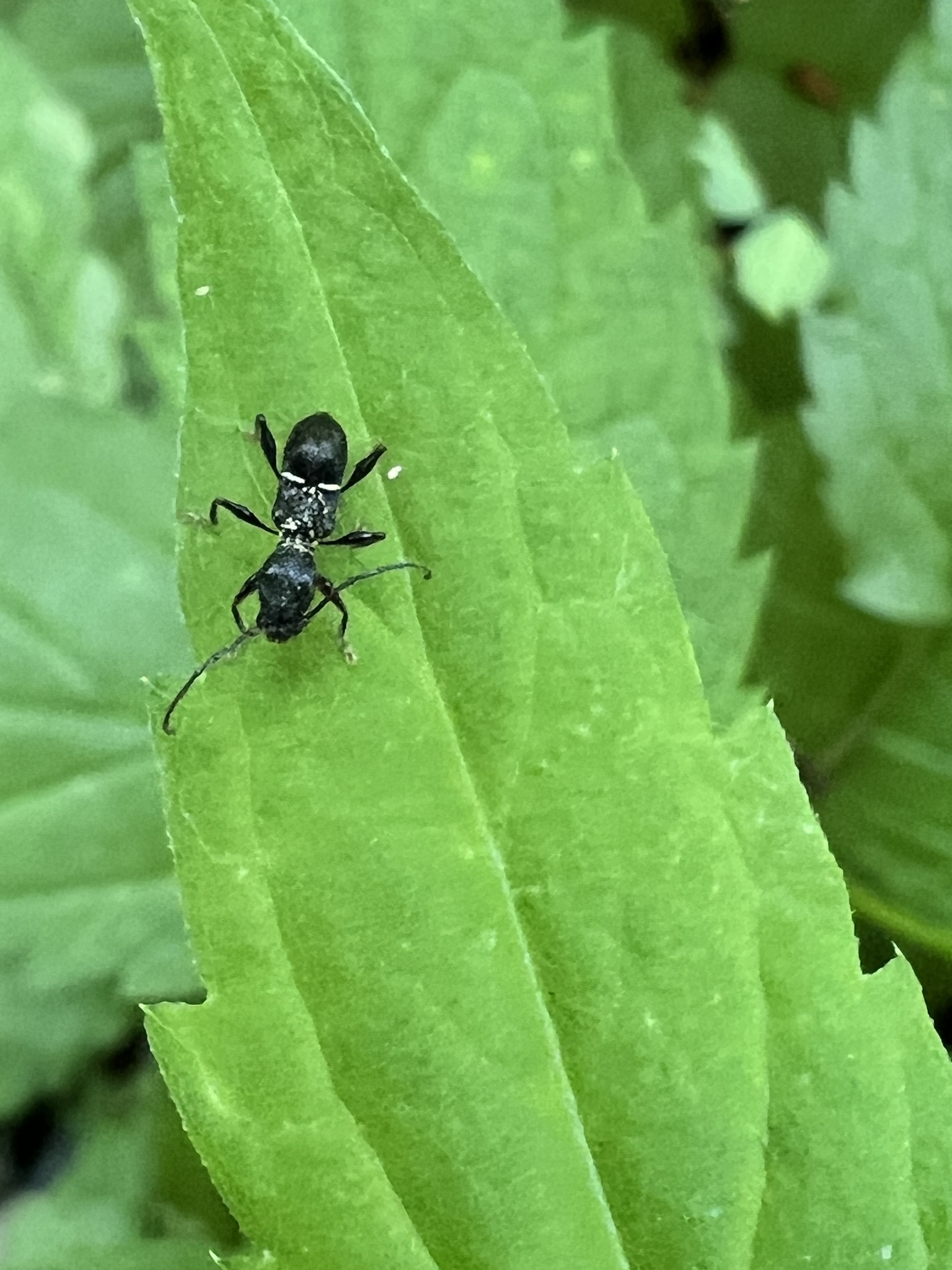
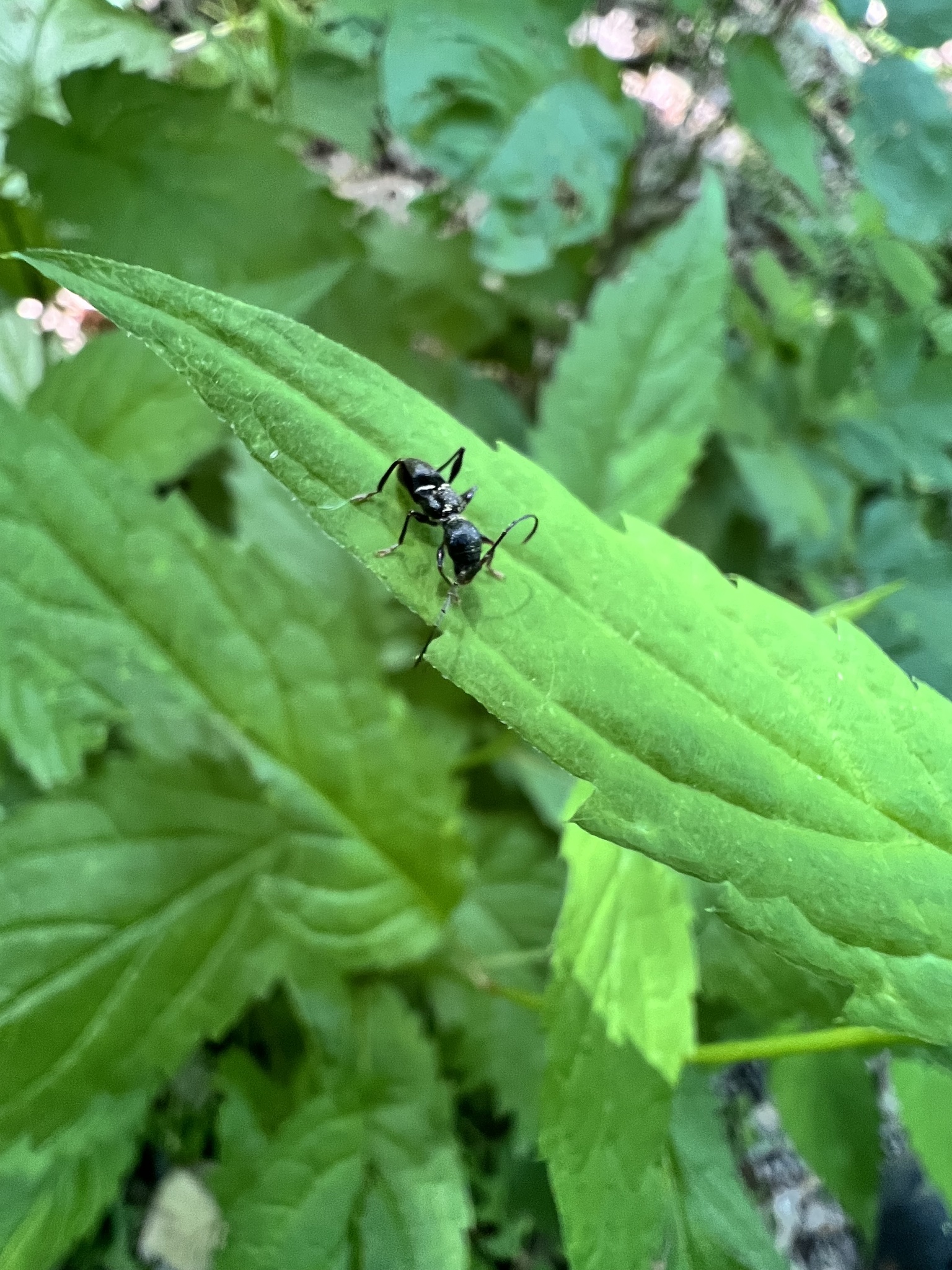
On a June morning in Pittsburgh, this little beetle was walking across the surface with quick, jerky steps, and I nearly dismissed it as an ant. Then it paused and the true shape came into focus: a compact black body with clean white markings and the deliberate movements of a beetle that wants you to look elsewhere.
This is Euderces picipes, a small longhorned beetle in the family Cerambycidae (order Coleoptera). Unlike the giant longhorns people picture, Euderces are tiny, and many species in the genus are famous for mimicking ants. Everything about this one’s gait seemed tuned to that disguise, right down to the way it held its antennae.
The mimicry likely offers real protection: ants are armed, aggressive, and unpalatable to many predators, so looking like one is a good way to be left alone. Longhorned beetles are wood-borers at heart, their larvae chewing through dead branches and timber, while the adults of species like this one are often found on flowers, where the ant act plays out in broad daylight.
I followed it for a few steps, and sure enough, it moved like a worker ant heading home, pausing, zigzagging, then striding on again. It worked its way across the surface with the single-mindedness of an insect with somewhere to be, which is to say, nowhere in particular. Close up, though, the beetle tells the truth: hard elytra, a tucked-in head, and a face that no ant ever had. Sometimes the best disguises are the ones you have to look twice to see through.