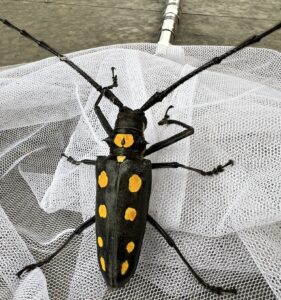
A giant longhorn that looked like a piece of polished wood
It was resting near the forest edge in Medog, and at first I took it for a broken twig. Then the antennae moved, sweeping slowly, each segment longer than my finger joint. It was a giant longhorned beetle, dark brown and glossy, with a heavy body and short, powerful legs.
This is Batocera roylii, a member of the longhorned beetle family Cerambycidae in the order Coleoptera. Batocera are among the largest longhorns of Asia, and their antennae can reach well beyond the body, swinging through the air like twin probes. The pronotum carries sharp spines at the sides, and the whole insect looks built for a life of pushing through bark and wood.
Longhorned beetles take their name from those antennae, but their real business is timber. The larvae bore deep into the trunks of living and fallen trees, spending months or years chewing through wood before pupating. Adults are short-lived by comparison, feeding on sap and bark, and their heavy jaws are more for defense and woodwork than for eating; the damage they do to timber is the work of the larvae, not the parents.
I moved in for a photo, and it responded the way giant beetles do: it braced itself, tucked its legs, and waited. There is something reassuring about an insect that big and slow. It has had millions of years to perfect the strategy of simply being too solid to hurry, and it allowed a few photographs before turning away with the slow dignity of something that has never been in a rush.
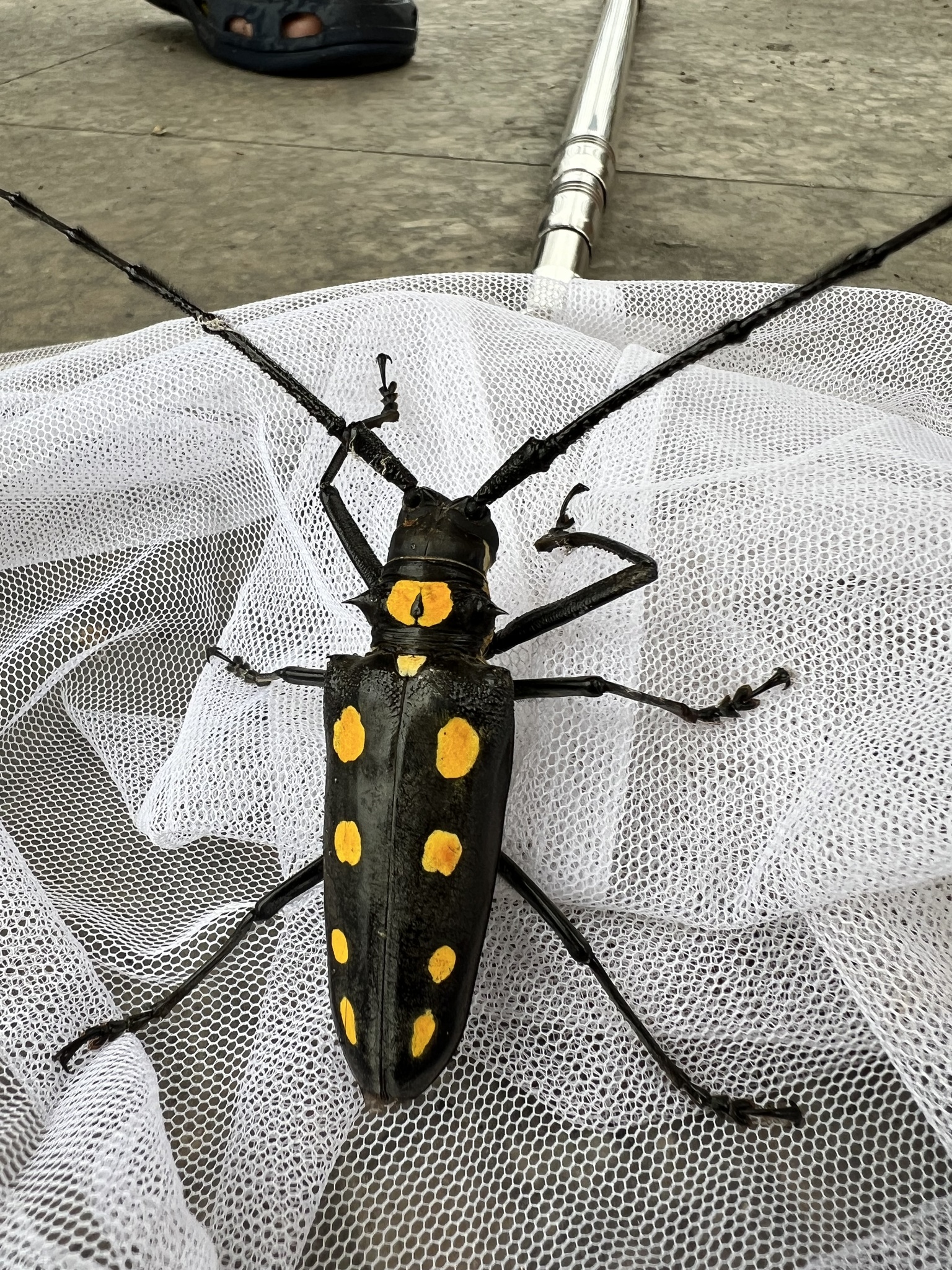
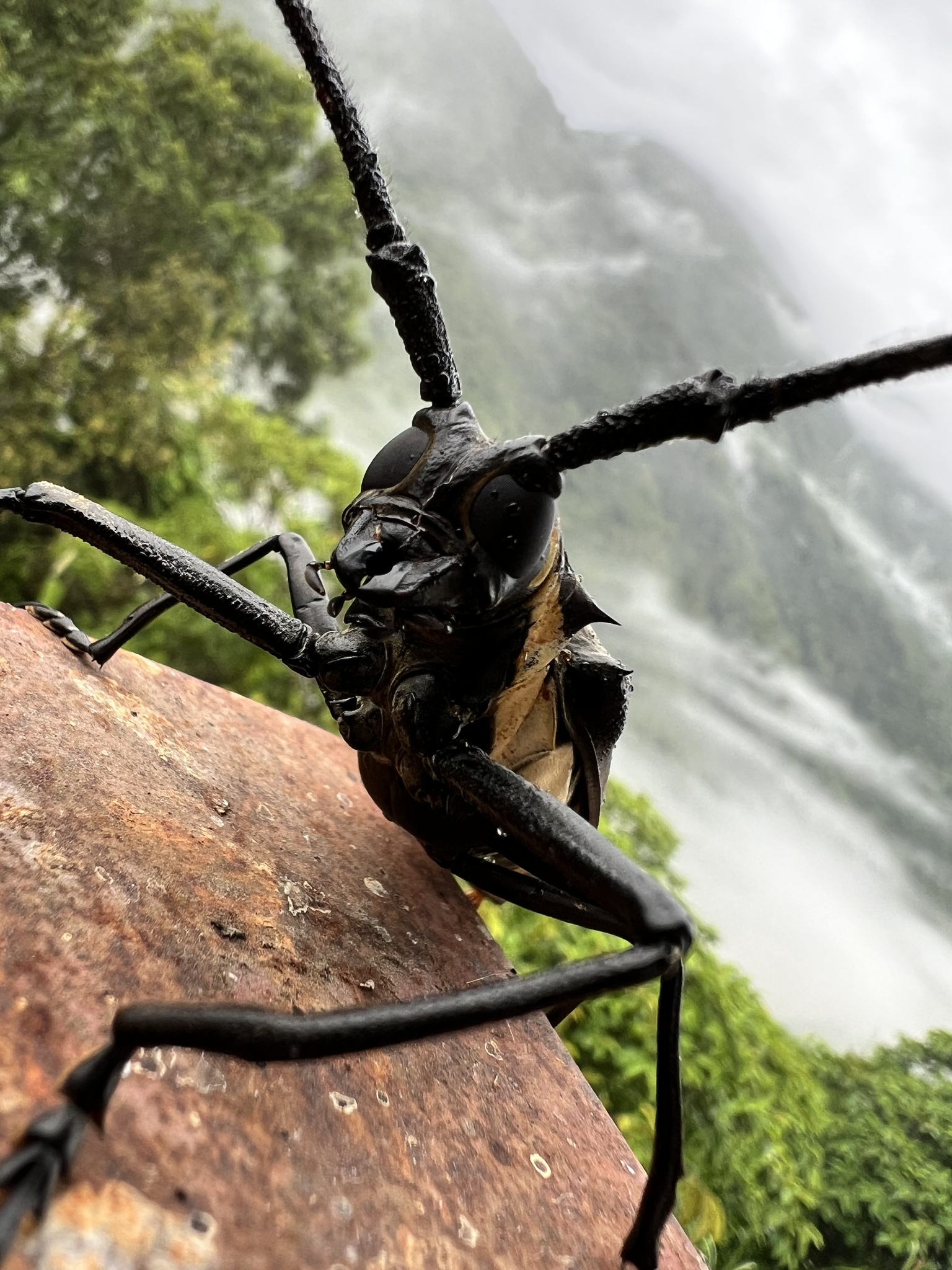
Great find in Medog — that camouflage as a broken twig is convincing. Do you happen to know how long the larvae of Batocera roylii take to develop before pupating, and which host trees they use up there?
On development, the honest answer is that it runs long. Big Batocera larvae bore through the trunk for a year or more, often stretching to two years in cooler or seasonal forests, and they pupate in a chamber in the wood rather than dropping to the soil. The adults then live only a few months, feeding on sap and bark. That is the general picture for the genus.
On hosts, I cannot give you a published list for the Medog population, so treat this as the genus pattern rather than a local record. Batocera species are broadleaf generalists and the recorded hosts lean heavily on figs, mangoes, rubber and other soft-wooded trees and vines. In that forest I would expect the same kind of broadleaf hosts, but I do not know of anyone who has reared this species out of a Medog tree.