A cone-headed katydid in the wet Himalayan dark
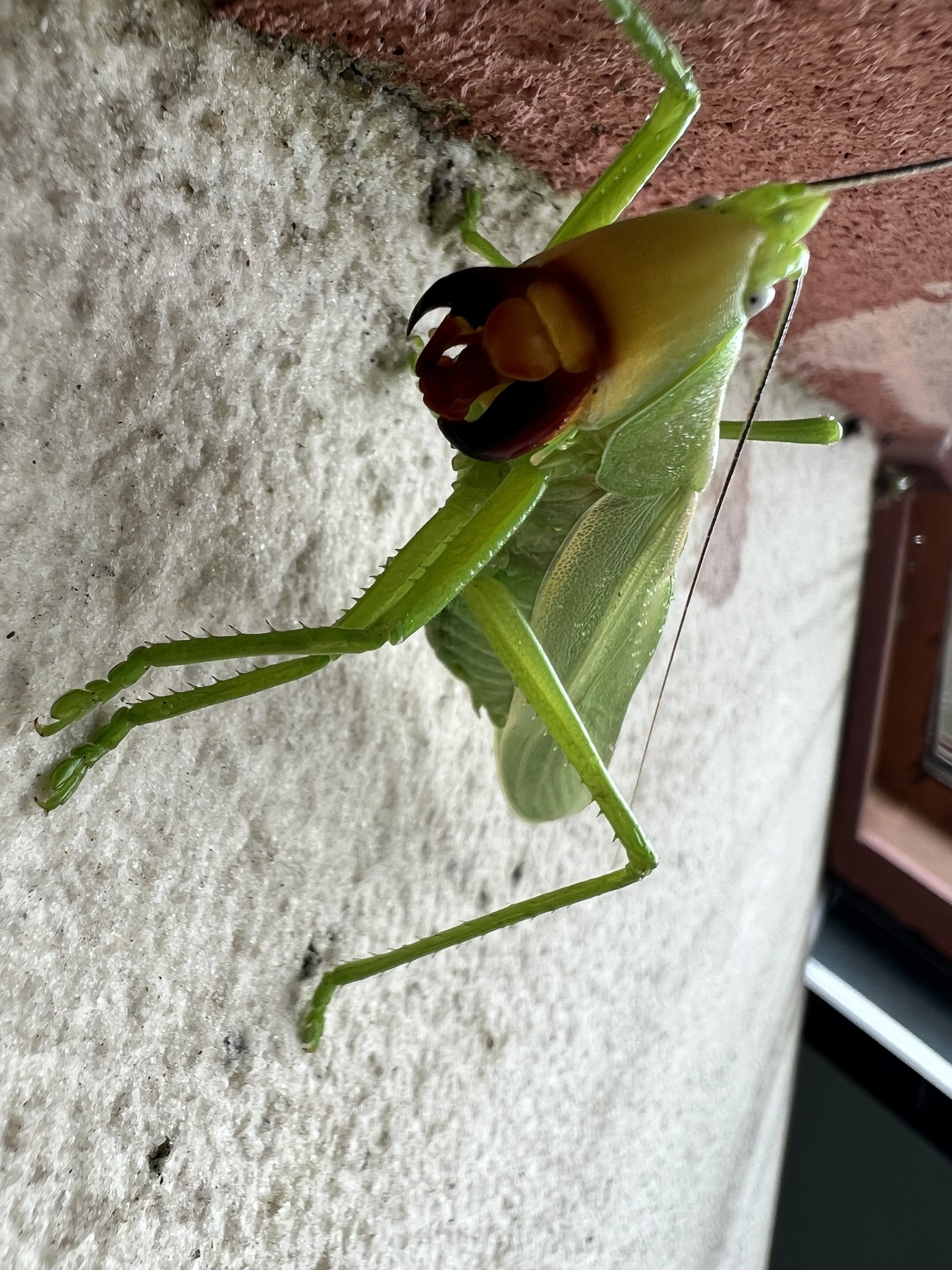
On an August night in Medog, the forest was loud with katydids, and this one had come to the light, a big green insect with wings that ran most of the length of its body. The most distinctive feature was its head, which tapered into a sharp cone between the antennae, giving it a streamlined, almost aerodynamic look.
This is Pseudorhynchus nobilis, a cone-headed katydid in the family Tettigoniidae of the order Orthoptera. Coneheads get their name from that projecting fastigium, the pointed extension of the head between the antennae. In Pseudorhynchus the cone is long and sharp, and the body is long and slender, an adaptation for life among grass stems and broad leaves.
The species name nobilis means noble, a fitting title for one of the larger katydids of the region. Katydids are famous for their songs, produced by rubbing the forewings together, and in the Medog night the air was thick with these calls, each species singing its own frequency in the chorus. Coneheads tend to be fast, active singers, and their buzzing notes ride above the general din. Katydids hear with organs on their front legs, just below the knee, so the whole chorus is felt as much as heard.
It posed for a moment on the light, then launched itself into the dark with a flick of its long wings. In the morning it would be gone, and the forest would sound different without it, though I could not have picked its voice out of the chorus if I tried. I was left standing in the rain, doing exactly that.