A coil in the grass that kept its stripes
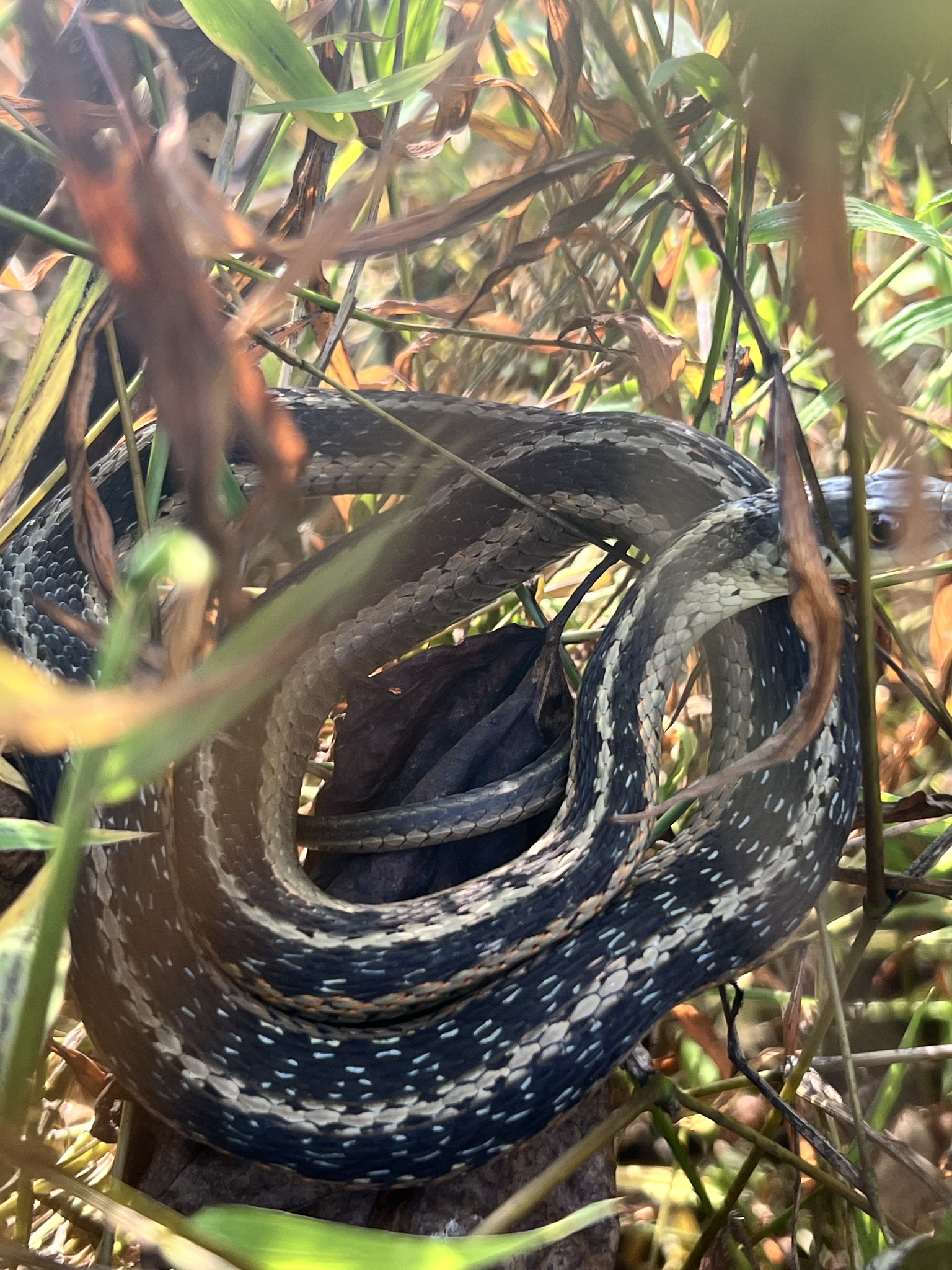
On September 22 in Pittsburgh, a dark shape in the dry grass at the edge of a field resolved itself into a coiled snake. It lay among the browned stems and fallen leaves, its body showing lighter markings and stripes along its length, basking in the last of the autumn warmth. It held still as a root, and by the time the camera focused, it had decided the game was over and was gone into the deeper grass.
This is a common garter snake, Thamnophis sirtalis, a member of the family Colubridae in the order Squamata. It is one of the most widespread snakes in North America, found from Alaska and Canada across most of the United States and down into Mexico. The species identification now stands on community consensus: the pale stripes running along the body, a classic garter snake feature, are clear enough in the photos to name it.
Garter snakes are harmless to people, carrying only a mild saliva that does nothing to us. Their back bears three longitudinal stripes, usually yellowish or greenish, over a darker ground, and their scales are keeled, which gives the body a slightly rough texture. They are live-bearing: females give birth to a dozen or more young in late summer rather than laying eggs. In western Pennsylvania they are common in fields and meadows, feeding on earthworms, small amphibians and the occasional fish or rodent.
September is a good month for garter snakes here: the days are still warm, and they bask in sunny spots to build up reserves before winter drives them into communal dens below the frost line. Not every encounter needs a long study. Sometimes a snake in the grass is simply a snake in the grass, a reminder that the field is shared with creatures that move quietly and leave no trace, and that patience is the price of a closer look.