A beetle that buries the dead and cares for its young
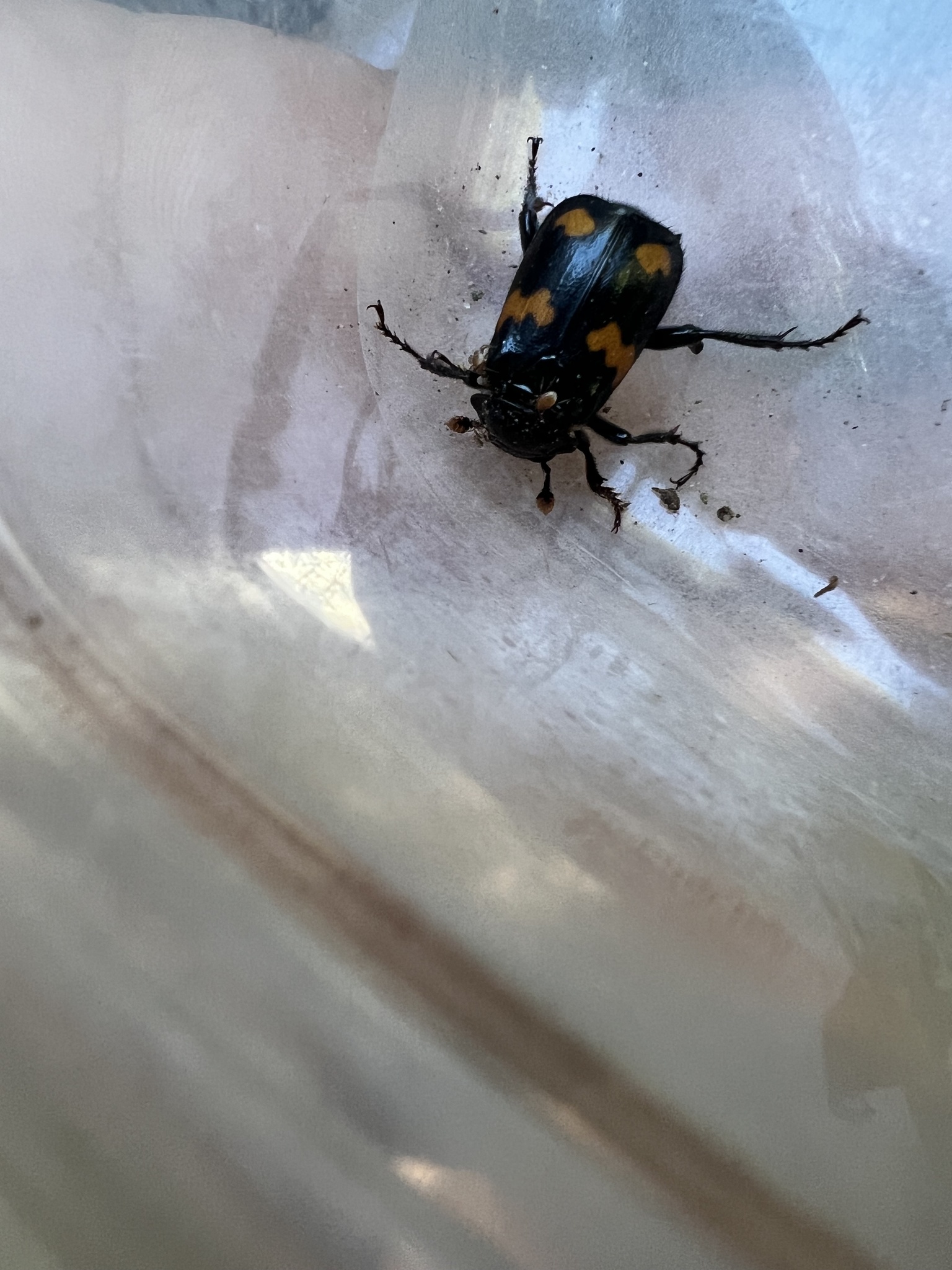
On the same late-July walk in Rhode Island, a flash of color caught my eye on the trail ahead. A stocky beetle was marching across the dirt with real purpose, pausing just long enough for a photograph before it went on its way, clearly a creature with a schedule.
It was Nicrophorus orbicollis, the roundneck sexton beetle, a member of the family Staphylinidae in the order Coleoptera. These are the burying beetles, famous for one of the most elaborate family lives in the insect world. A pair will take a small carcass, a mouse or a bird, dig it into the soil, and shape it into a brood ball. The female lays her eggs nearby, and both parents stay to feed the growing larvae mouth to mouth. That level of parental care is genuinely rare among insects.
The common name comes from the beetle’s distinctly rounded pronotum, orbicollis meaning “round neck.” I have also been reading about the tiny phoretic mites that hitch rides on burying beetles, and one recent study found that even a full backpack of these passengers does not influence mate choice. The mites get a free ride, and the beetles seem not to mind at all.
Sexton, in the old sense, is the church officer who dug graves, and the name fits a beetle whose profession is burial. Given the choice of job descriptions, I would rather be the sexton than the mourner, and this beetle does its work with quiet competence.