A flat beetle with the forest’s dirtiest job
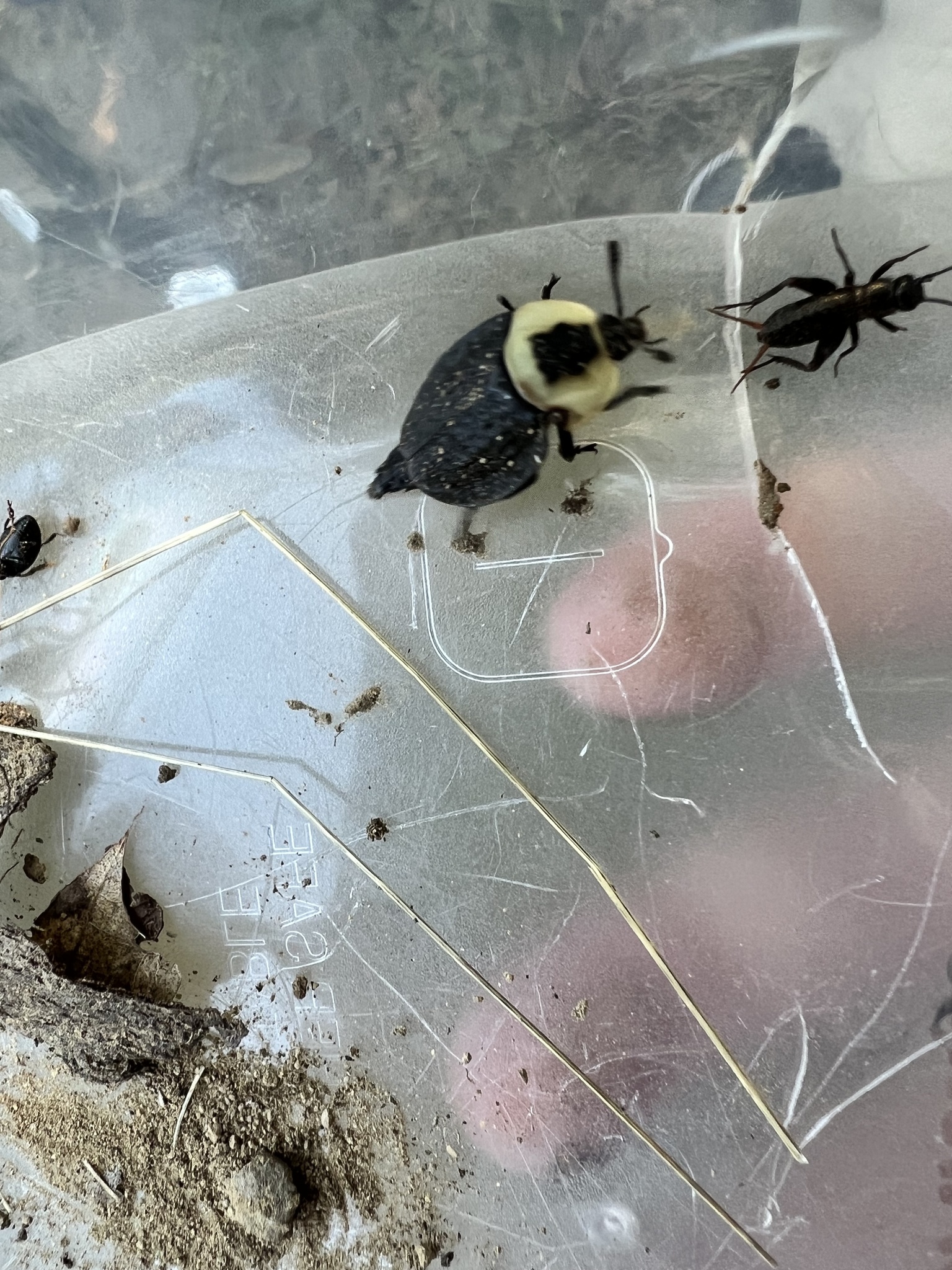
Late July in Rhode Island, and the woods are deep in their summer recycling program. On a walk through the leaf litter on July 22, I turned over a piece of rotten wood and found a broad, flattened beetle hurrying across the duff. It paid me no attention and simply kept moving, as if it had somewhere important to be, which, in a way, it did. The woods were warm and damp that afternoon, and everything smelled of summer: soil, sap, and something faintly sweet that I did not care to investigate too closely.
It was Necrophila americana, the American carrion beetle, a member of the family Staphylinidae in the order Coleoptera. Despite the grim common name, adults turn up in all sorts of decay: rotting fungi, fermenting sap, and of course carcasses, where they join a busy crew of flies and beetles breaking down what nothing else will touch.
The flattened, shield-like body is no accident. It lets the beetle slip under and around decaying material, and the larvae are equally at home in the mess, scavenging side by side with fly maggots until the job is done. In a healthy forest this quiet work keeps nutrients moving back into the soil, and the whole ecosystem quietly depends on it. Without this workforce, a dead animal in the woods would linger for a long time, and the forest floor would slowly bury itself in leftovers.
The genus name tells the story: nekros, the Greek word for a corpse, and philein, to love. A lover of the dead, though in the most wholesome sense imaginable. Every forest needs a cleanup crew, and few wear the uniform as honestly as this one.