A shrub that paints its own seeds red
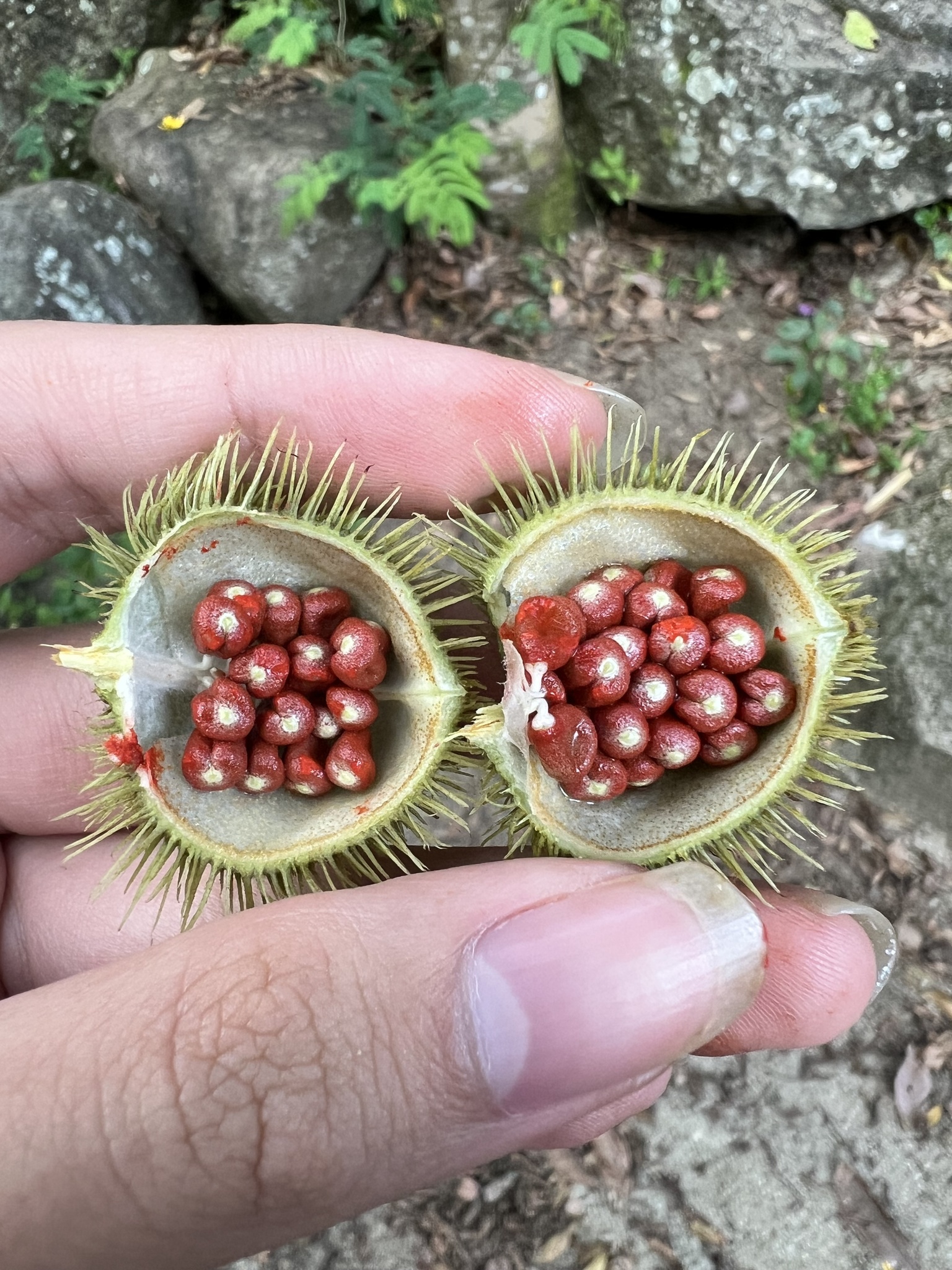
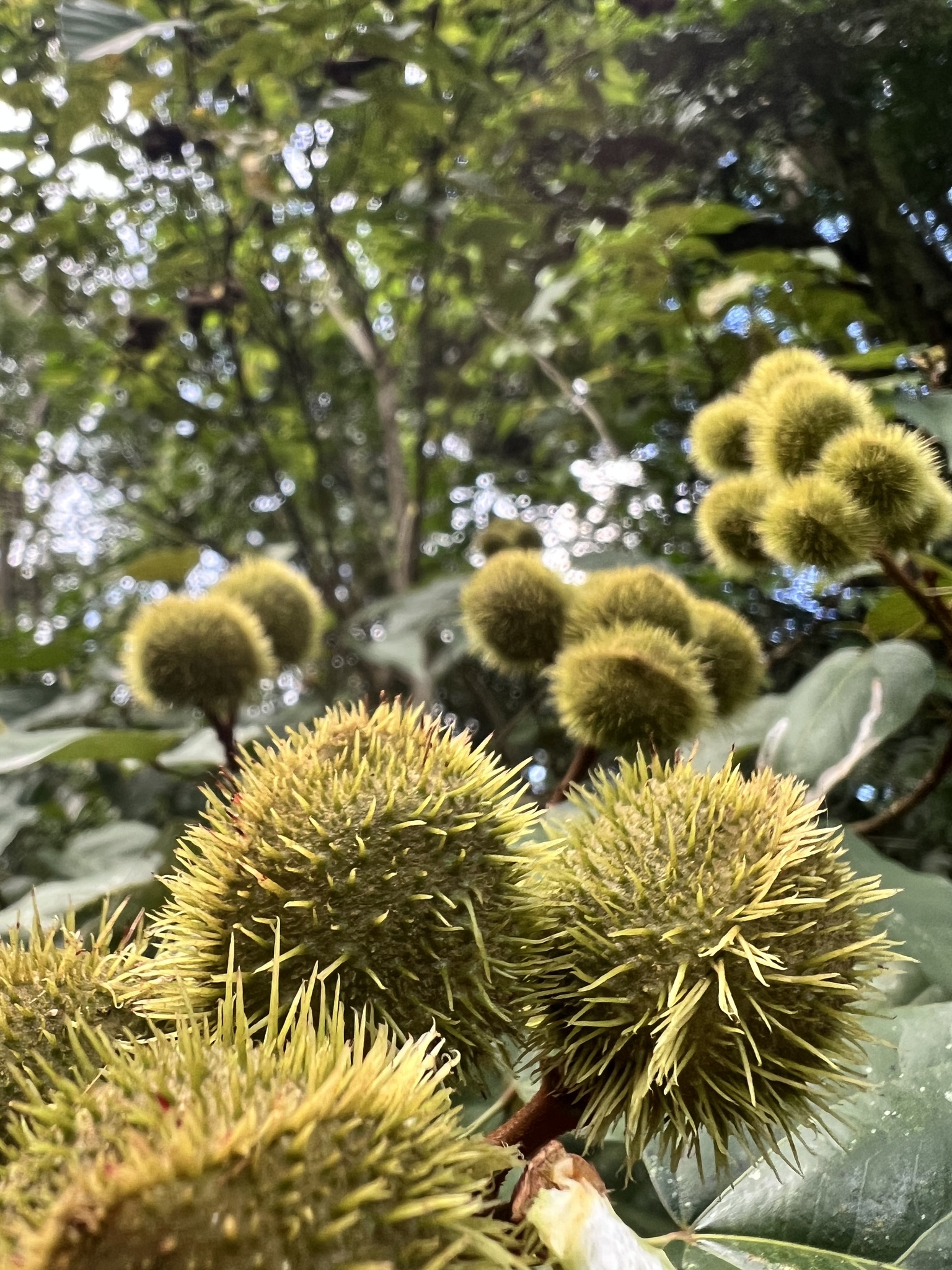
In early January, on a sunny day in the Dominican Republic, I stopped in front of a shrub I had passed many times without really looking. The broad, glossy leaves were nothing special, but the round fruits were impossible to ignore, covered in stiff green bristles like tiny sea urchins. One had already split open, and inside were clusters of seeds wrapped in vivid orange-red pulp.
This is Bixa orellana, the lipstick tree, also called achiote. It belongs to the small family Bixaceae, in the order Malvales. The shrub can grow several meters tall if left alone, and its bristly pods ripen from green to a deep reddish brown. Native to the region between Mexico and northern South America, it is now grown in many countries worldwide, and on Caribbean islands like Hispaniola it is a familiar garden plant.
The red pulp is the whole point. It is the source of annatto, a natural dye that has colored food for centuries, from cheese and butter to rice and stews, and it still tints cosmetics today, which is how the tree earned its common name. Indigenous peoples of the Americas used it long before that, painting their skin with it for ceremonies and for protection from the sun.
The species name honors Francisco de Orellana, the Spanish explorer of the Amazon, who surely never guessed that a humble shrub would carry his name into kitchens around the world. Looking at the opened pod, I decided the lipstick tree deserves more than a passing glance.