A gecko on night watch
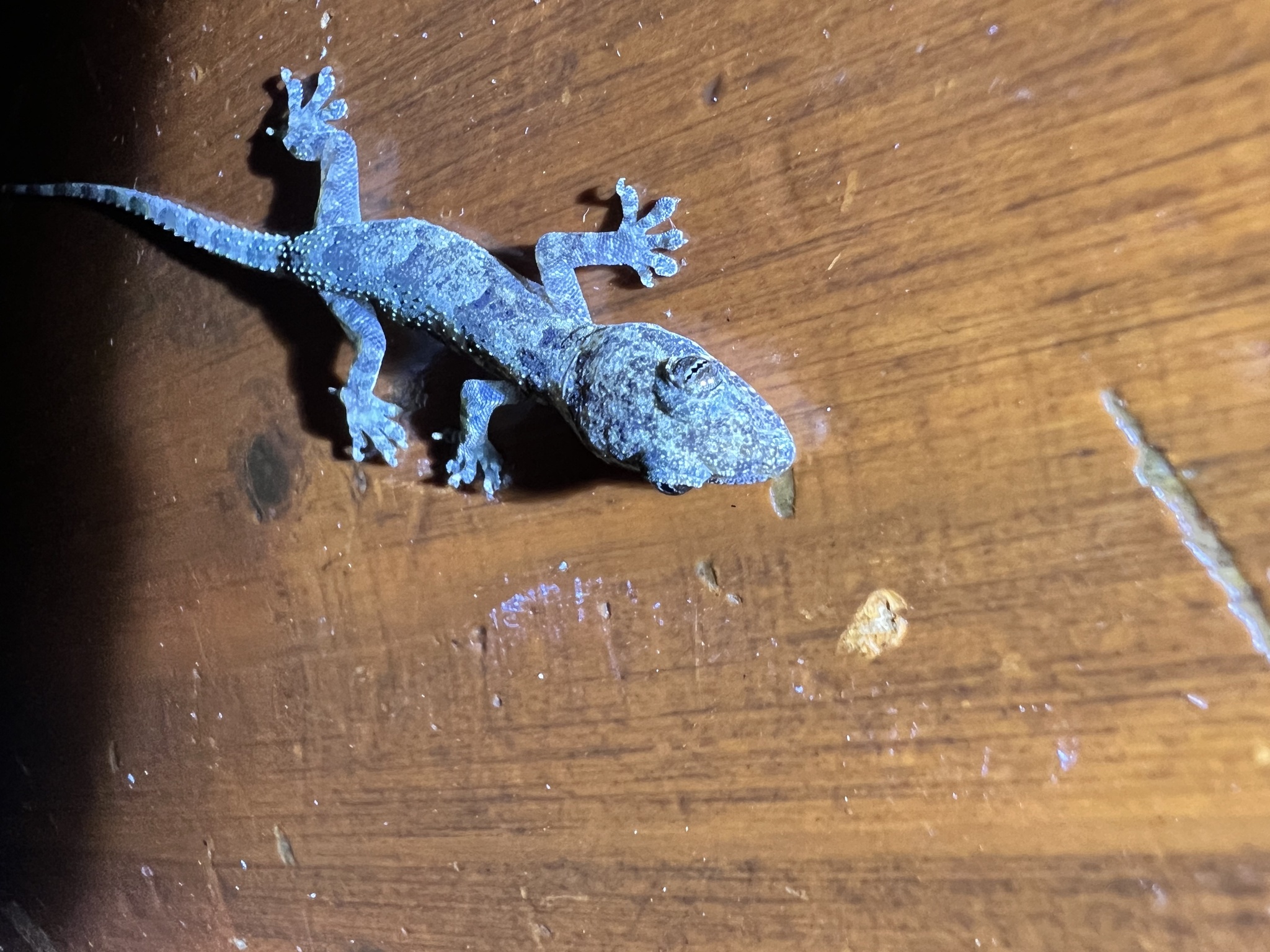
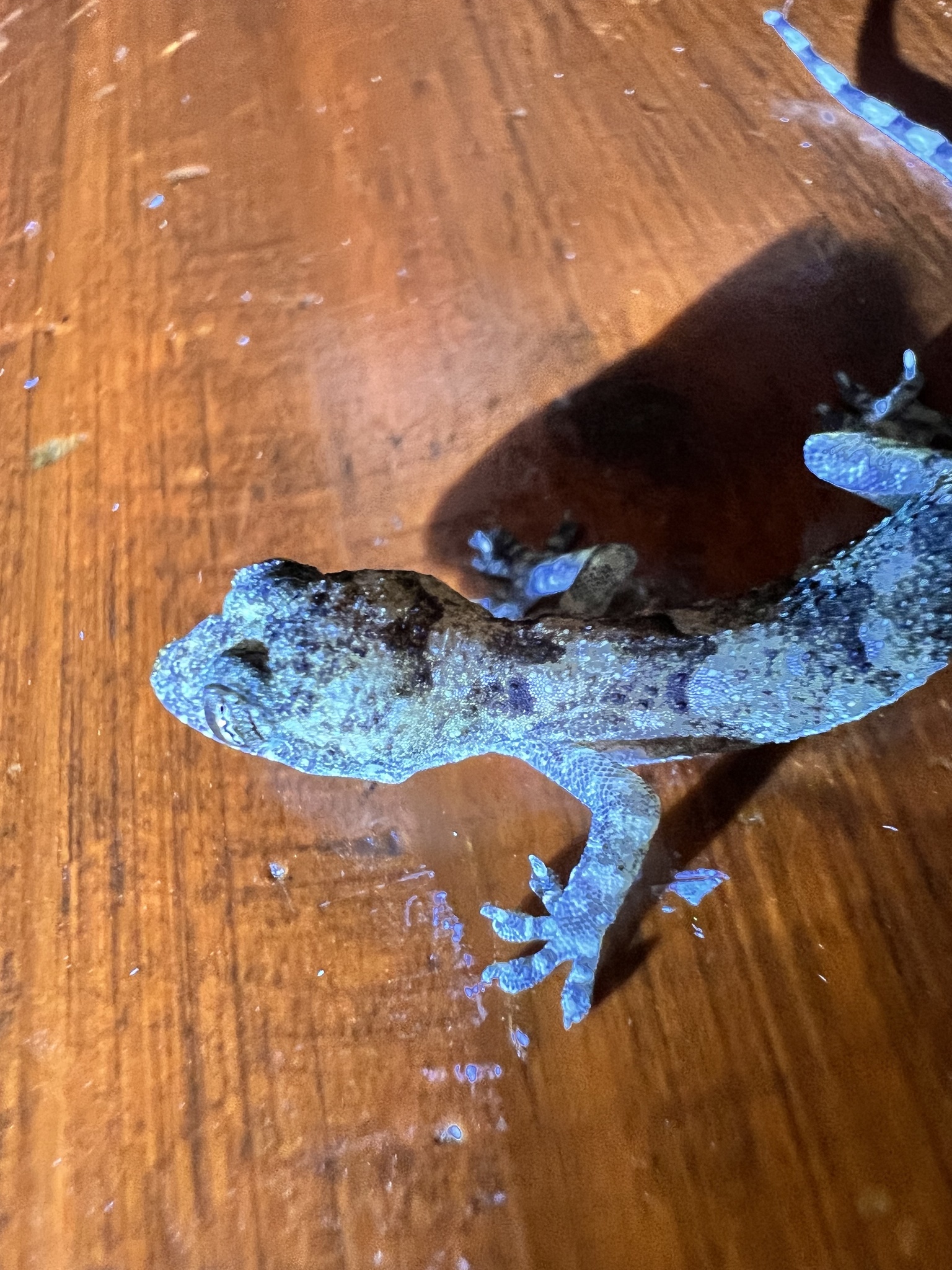
On a January night in the Dominican Republic, I stepped out onto the porch and found a small gecko already on duty. It was parked on the wall beside the light, and every time a moth wobbled into the glow, the gecko made a quick, precise move and the moth was gone.
This is Hemidactylus mabouia, the tropical house gecko, a member of the gecko family Gekkonidae. It is one of the most widely distributed geckos on the planet, and most of that range has been stitched together by shipping: the species is so comfortable around humans that it has hitchhiked across the tropics in cargo.
Like other geckos, it is nocturnal, and its toes carry rows of microscopic adhesive lamellae that let it walk up smooth walls and even across ceilings. The eyes are large and lidless, and the gecko licks them clean with its tongue from time to time, a small routine I could watch for hours. When it calls, usually at night, it makes a series of soft chirps. Its diet of moths, mosquitoes, and other insects around lights makes it a welcome houseguest, and many people in the Caribbean simply let them come and go.
The species name is thought to trace back to a South American indigenous word, and the gecko has repaid the borrowing by colonizing half the world. It has no interest in humans; it is only here for the bugs, which makes it about the most honest roommate a tropical porch can have.