A patient hunter with spiny legs
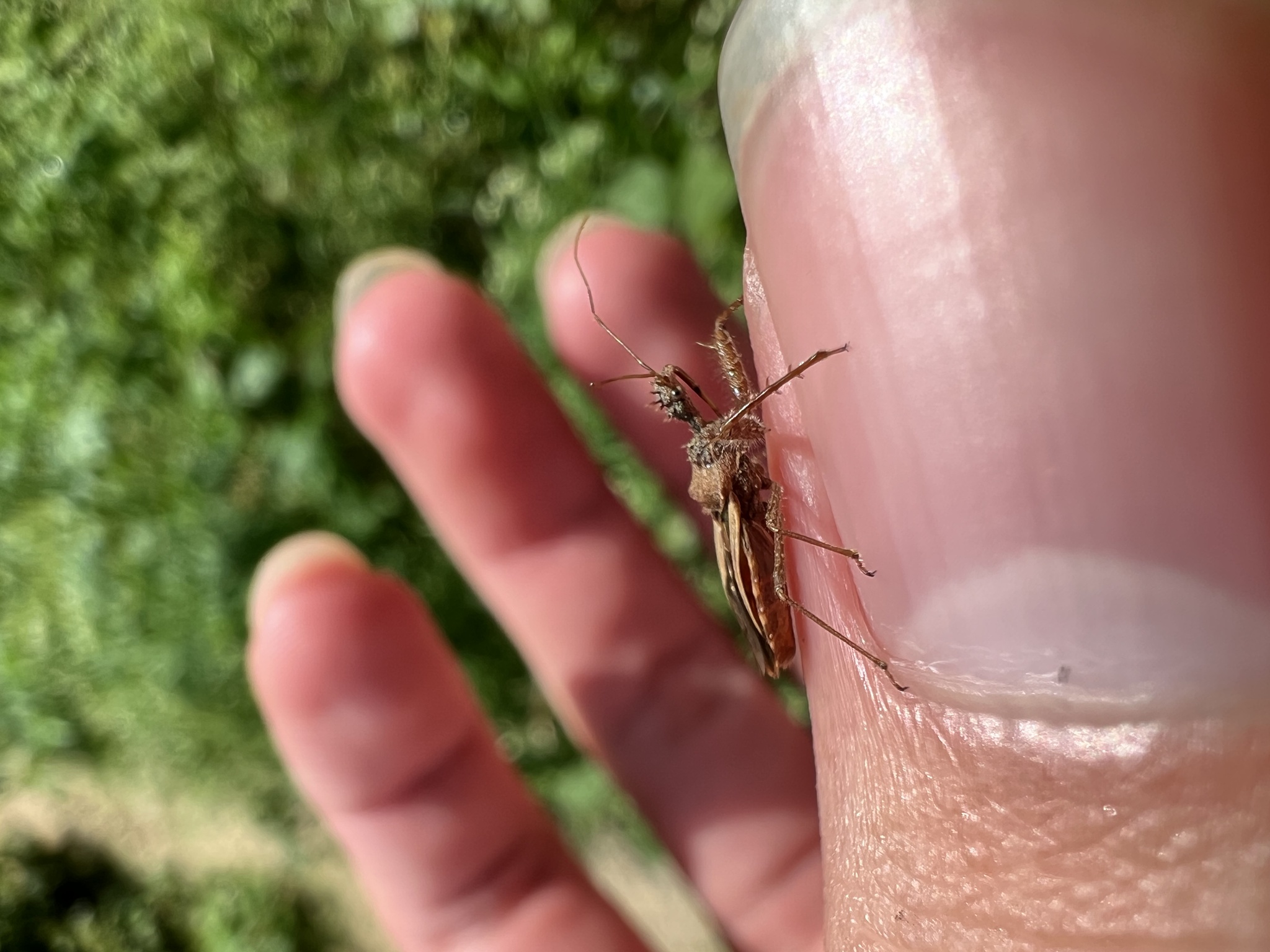
On Christmas Eve in the Dominican Republic, a small, angular insect was sitting on a plant stem near the house, holding so still that I nearly walked past it. Its legs were long and spiny, its body narrow and brownish, and its head carried a pair of eyes that swiveled to track me as I leaned in. It was an assassin bug, and it was doing the one thing assassin bugs do best: waiting.
This is Sinea confusa, a member of the assassin bug family Reduviidae in the order Hemiptera. Reduviids are predators among true bugs, and this one hunts the small insects that wander through the vegetation around gardens. It does not chase. It sits, often on stems and leaves, with its front legs ready, and when prey comes within reach it stabs with a sharp, piercing mouthpart called a rostrum, injecting digestive enzymes that liquefy the victim’s insides. Then it drinks the result through the same straw-like tool.
The spiny legs are part of the equipment, helping it grip struggling prey and hold on. As ambush hunters, these bugs are some of the most effective small predators in the garden, quietly keeping populations of other insects in check while asking for nothing in return.
The species name confusa means “confused,” and it likely reflects how easily this species has been mixed up with its close relatives over the years. A fittingly humble name for a hunter whose whole life is about looking like something harmless until it is too late.