A stick-thin mantis of the Caribbean
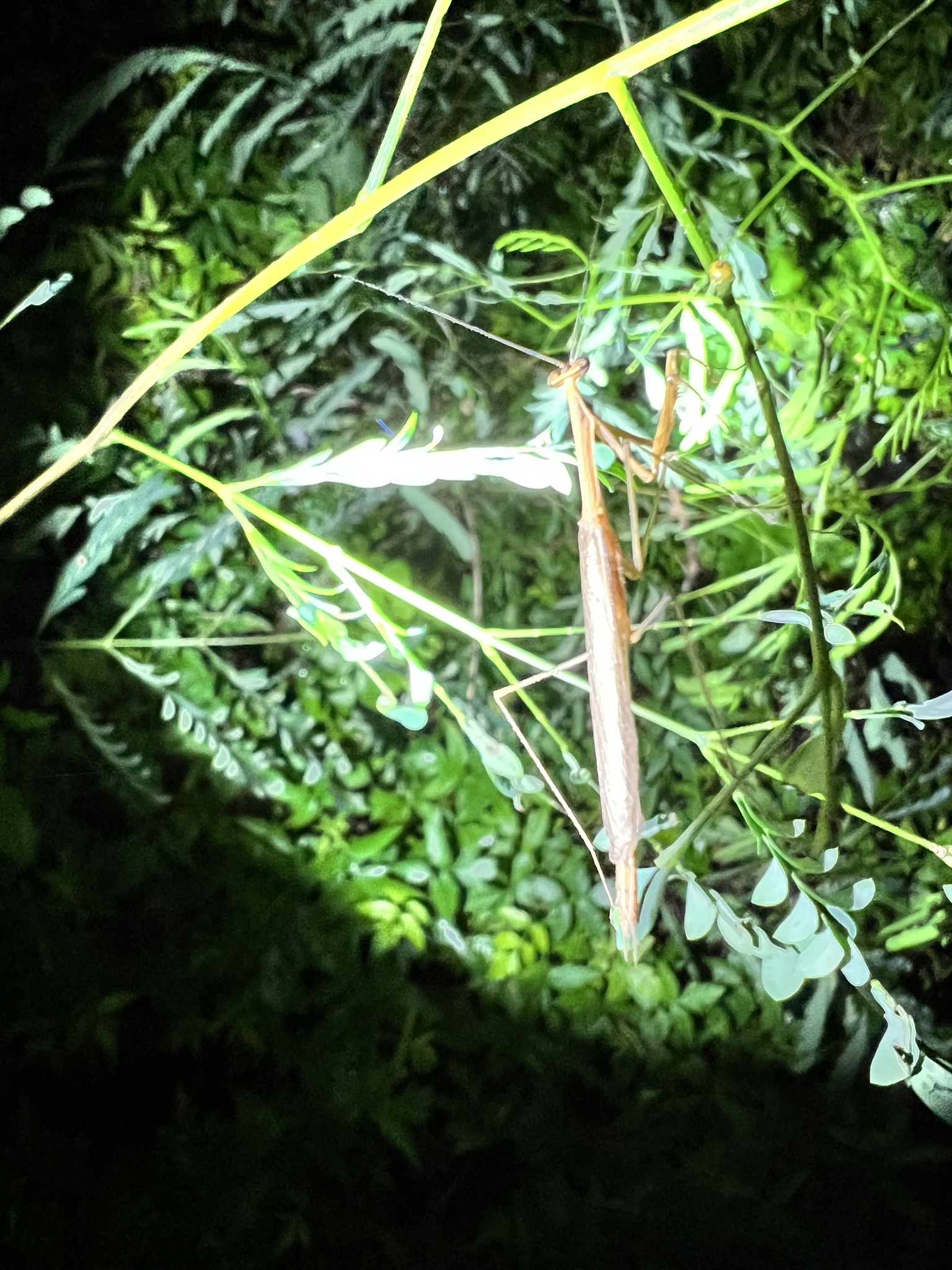
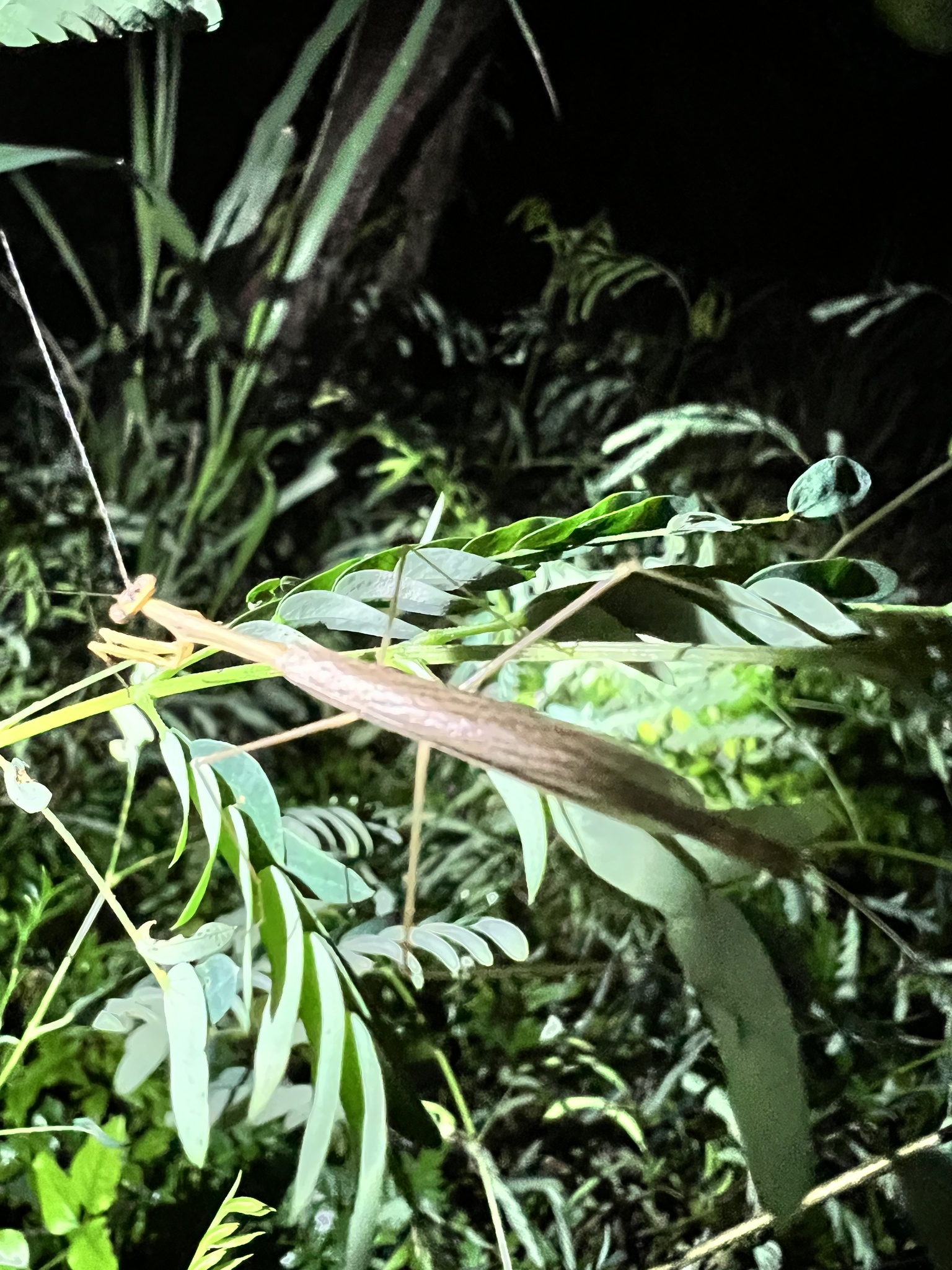
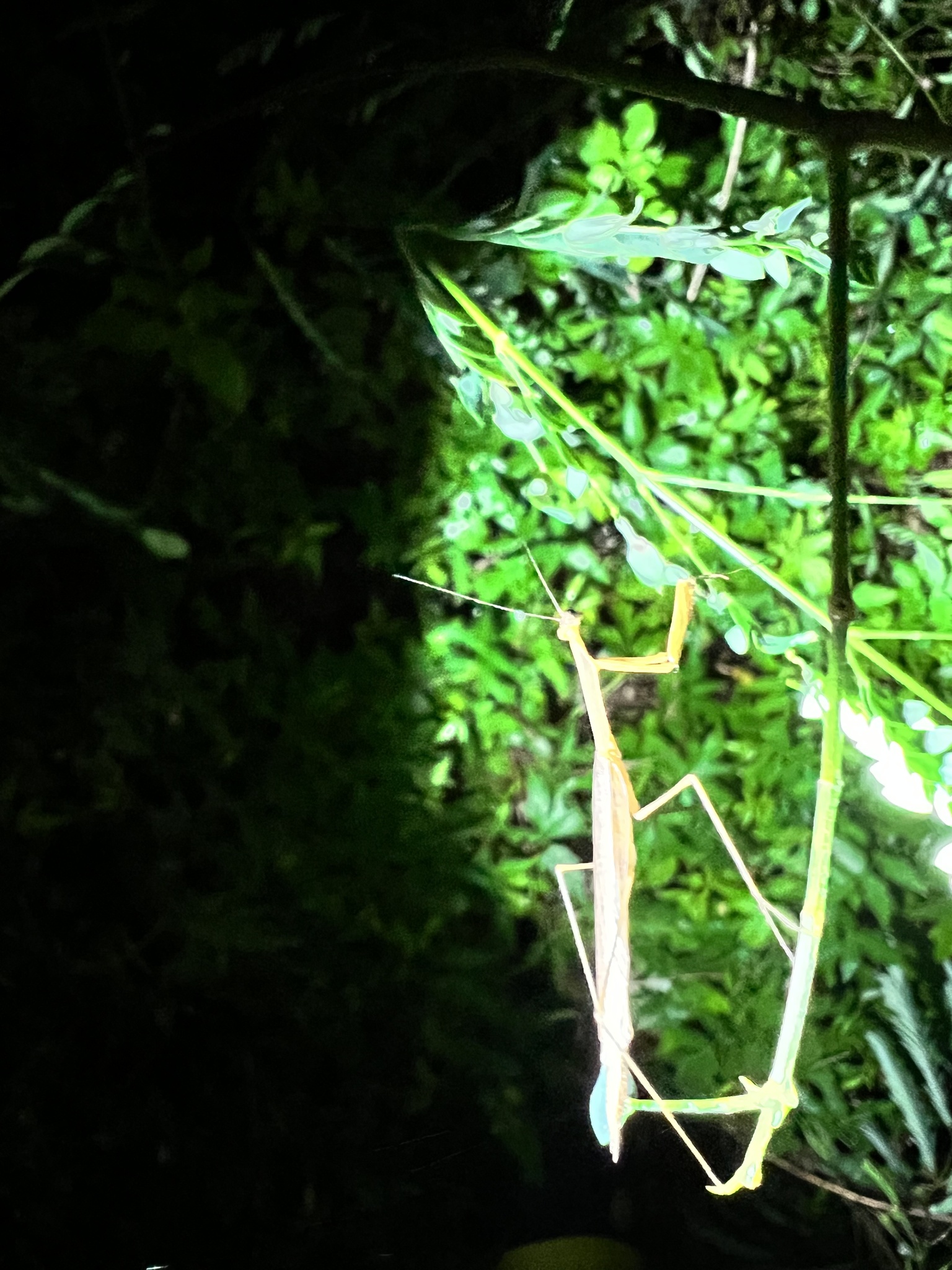
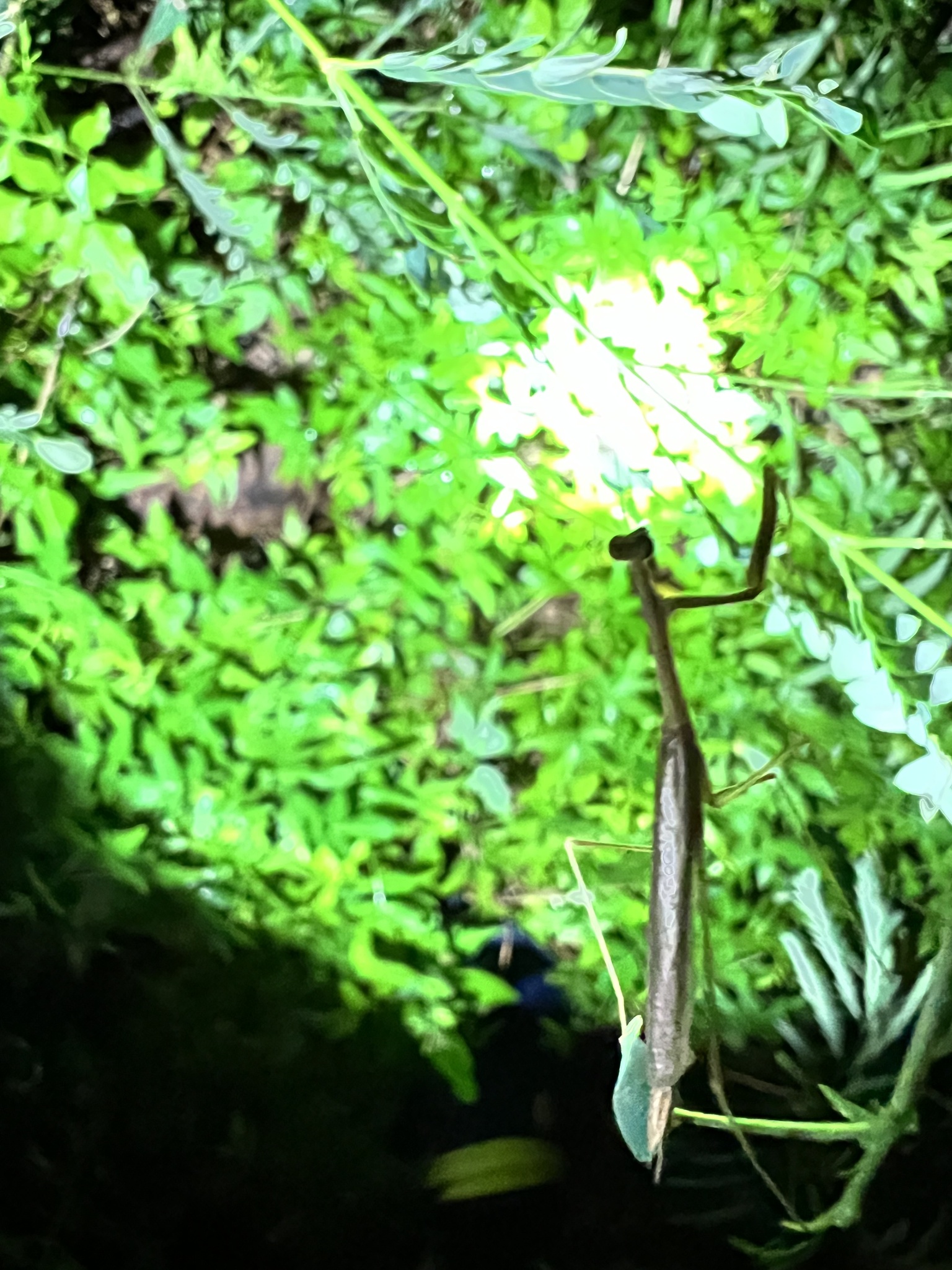
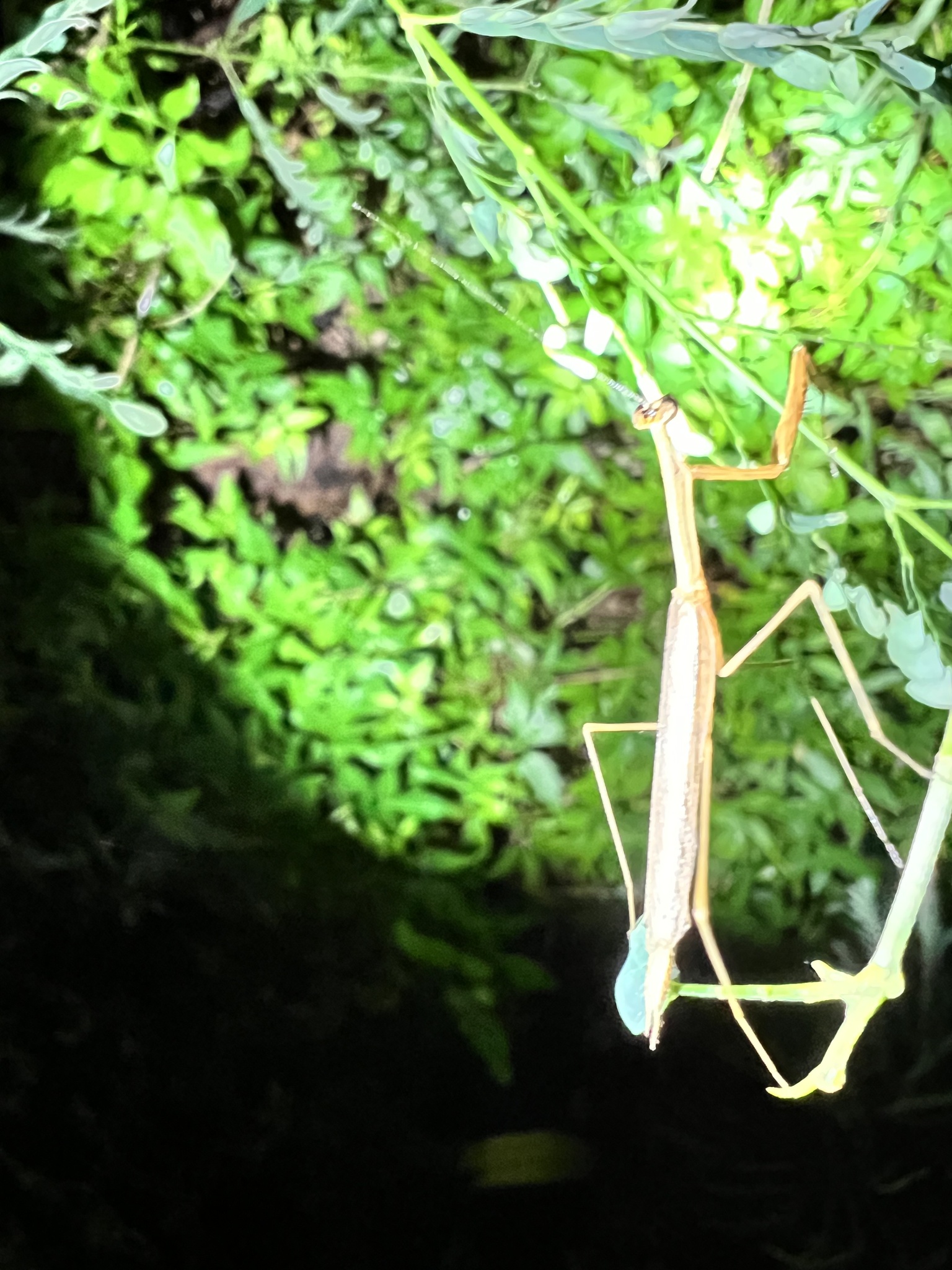
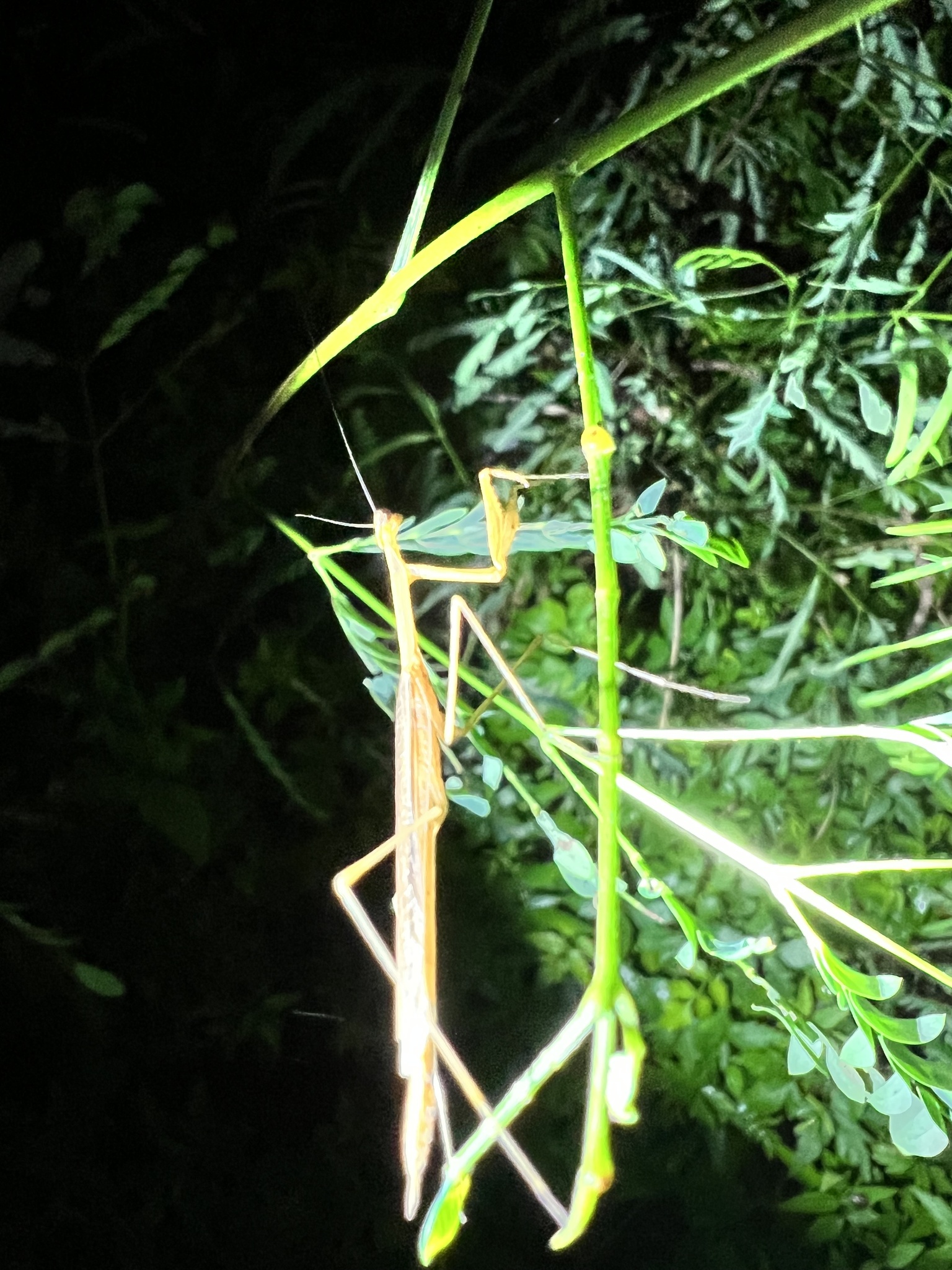
On December 24 in the Dominican Republic, a mantis was stretched along a twig, so long and thin that it looked less like an insect than like a twig that had grown legs. It held the pose while I circled it slowly, only the head rotating to keep an eye on me.
It was Musonia remota, a mantis in the family Thespidae, order Mantodea. The thespid mantises tend to be among the most slender of the group, with elongated bodies and thin legs, well suited to blending into bark and twigs. The species name remota hints at an island resident far from the group’s main range, and the Caribbean is exactly where this one calls home.
Like all mantises, it is an ambush predator. The spined forelegs fold in a patient prayer pose, then snap shut on anything small enough to catch, and the swiveling head with its big compound eyes tracks prey with unnerving precision. The strike itself takes a fraction of a second, and the spines on the forelegs make sure the meal does not get away once it is caught. Mantises are among the few insects that can turn their heads to look over their shoulders.
One of my favorite mantis facts: many species carry a single ear, located on the underside of the abdomen, tuned to the sonar of hunting bats. When they hear a bat’s high-frequency call, they dive. A twig that hides in plain sight by day and dodges bats by night, which is about as good a life strategy as any.