A conehead with a night job
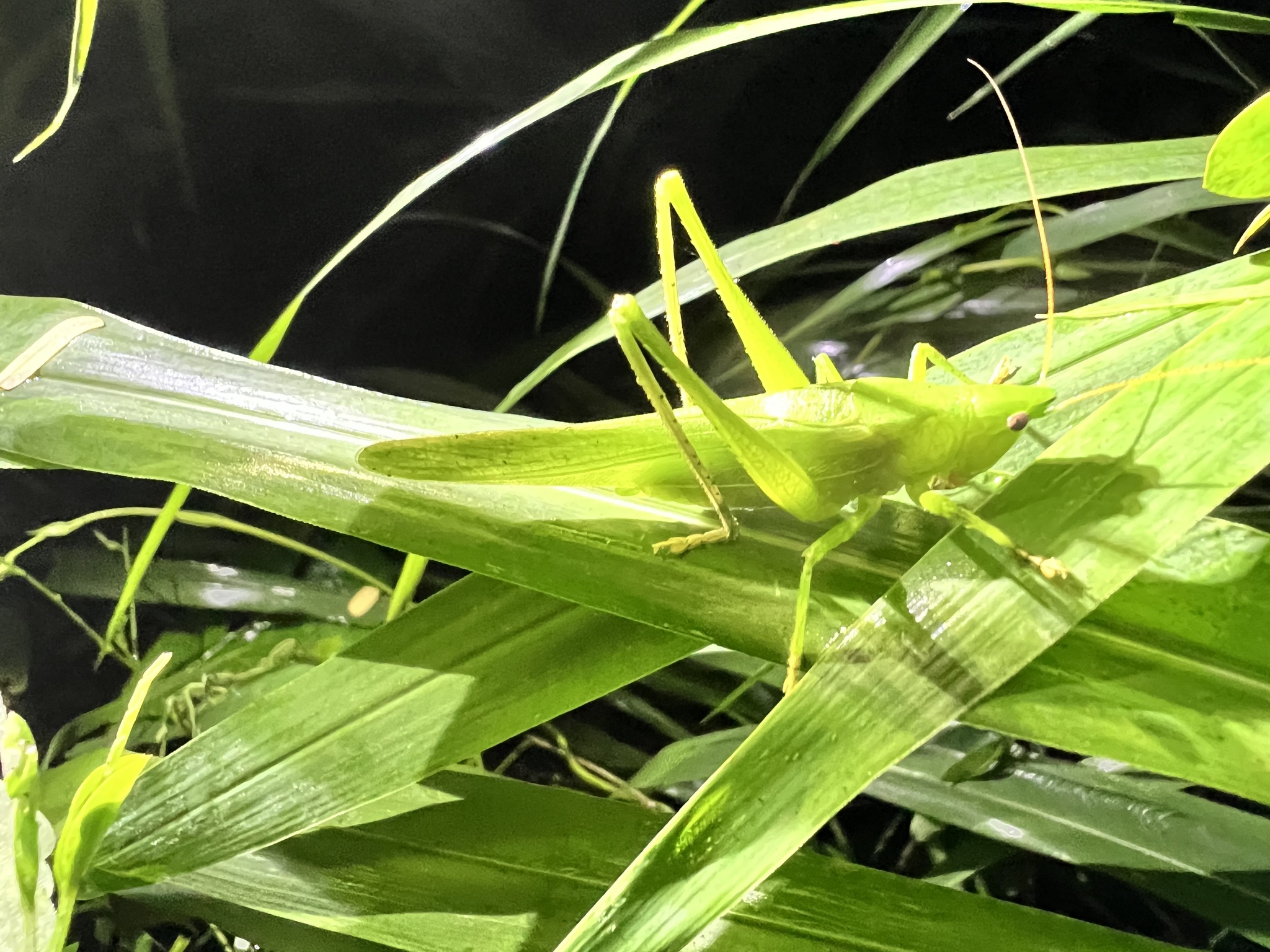
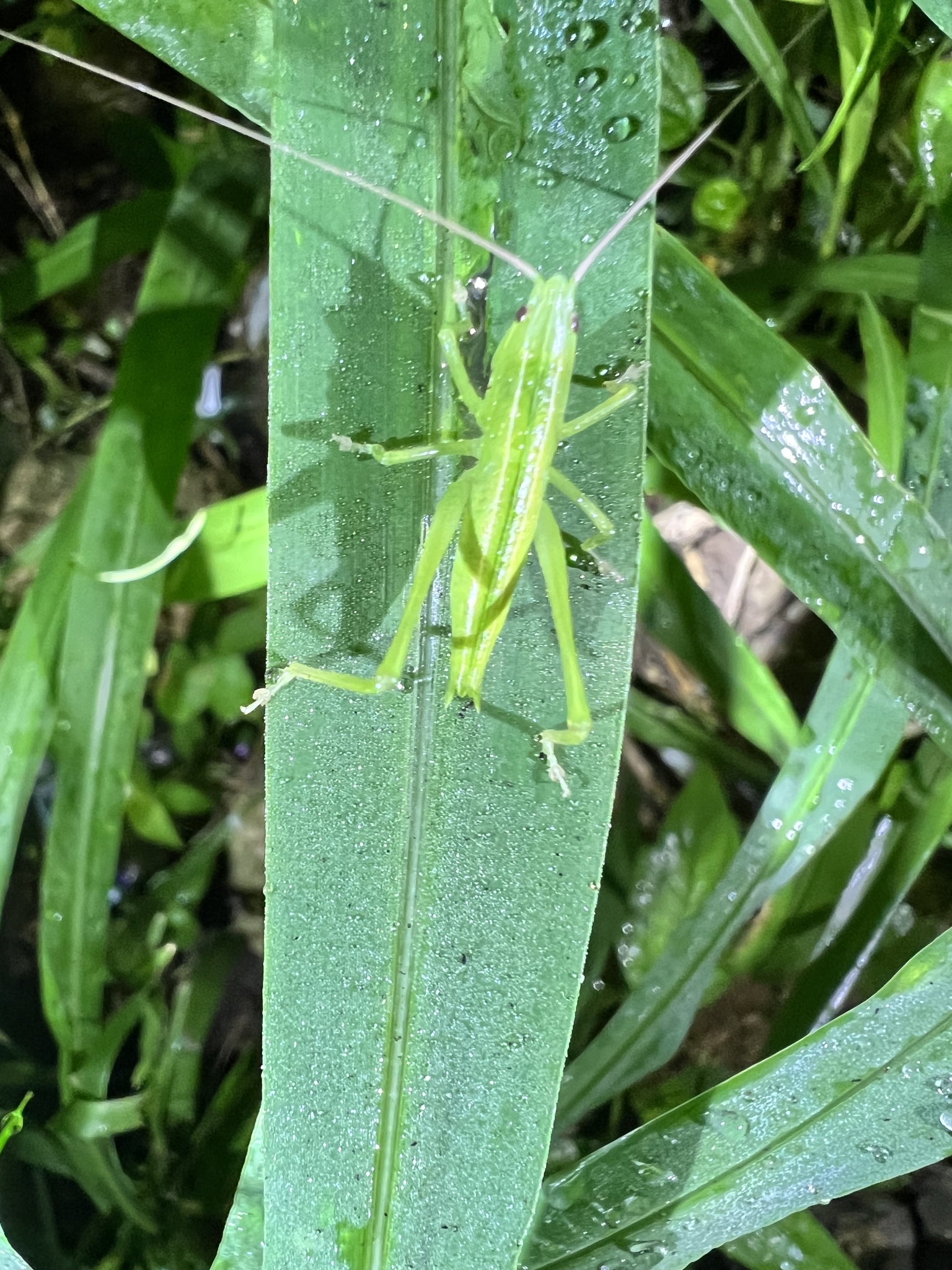
Christmas Eve in the Dominican Republic, and the daylight insects had all found their hiding places. On a leafy trail I spotted one that had not gotten the memo: a green katydid sat motionless on a leaf, its head drawn out into a pointed cone, aimed at me like a tiny arrowhead.
It was Neoconocephalus triops, the broad-tipped conehead, a katydid in the family Tettigoniidae, order Orthoptera. The cone is the fastigium, a projection of the head between the antennae, and it gives the whole genus its name: neo, new, cono, cone, and cephalus, head. In some relatives the cone is so exaggerated that the head looks like a tiny spear.
Coneheads are best known after dark. The males sing by rubbing their forewings together, producing a loud, mechanical buzz that carries surprisingly far, and in the tropics the chorus can be relentless. The sound comes from a file on one wing scraping against a ridge on the other, and each species has its own rhythm, which is how a trained ear tells them apart at night. Studies on closely related coneheads have shown that the pace of the song tracks the temperature closely: the hotter the night, the faster the buzz, which is why a tropical chorus speeds up as the evening warms.
The species name triops, from Greek for “three-eyed,” is one of those names that raises more questions than it answers, but the conehead does not seem bothered. It sat there on Christmas Eve, ready for a night of song, and I left it to its orchestra.