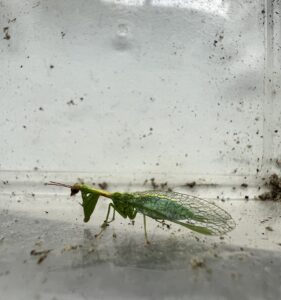
A tiny mantis that turned out to be a lacewing in disguise
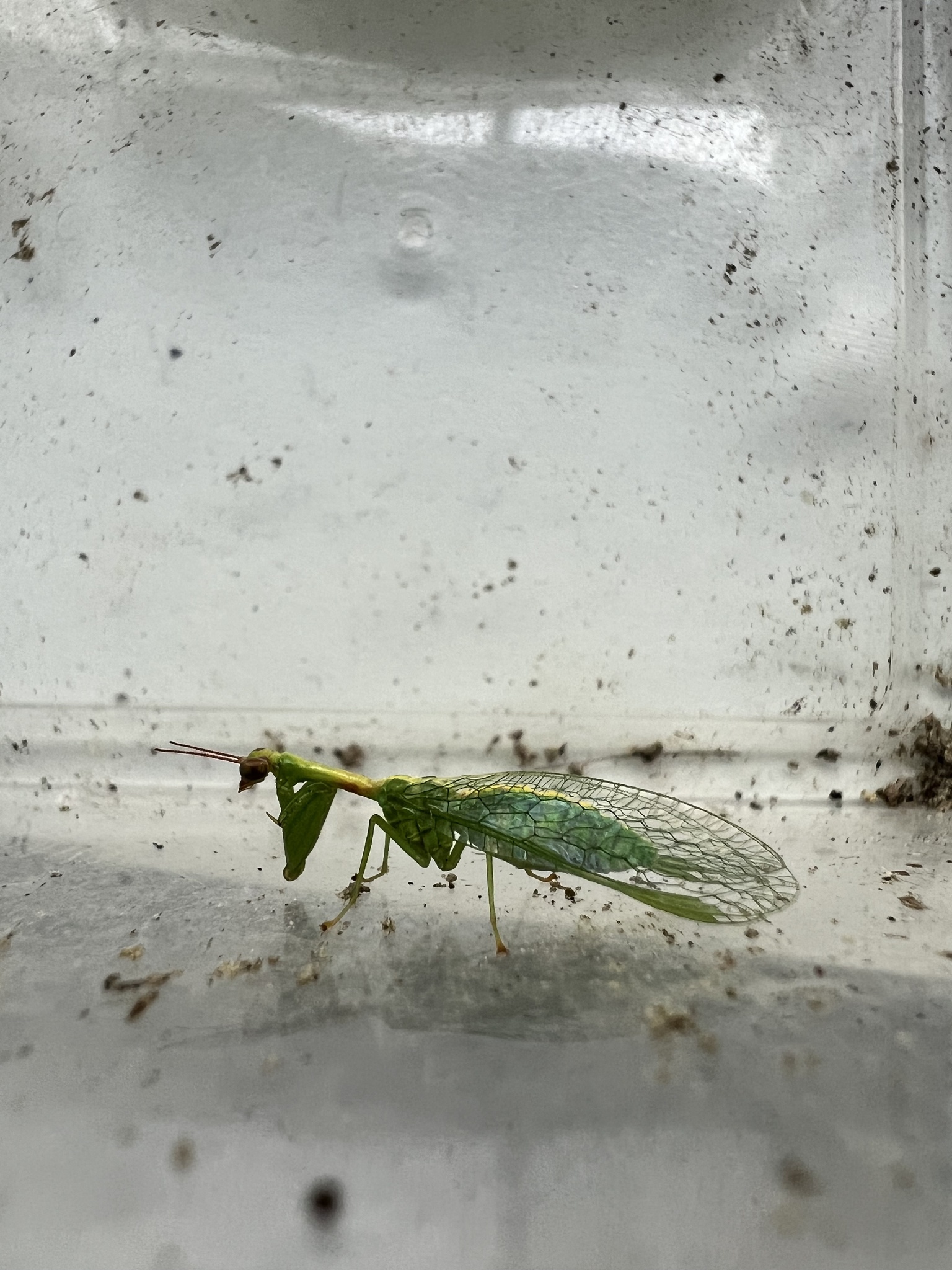
On a September afternoon in Pittsburgh, this small insect sat on the surface in front of me, and for a moment I was sure it was a baby mantis. It had the folded, raptorial front legs and the alert posture. But something about the wings and the long, threadlike antennae said otherwise: it was a mantidfly, a lacewing that has reinvented itself as a miniature praying mantis.
This is Zeugomantispa minuta, a member of the mantidfly family Mantispidae in the order Neuroptera, the same order as lacewings and antlions. Its forelegs are armed with spines and held ready to snatch small insects, and it hunts like a tiny ambush predator. The species name minuta, meaning tiny, fits: it is small enough that it is easy to walk past.
Mantidflies have one of the strangest life stories among insects. The larvae of many species find spider egg sacs, crawl inside, and feed on the developing spider eggs, pupating inside the sac and emerging as winged adults. That means the fierce-looking adult starts life as a quiet thief in a spider’s nursery.
Finding one in the middle of the city is a good reminder that urban green spaces hold plenty of surprises. Mantidflies are never common anywhere, so each sighting feels like a small gift, and this one had chosen a quiet corner where the afternoon light caught its wings. I watched it for a while, then let it go about its business, a pocket predator with a lacewing’s pedigree and a mantis’s ambitions.
Nice spot for a city park. I had read that mantidfly larvae end up inside spider egg sacs — do you know if Zeugomantispa minuta finds the sac on its own, or does it hitch a ride on a female spider first? And in the field, is the giveaway mainly the threadlike antennae and the wing shape, or is there something subtler you look at to rule out a young mantis?
Both routes exist in mantispids, and the first instar larva is built for either one. It is a mobile, long legged planidium that can hunt out an egg sac on its own or climb onto a spider and wait. The phoretic version usually means boarding a female spider and then slipping into the sac as she lays, which is the version most people have read about. For Z. minuta specifically I do not think the details are well documented, and the family as a whole looks fairly opportunistic about which sacs it uses, so I would not claim one route over the other for this species without a rearing record.
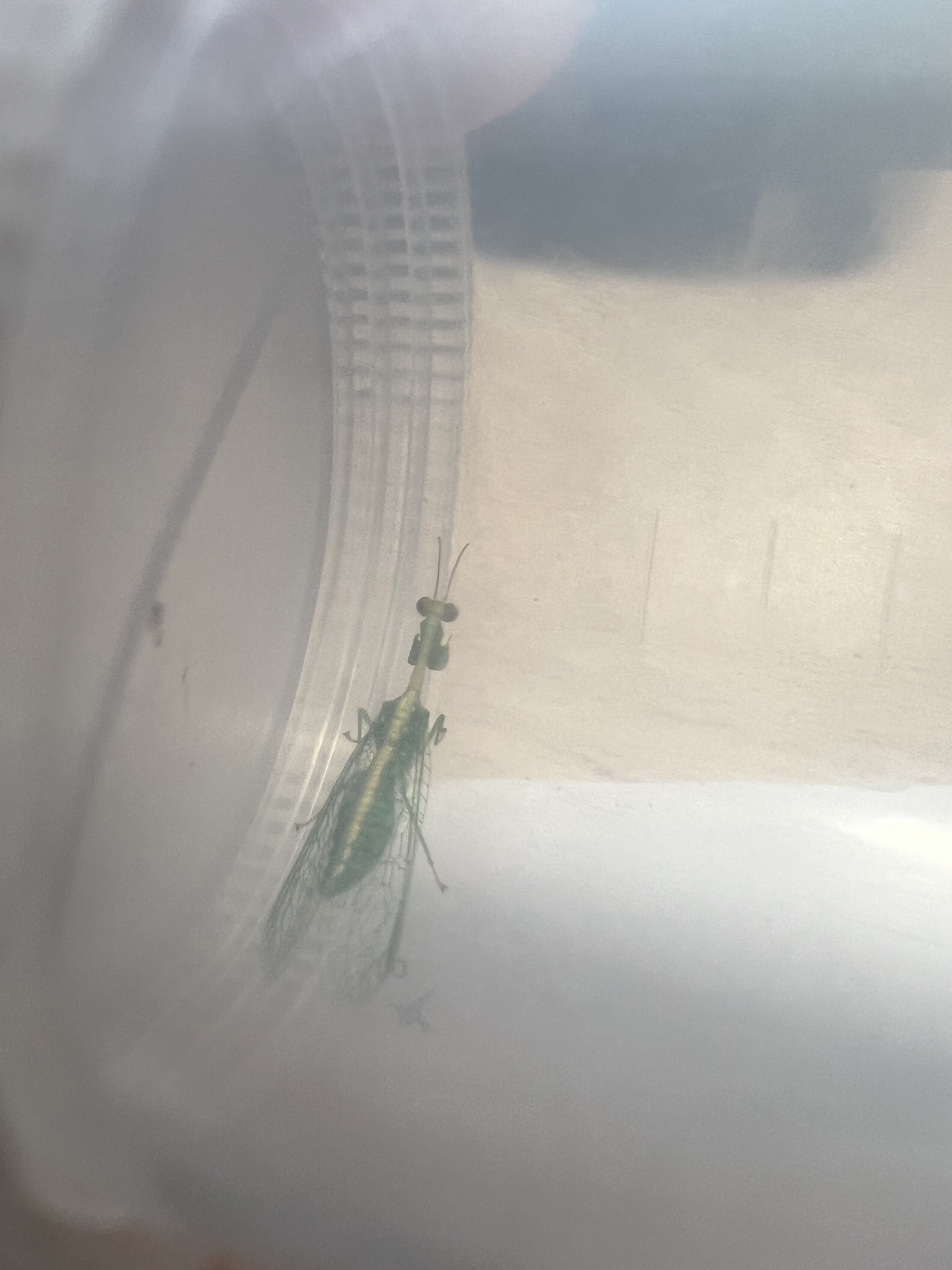
In the field the reliable giveaway is the wings. An adult mantidfly has four membranous, densely veined wings folded roof-like along the back, so it reads as a lacewing wearing a mantis front end. Young mantises have no wings at all, so if what you have is wingless, the antennae will not settle it on their own, and you are better off looking at the prothorax. Mantidflies have a short pronotum, mantises have a long one, and that difference usually shows even in a mediocre photo.