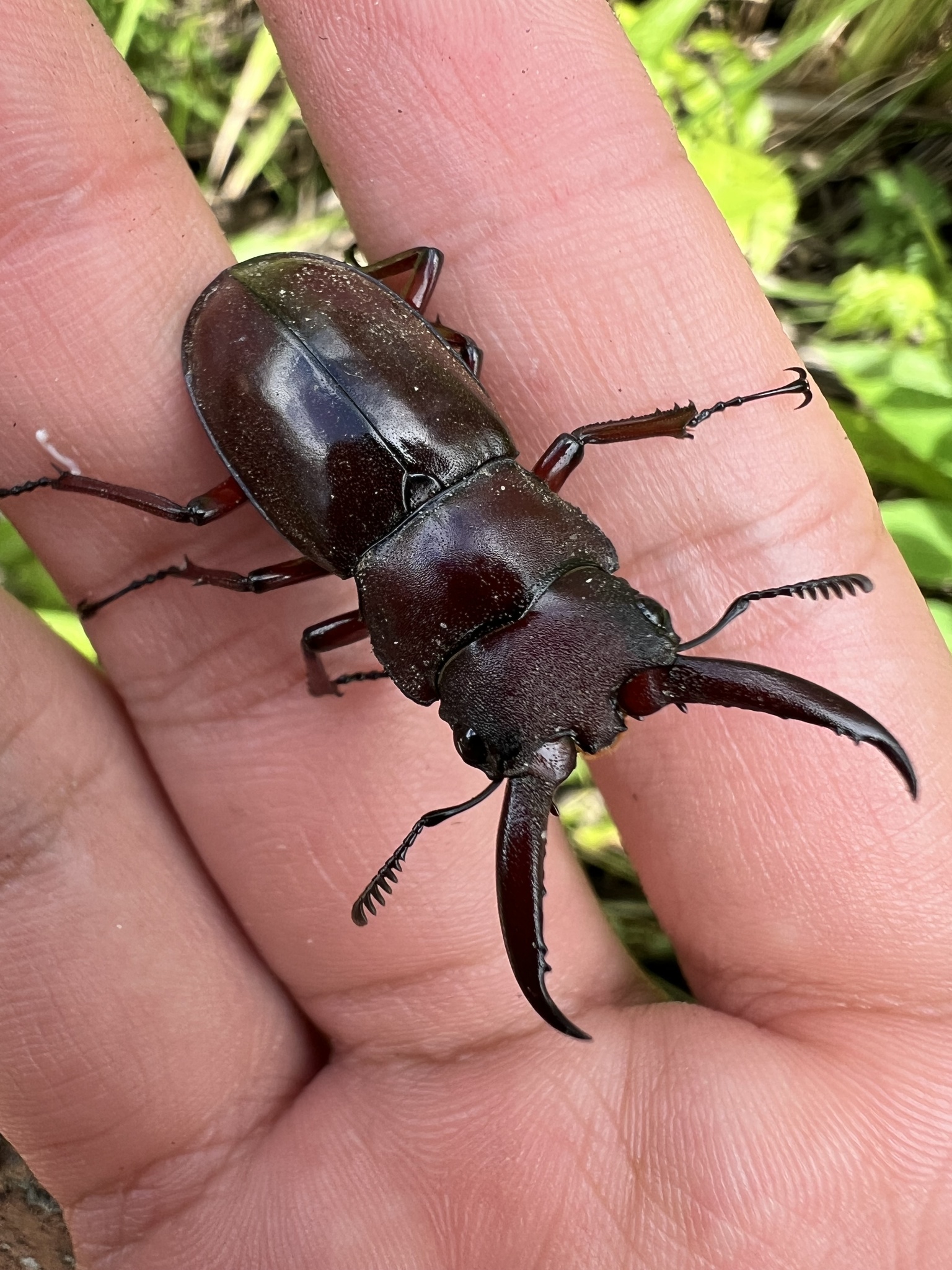
A heavyweight stag beetle of the eastern Himalaya
Every night in Medog feels like a lottery ticket. On 8 August 2024, this one paid out: a stag beetle whose mandibles looked like they belonged on a much bigger animal. It was found in the forests of Medog, Tibet, where the lowland rainforest meets the great Himalayan wall, and it needed no introduction.
This is Hexarthrius forsteri nyishi, a subspecies of a species in the stag beetle family Lucanidae (order Coleoptera). Hexarthrius is a genus of heavy-bodied Asian stag beetles, and the males of many species carry long, curved mandibles that they use in pushing matches over sap sites and mates. The females are smaller and plainly built, but they do the essential work of the species: choosing the right rotting log for their eggs.
The larvae do their growing quietly inside decaying wood, taking a year or more to mature before emerging as glossy adults. That dependence on old timber is why stag beetles disappear wherever forests are cleared too fast, and why Medog’s intact woodlands are so valuable to them.
Medog sits in one of the most biodiverse corners of China, where Himalayan and tropical Southeast Asian faunas overlap, and stag beetles here reach sizes that seem out of place so far north. For a beetle watcher, a Hexarthrius is a trophy find. The jaws look like weapons, but they are mostly used for shoving, not slicing, and a male is far more interested in a drop of tree sap than in any fight that is not about a female.