The imitator stag beetle of Medog
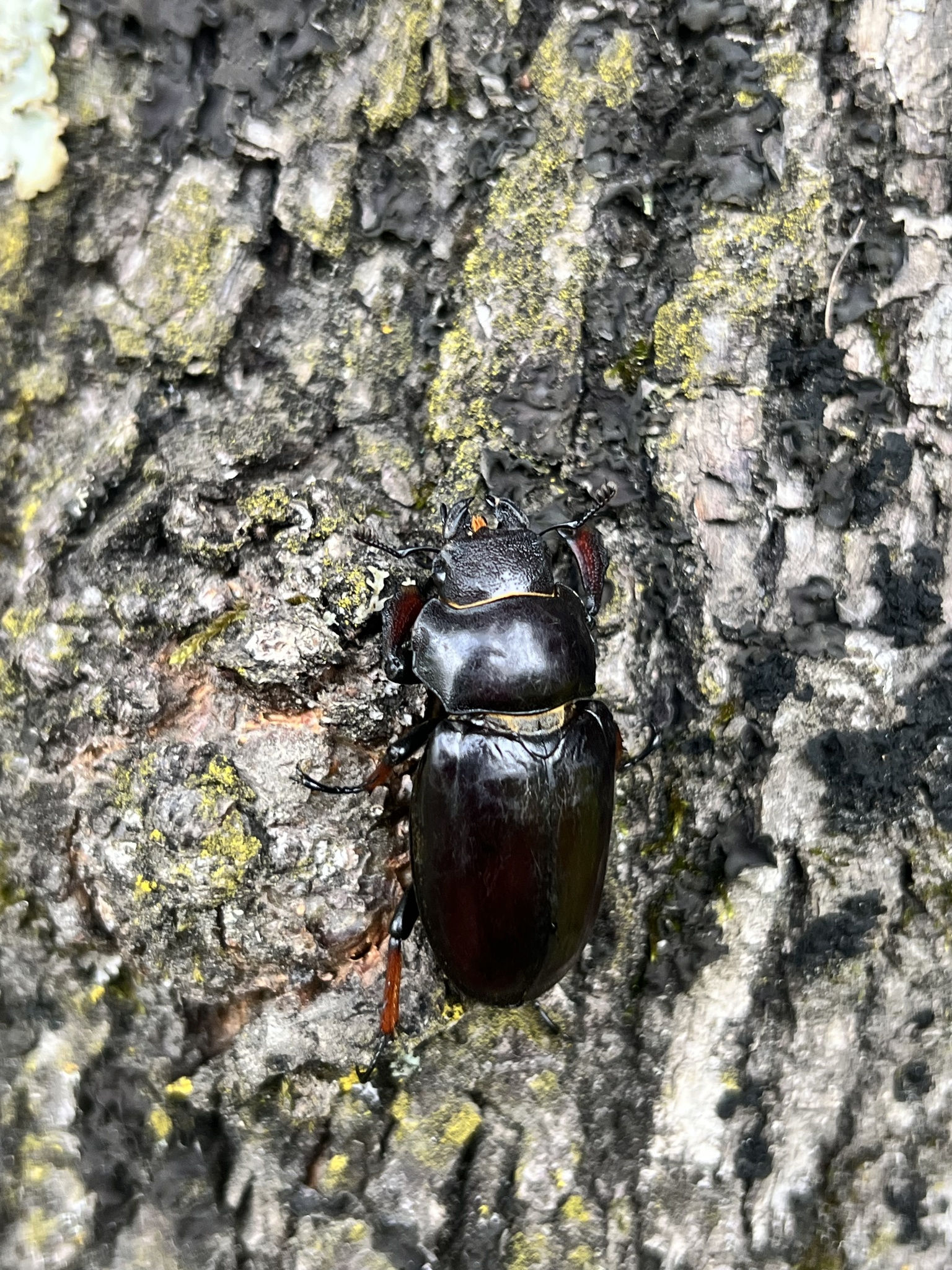
Medog in early August is stag beetle season, and this one, found on 6 August 2024, earned a long look. It was a Lucanus, the classic stag beetle genus, glossy and heavy-set, with the big curved mandibles that give the whole family its common name.
This is Lucanus imitator, a stag beetle of the family Lucanidae (order Coleoptera). The males’ jaws curve like antlers, which is exactly why they are called stag beetles, and they use them in wrestling matches over sap and mates, gripping and lifting rather than biting. The females are smaller, with modest jaws, and do most of the real work of the species: laying eggs in the wood where the next generation will feed.
The species name means the imitator, and it suits a genus where many species look alike enough that even specialists argue over who is who. Medog’s forests hold several Lucanus species, and sorting them out in the field is a challenge, which makes a name like imitator feel less like a joke and more like a warning. By day the adults hide under bark and in crevices; the serious stag beetle hunting happens after dark. The larvae live inside rotting wood, chewing patiently for a long time before pupating, which is why old forest and fallen timber matter so much to stag beetles. Take away the dead wood and the whole family quietly vanishes.
Seeing a Lucanus in the wild, jaws raised and shell gleaming under torchlight, you understand why people collect these beetles, and why museums can never have enough of them.