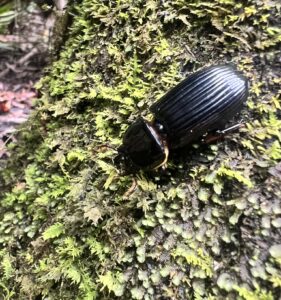
The bess beetle that talks to its family
December in Florida is mild, and the rotting logs on the forest floor are still warm with decomposition. Under one such log lives a small society: the bess beetles, glossy black beetles that spend their entire lives inside decaying wood, raising their young in family groups.
This is Odontotaenius disjunctus, widely known as the horned passalus beetle or bess beetle, a member of the family Passalidae. It is one of the most social of all beetles. Adults cooperate to chew and prepare wood for their larvae, and both adults and young communicate with a repertoire of squeaks and grunts produced by stridulation, rubbing body parts together. Pick one up and it will audibly complain.
That family life is the rare thing here. True parental care is almost unheard of among insects, yet passalid beetles feed, groom and defend their offspring. The larvae, in turn, are dependent on their parents to survive, a level of interdependence that would impress any bird or mammal.
Bess beetles are also famous for living long lives, with adults surviving for a year or more, an eternity for most insects. To hear a log quietly squeaking and know there is a whole conversation happening inside is one of the stranger and more delightful experiences in the woods.
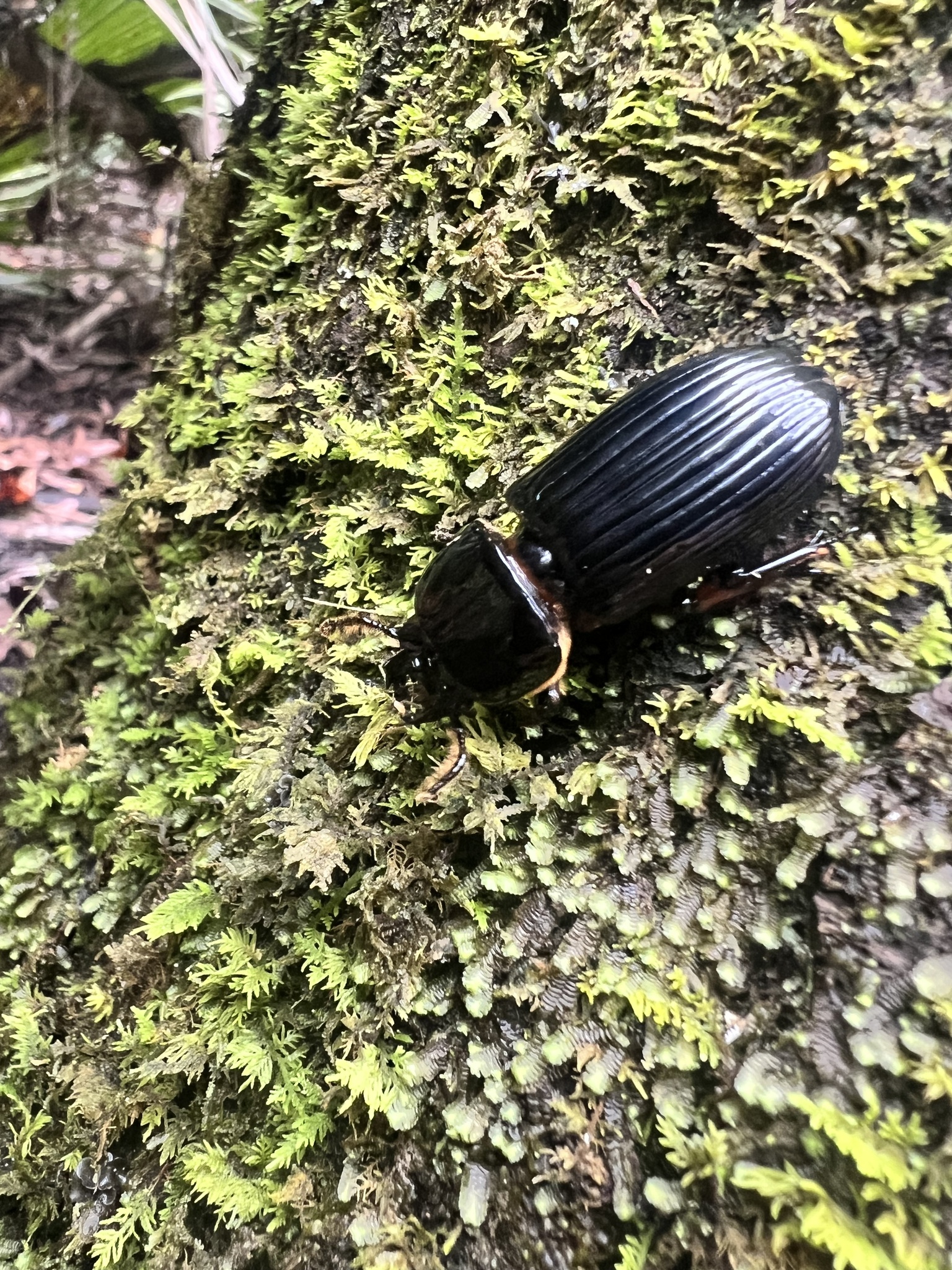
Really enjoyed this one. I had no idea bess beetles were so social — do the larvae stay with the same parents for their whole development, or do they eventually wander off to start their own log?
They stay. Passalid larvae are not left to fend for themselves: they live in the same gallery system as the adults, are fed wood the parents have already chewed and processed, and remain under the same roof right through larval development, with stridulation keeping the family in touch. The wandering happens later, when a new adult finally leaves the log it was born in to find one of its own. Some passalids go further, with older offspring hanging around and helping to prepare wood for the next brood, which is about as close to a family business as beetles get.
They take their time about it too. Bess beetles are among the longer lived beetles, with adults reported to survive a year or more, and development in that slow, humid log is not a race.