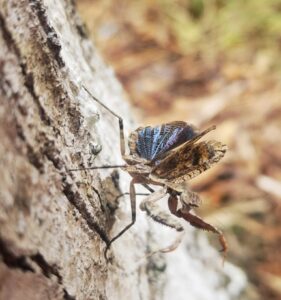
A lichen with legs
On a lichen-covered tree trunk in Florida, the grey bark seemed to have grown a mantis. The grizzled mantis is a master of one of nature’s favourite tricks: looking like something that is not alive.
This is Gonatista grisea, sometimes called the grizzled mantis, a member of the family Epaphroditidae. Its body is mottled in greys, whites and browns, an almost perfect match for the lichens that cover the bark of trees in the southeastern United States. When it presses itself flat against the trunk, it becomes effectively invisible to both prey and predators.
Unlike the large, showy mantises of gardens, this is a slender, bark-dwelling specialist. It hunts by sitting still and letting insects come to it, relying on the lichen camouflage to do the heavy lifting. The flattened body and muted colours are an adaptation to a life spent in plain sight, but unnoticed.
Finding one takes a patient eye. The reward is a glimpse of evolution’s favourite art form: the ability to disappear.
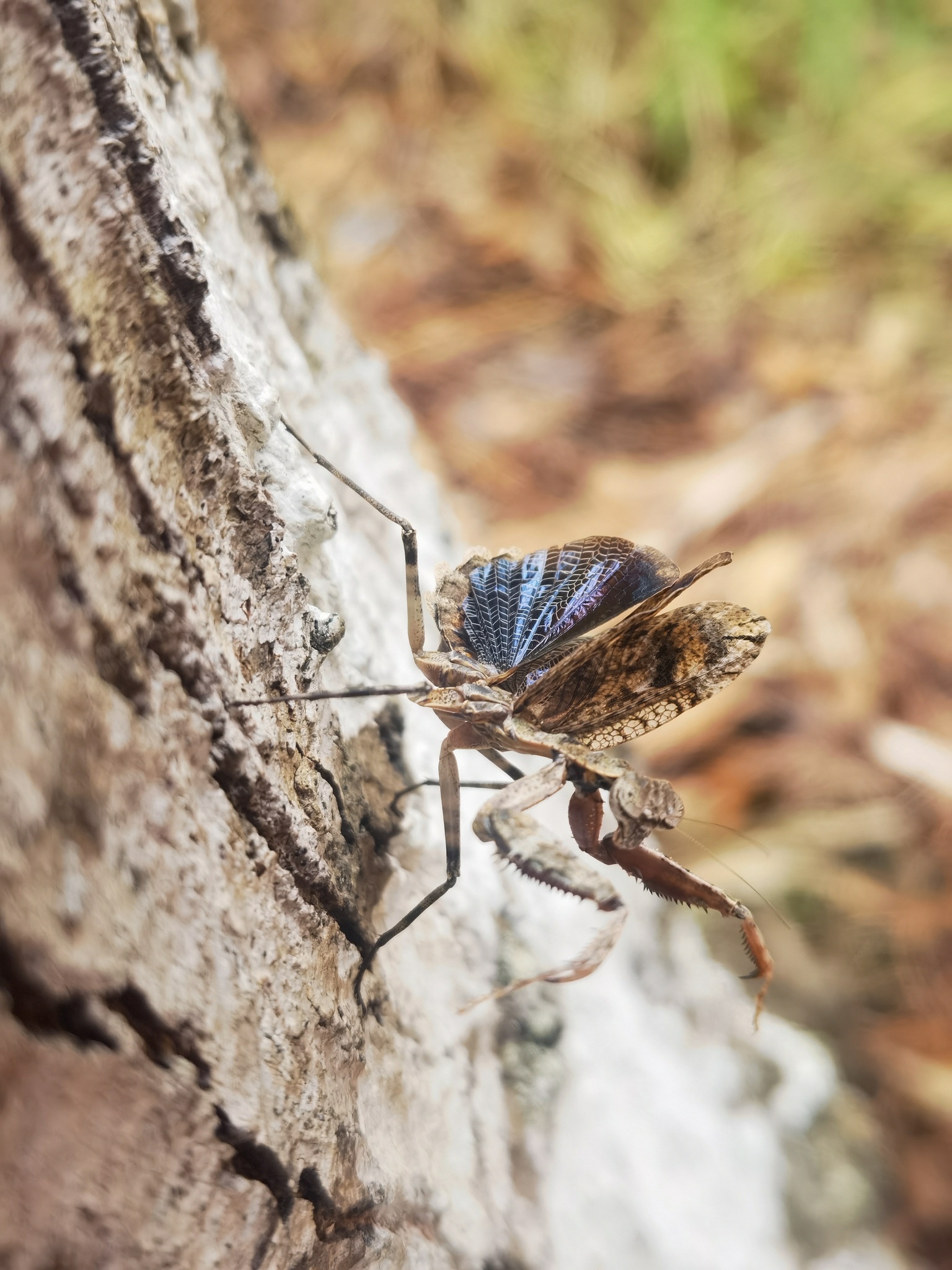
Really incredible camouflage. I was wondering – do grizzled mantises rely only on staying perfectly still against lichen-covered bark, or can they also slightly adjust their coloration to match different lichen types as they move between trees?
Mostly the stillness, honestly. Mantises can’t do fast color change like a chameleon can, and the grizzled mantis is no exception: its grey, white and brown mottling is fixed once it reaches adulthood, so an adult that moves to a tree with different lichens can’t repaint itself to match. There is a slower version of color adjustment, though, and it happens earlier in life. Like many mantises, nymphs can shift color somewhat between molts depending on the background they grow up on, so an individual that develops on one type of lichen-covered trunk will likely end up a closer match for it. After that final molt the pattern is locked in. That’s probably why you so often find them pressed flat and motionless: on top of the camouflage they also choose a resting spot where their existing pattern already blends in, then hold dead still. The stillness isn’t just patience, it’s part of the disguise, because movement would break the whole illusion.