A cone-headed singer near the end of the season
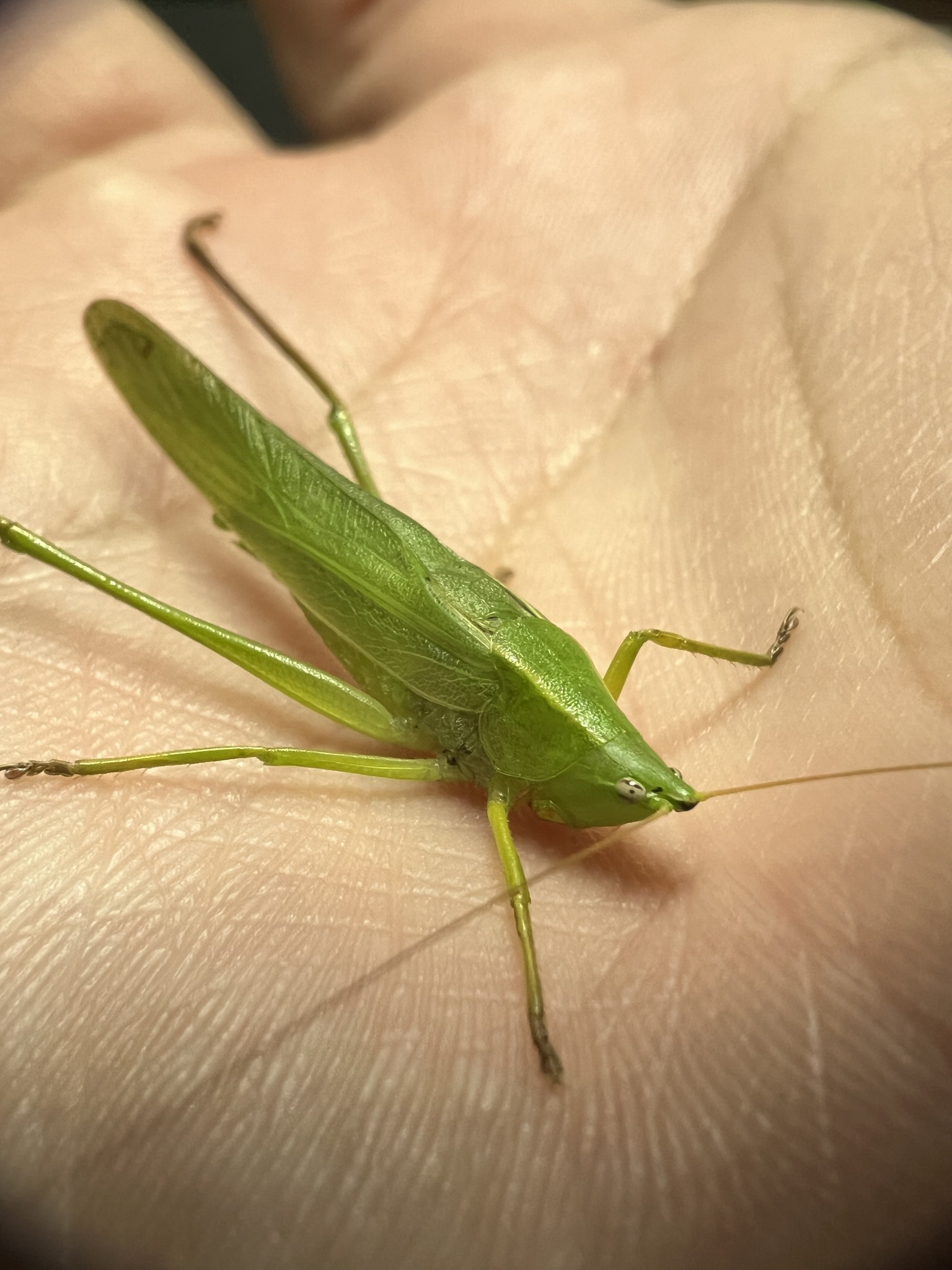
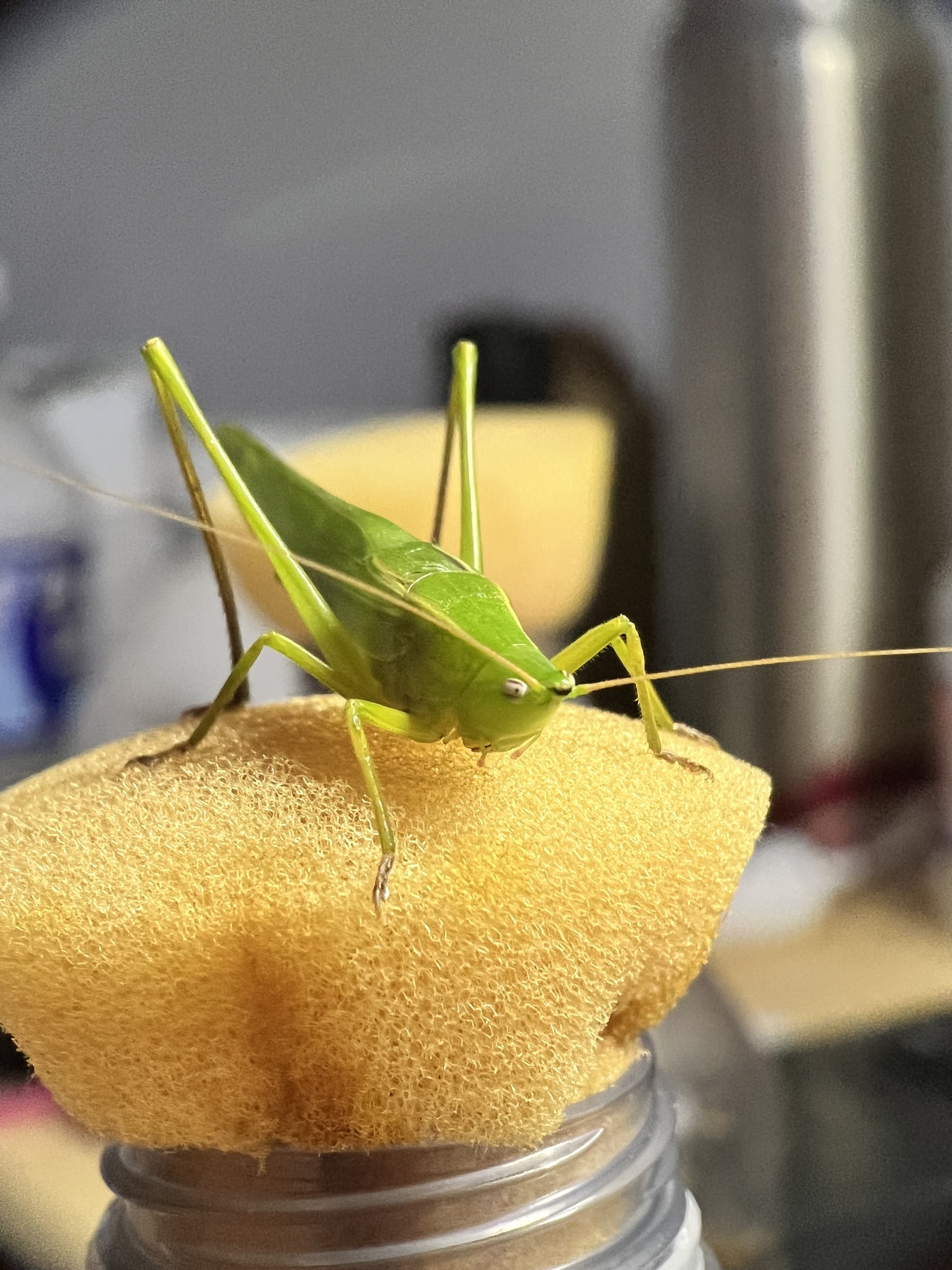
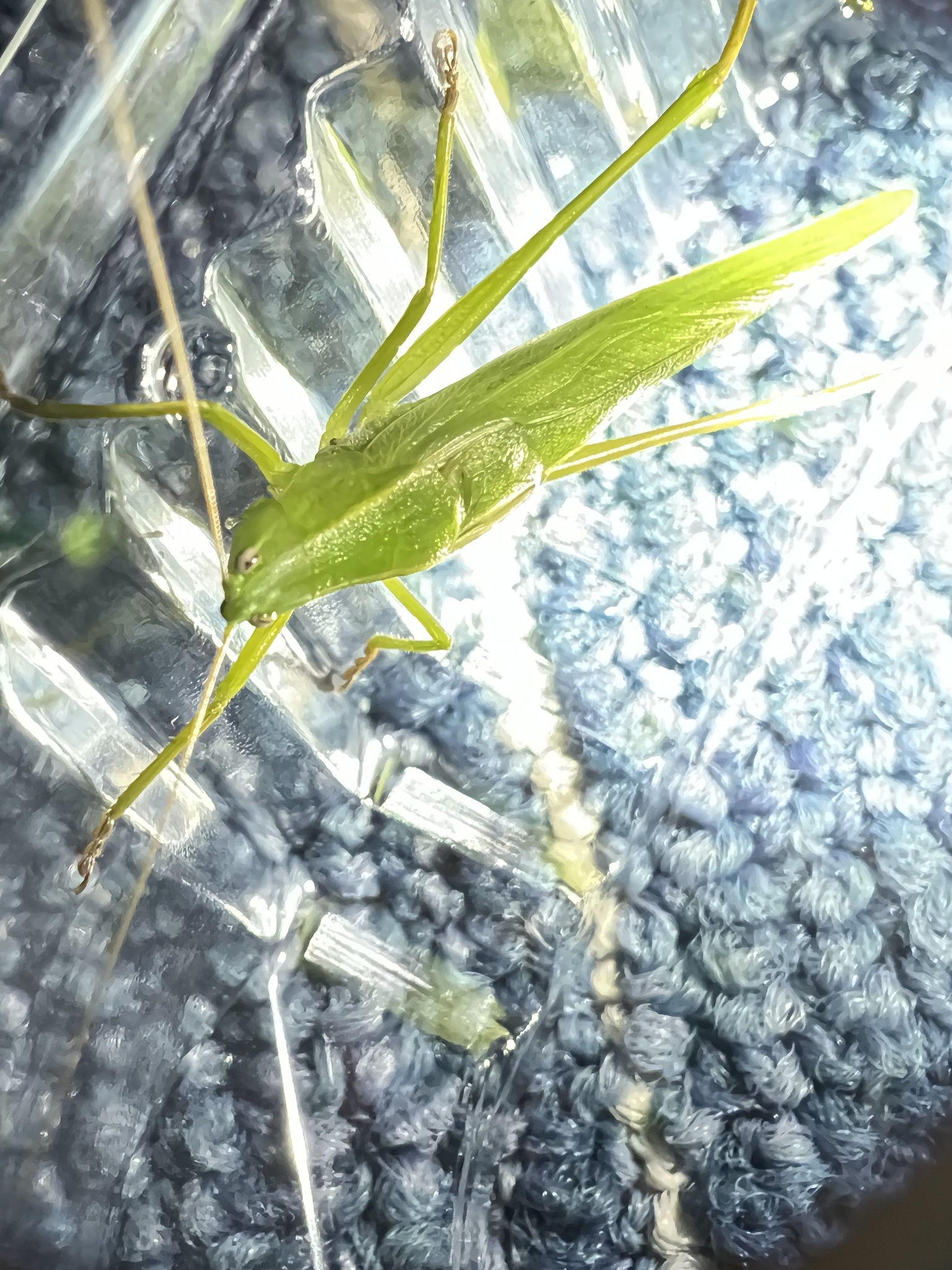
On October 21 in Pittsburgh, a green katydid landed on a hand and stayed there long enough for a portrait session. It posed on a yellow sponge, then on a piece of blue fabric, patient and calm, its long antennae sweeping forward and its folded wings giving it the streamlined look of a small green arrow. In late October, any katydid still alive is worth a careful look, and this one was a conehead.
This is a conehead katydid of the genus Neoconocephalus, a member of the katydid family Tettigoniidae in the order Orthoptera. The group is named for the pointed cone on top of the head, a projection called the fastigium that gives these katydids their unmistakable profile. The identification here is at genus level, awaiting community confirmation; telling the species apart usually requires a close look at the head and pronotum, and often the song.
Coneheads are among the loudest insects around. The males sing at night by rubbing their forewings together, and some species, including the robust conehead, produce a buzz loud enough to be felt as much as heard. Research on the robust conehead has shown that the pace of the song tracks temperature closely, which is why the chorus speeds up on warm nights and slows as the weather cools. By late October in Pennsylvania, that chorus has nearly fallen silent, and the few males still singing do so in a thinner, slower voice.
Finding a conehead at the end of October felt like catching the season’s last note. It sat on the sponge, cleaned its antennae, and eventually flew off, and the yard was quiet again.