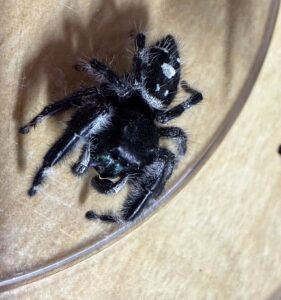
A bold jumper staring back from a plastic wall
This one turned up on the inside wall of a clear plastic container in Pittsburgh in mid-May, which is the kind of place jumping spiders always seem to end up. It was perched head-up, body black with clean white spots and stripes, and its long legs, dusted with fine hairs, were pressed against the smooth surface. When it tilted its head to look at me, I could practically feel the curiosity radiating back.
This is Phidippus audax, the bold jumping spider, a member of the family Salticidae in the order Araneae. The species name audax means bold or daring in Latin, and it is well earned. Jumping spiders are the small predators of the spider world that refuse to sit in a web and wait. They stalk, they aim, they pounce, and they are famous for their excellent eyesight, which is rare among spiders.
Salticids have four pairs of eyes, and the huge front pair gives them sharp, almost binocular vision. A jumping spider can size up a jump, judge the distance, and land precisely on a target several times its own body length away. The fine hairs on the legs, which you can see in this photo, help with grip and sensing vibrations.
What I love about bold jumpers is that they are genuinely curious about people. Most spiders run. This one turned to face me, raised its front legs, and watched me as closely as I watched it. For a few seconds we were just two animals sizing each other up, and I think the spider was winning.
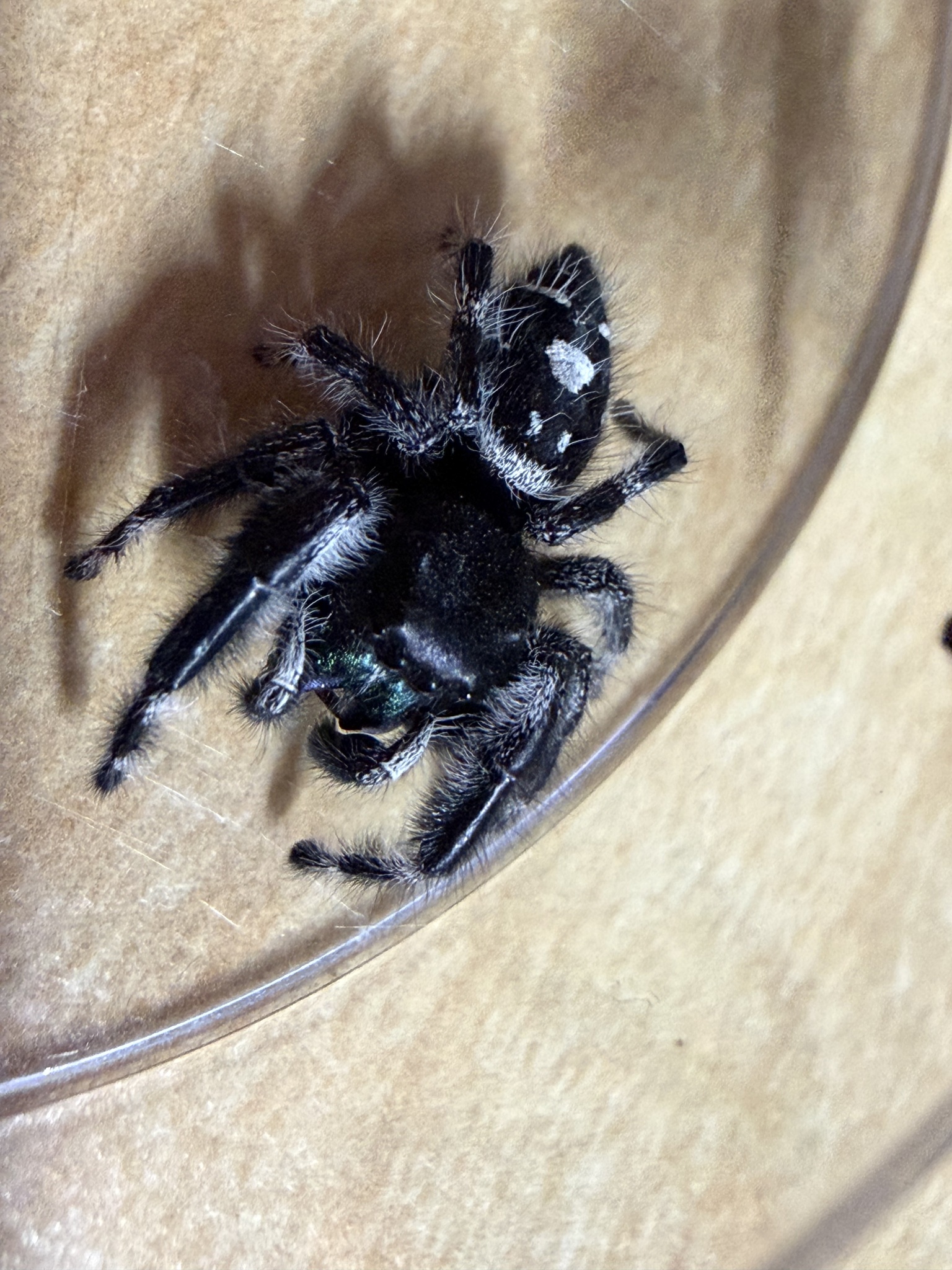
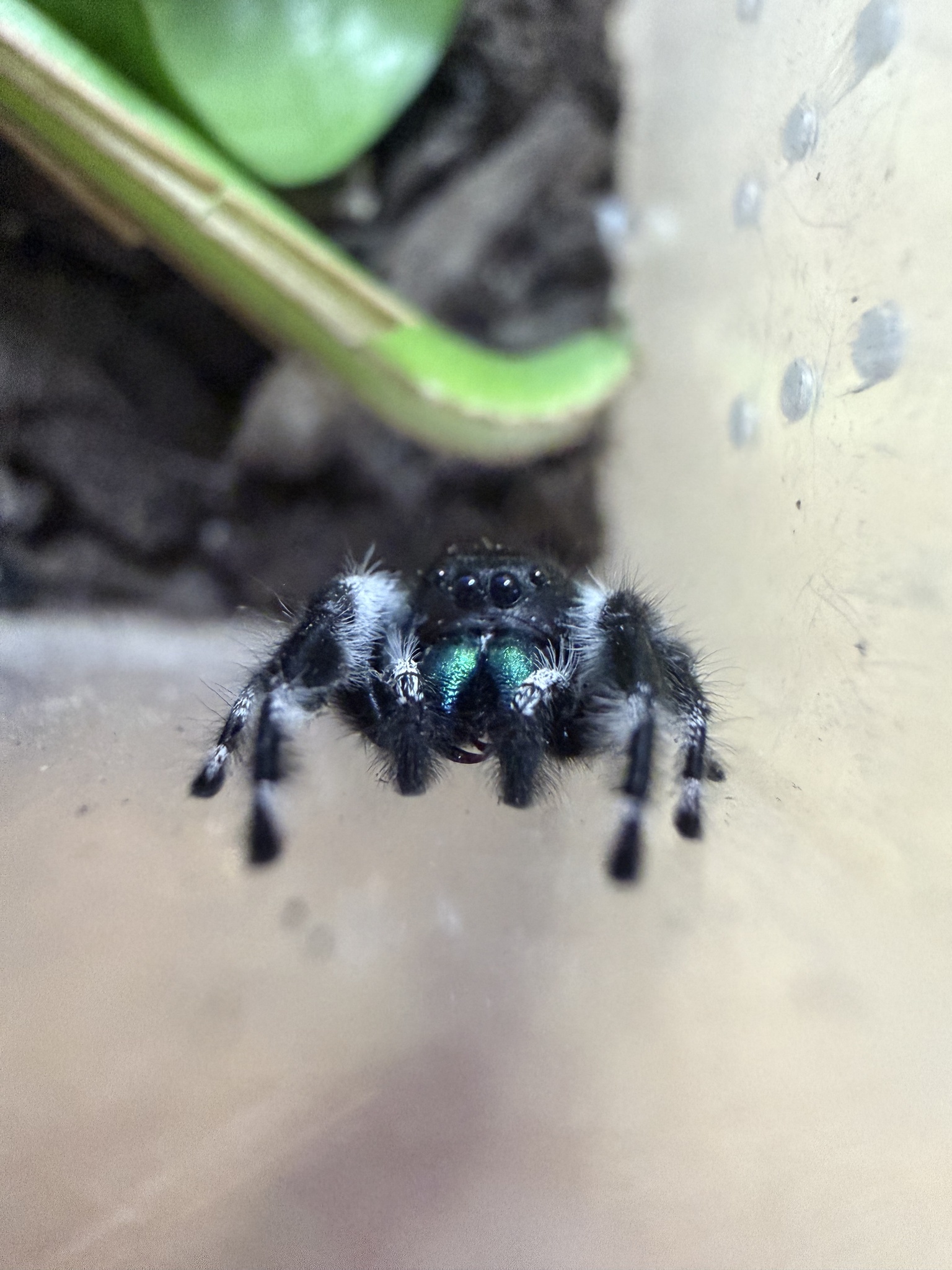
Nice shot — I see these around my place too. Does the white spotting vary much between individuals, or is it pretty consistent? Also curious whether the ones you find indoors tend to stay and claim a spot in one room.
The spotting is variable, but part of what you are seeing is age. Immature bold jumpers carry orange or reddish spots on the abdomen, and those turn white as the spider matures, so a juvenile and an adult of the same species can look like different animals. Even among adults the white varies, with some individuals heavily marked and others much darker, and there is regional variation on top of that. It is a species you read as a range rather than one fixed pattern.
On the indoors part, they are homebodies. A bold jumper picks a retreat, a corner, a windowsill, the back of a picture frame, and tends to stay there for weeks, hunting a small circuit around it. It is a resident rather than a wanderer, which is why people notice the same spider in the same room for months.