A stark black-and-white carpenter on a Medog wall
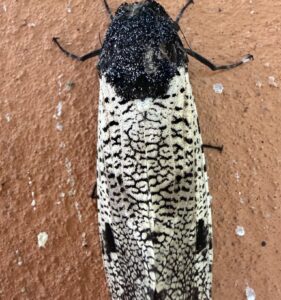
On 26 June 2026, along the Motuo highway southwest of the county seat, this striking moth had settled on a weathered surface near the road and sat through my approach without moving. The pattern is unlike anything else you meet in the forest: a black head and thorax, and forewings marbled in bold black and white swirls like an ink drawing gone wild.
The community identification places it as Xyleutes strix, a species of the carpenter moth family Cossidae (order Lepidoptera). Its Chinese name is 枭斑蠹蛾. The family name is earned: cossid caterpillars bore into living wood and can spend years tunnelling inside trunks before pupating, which is why the adults are rarely seen and usually encountered only when a forest road or a lit window pulls one out of the dark.
The species name strix is Latin for a screech owl, a nod to the cryptic, owl-like marbling of the wings. Most records of Xyleutes strix come from South and Southeast Asia, and the identification here is a community one that has not yet reached research grade, so a record this far north and east, if confirmed, would be a notable extension of its known range.
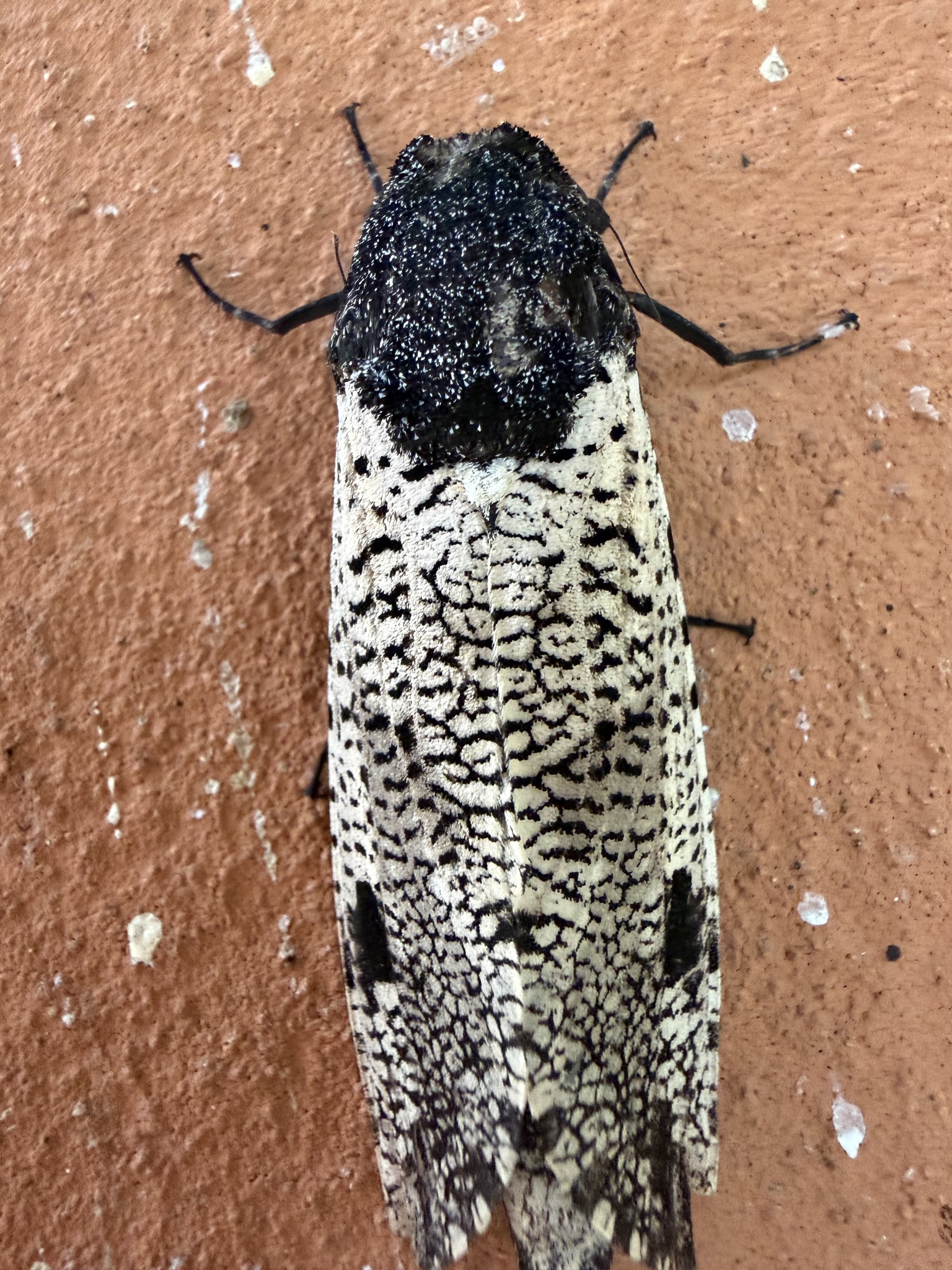
Moths this boldly patterned tend to be either poisonous or bluffing. The carpenter moths sit firmly in the second camp, and this one’s frozen stillness was the whole defence, which is why it let me get so close.
Great find — that ink-blot wing pattern is striking. Is the ID based on the wing pattern alone, or was the specimen examined further? A record that far north and east of its usual range seems like it would need more than a photo to move to research grade.
You’re right to push on that. There’s no specimen here: the ID is entirely photo-based and the wing pattern is basically the whole case. That bold black-and-white marbling on the forewings, the owl-like ‘strix’ look, is what puts it in Xyleutes strix in the field, and the community suggestion agreed, but the observation is still sitting at needs ID and hasn’t reached research grade.
I agree with your read on the range too. GBIF holds around 700 georeferenced records for the species and the bulk are Taiwan, Malaysia, Thailand, Indonesia, the Philippines and India, with a few from New Guinea. Medog sits well outside that cluster, so if it holds up it’s a genuine extension, and one photo of a moth on a wall can’t carry that on its own.
To get past photo level you’d want a specimen, ideally with the genitalia examined, since cossid species often aren’t separable on wing pattern alone. Short of that, more shots of the same individual plus someone who works on the family would be the realistic route. Until then I’d rather leave it flagged as a possible northern record than assert it.