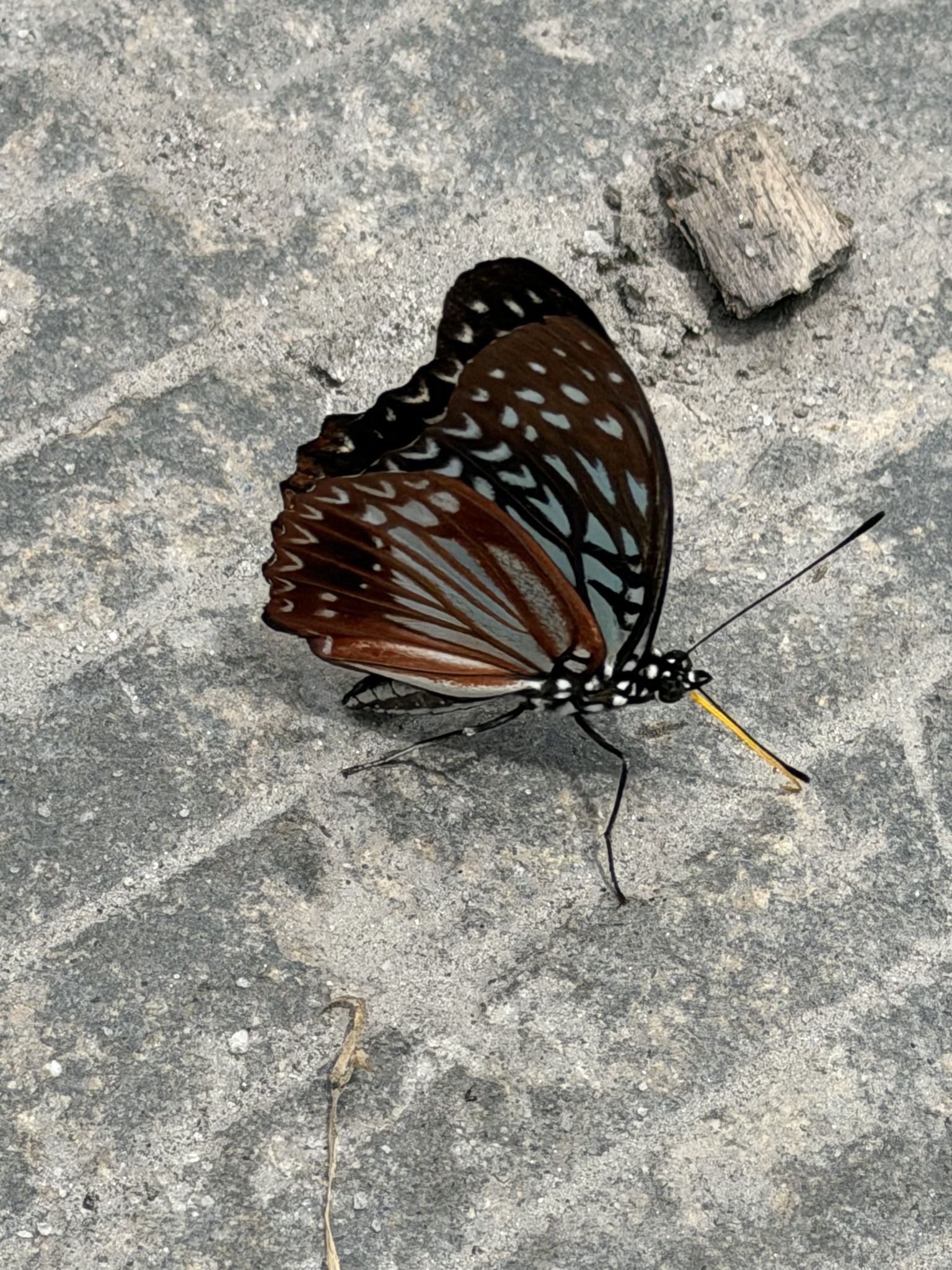
A brown and white butterfly resting on bare ground
It was sitting on the bare ground of a trail in Medog, surrounded by scattered gravel and dry twigs, not a flower in sight. The wings were brown and white, marked with bold black stripes and clean white spots, and it stayed put while I crouched down for a closer look. Some butterflies vanish the moment you approach. This one seemed happy to pose.
This is Hestinalis nama, known in English as the Circe, a member of the brush-footed butterfly family Nymphalidae in the order Lepidoptera. The family name comes from the small, brush-like front legs that adults tuck against their bodies, which is also why they often look like they only have four legs walking around. The Circe is a butterfly of wooded lowlands across much of Asia, and Medog, tucked against the Himalayas in southeastern Tibet, sits right at the edge of its range.
That day the butterfly was doing what most adults do in between flower visits: warming up, resting, and watching the world from a patch of dirt. Its pattern of black stripes and white spots against brown is classic Nymphalidae camouflage, breaking up the outline so a perched butterfly reads as a bit of bark or a dead leaf rather than a meal.
As for the name Circe, it comes from the enchantress of Greek mythology, a fitting label for a butterfly that seems to hold anyone who watches it still. The species name nama is a quiet one, but the common name carries all the drama.