A deep red stag beetle with a golden stripe
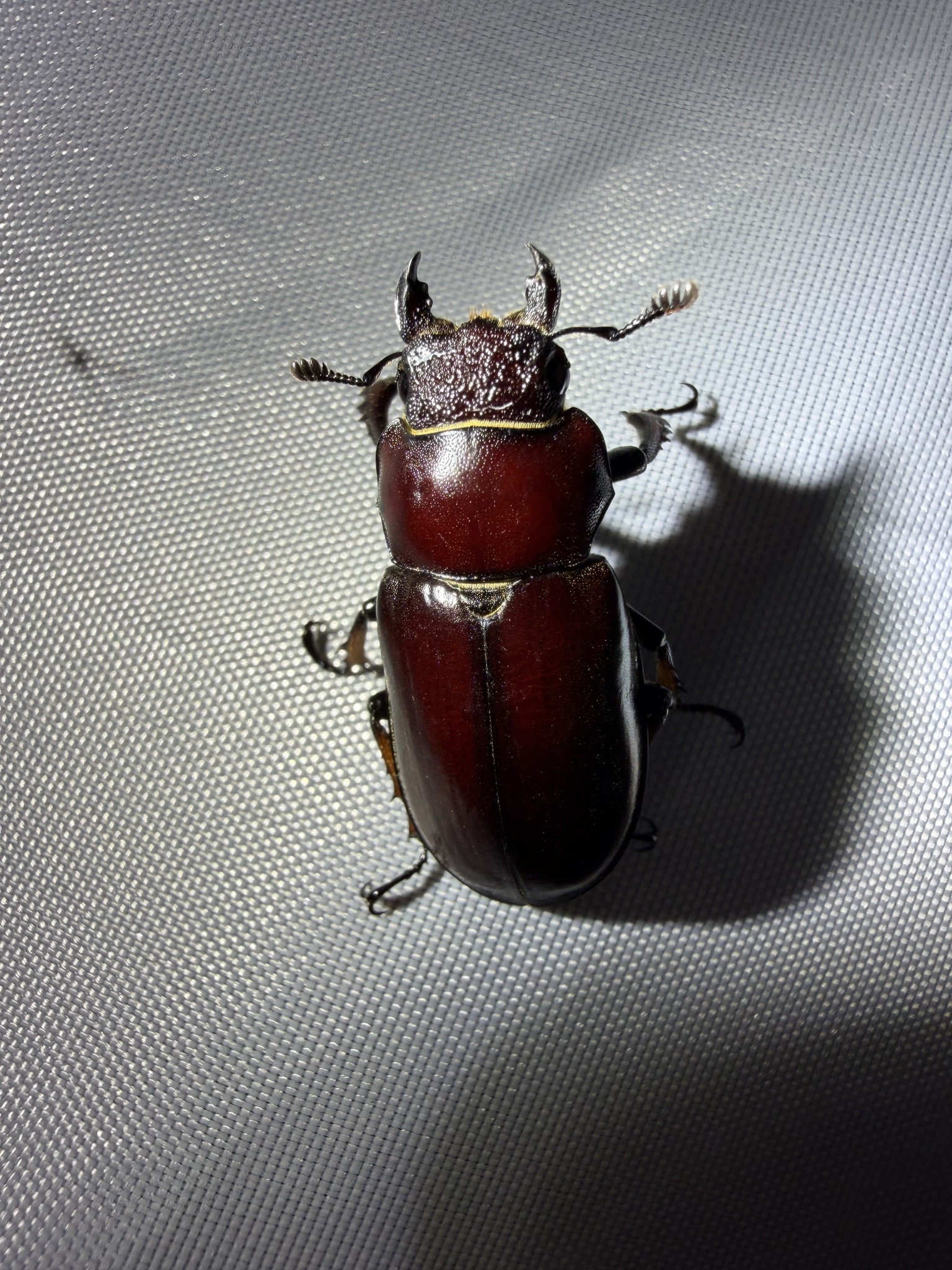
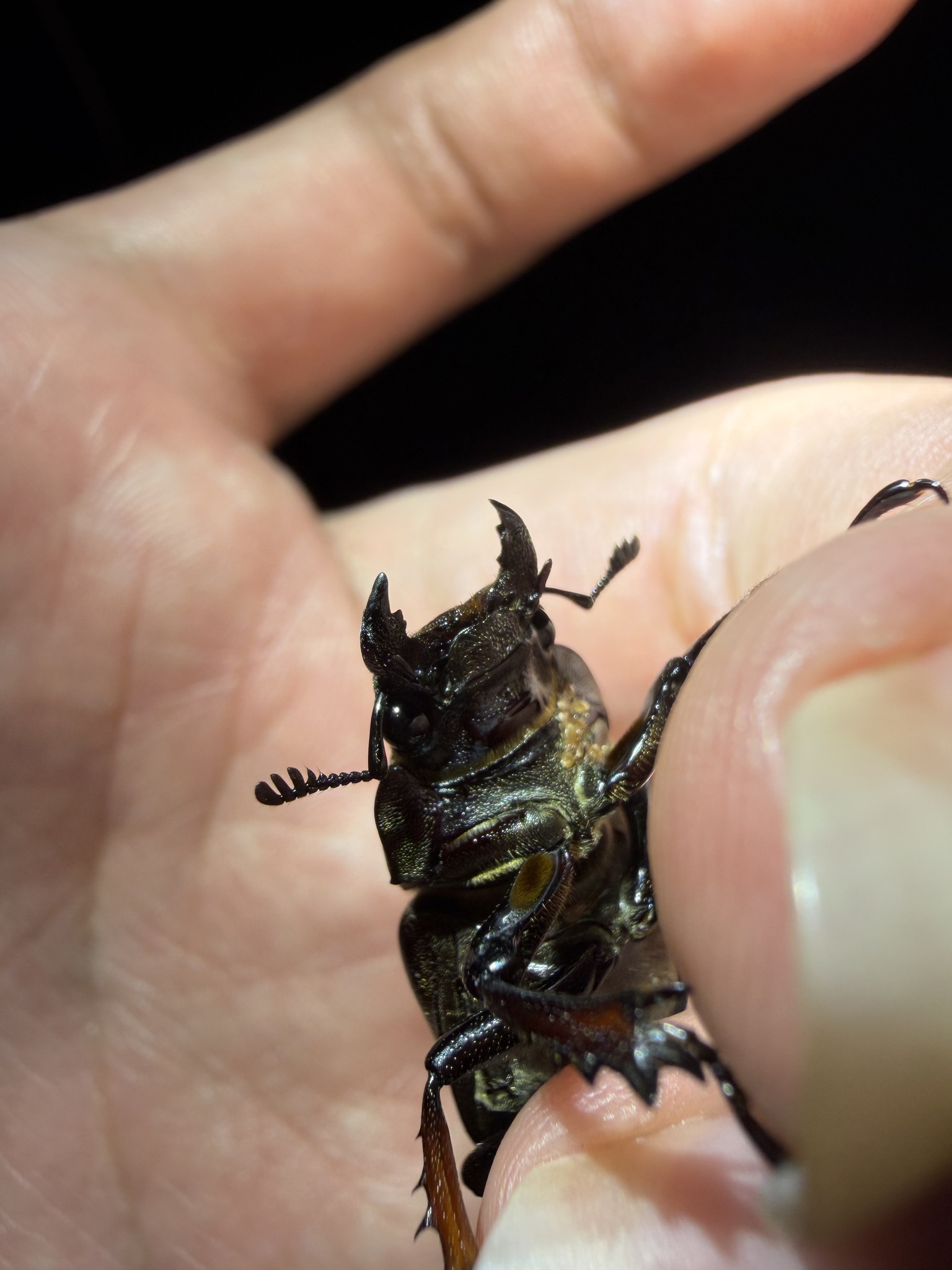
In late June I found this one in Medog, sitting calmly on a piece of grey mesh fabric that someone had laid out in camp. It was a big, heavy-looking beetle, deep red in colour, and the first things I noticed were the horn-like projections on the sides of its head and the narrow golden stripe running down the middle of its back. It did not move as I brought the lens closer, just held its ground like a small tank.
This is Lucanus imitator, a stag beetle of the family Lucanidae in the order Coleoptera. Lucanus is the classic stag beetle genus, the group that gives the whole family its common name, thanks to the males’ oversized mandibles that look like antlers. The species name imitator is Latin for imitator or mimic, and it hints that this beetle resembles other, larger members of its genus closely enough to cause identification headaches even for people who study them.
Stag beetles lead a slow, hidden life. The larvae chew through decaying wood for years, growing fat inside rotting trunks, while the adults are short-lived and mostly feed on tree sap and ripe fruit. Finding an adult out in the open like this usually means it is freshly emerged, on the move, or simply basking after the damp mountain nights of Medog.
That golden stripe down the back is the detail that stays with me. Most stag beetles are anonymous dark brown or black, so a red one with a bright dorsal line feels almost theatrical, like the beetle dressed up for the occasion.