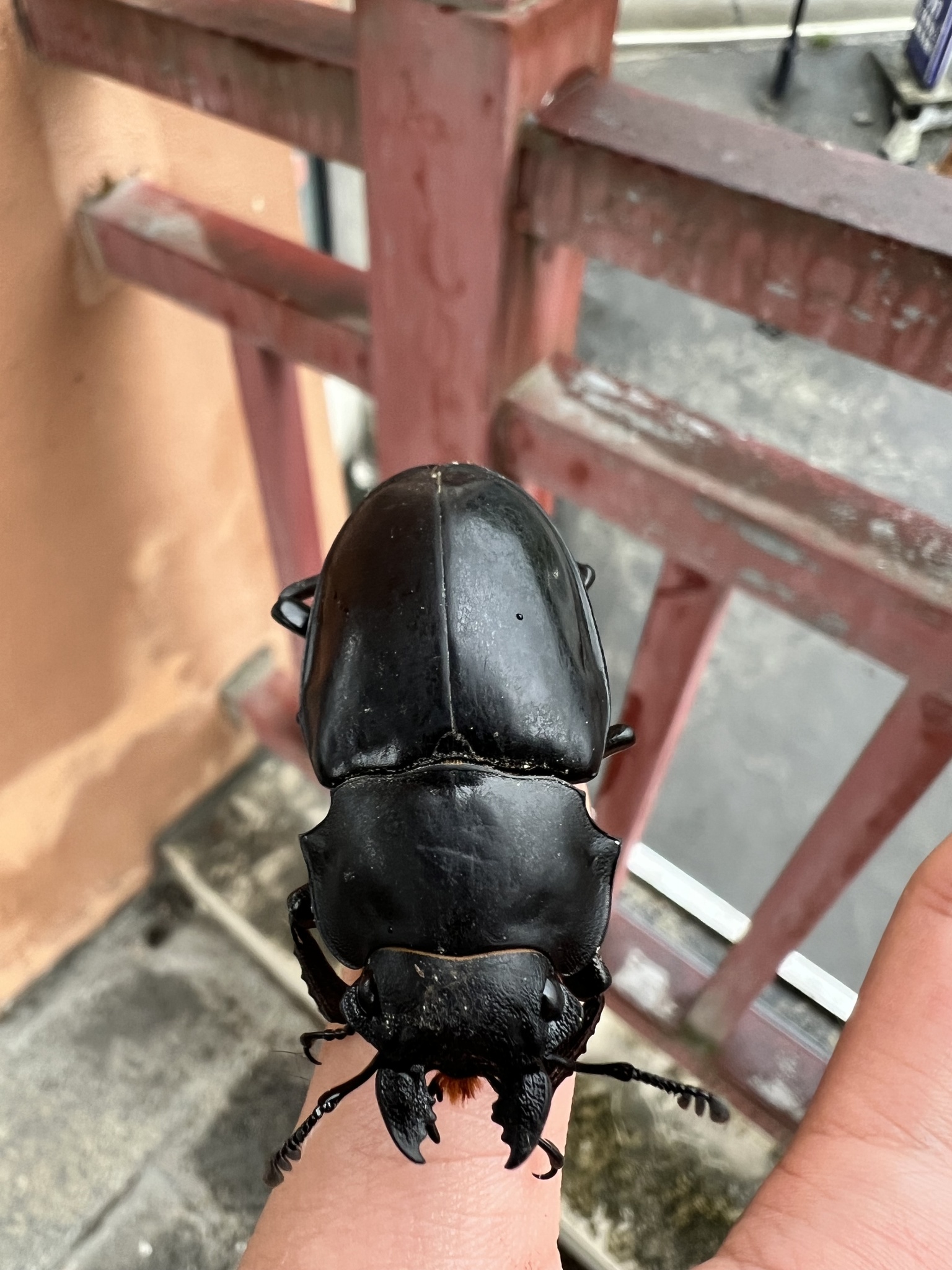
A stag beetle of the eastern Himalaya
In August 2024 I was in Medog, in southeastern Tibet. It is the lowest and wettest corner of the plateau, where the mountains drop sharply into subtropical forest, and it is famous among naturalists for the sheer number of species packed into its valleys. It was there that I met a stag beetle I had not seen before, resting quietly while I got my camera close.
This is Odontolabis siva, a member of the stag beetle family Lucanidae in the order Coleoptera. Males of the genus Odontolabis are known for their broad, flattened mandibles, which they use in pushing contests over feeding sites and mates, the insect equivalent of a wrestling match. The larvae spend years chewing through decaying wood, while the adults feed mainly on tree sap, so a healthy population is a good sign for a forest. Females are plainer, with much smaller jaws, and most of their energy goes into finding the right piece of dead wood for their eggs. It is usually the males that catch your eye first.
Medog’s warm, wet woodlands are exactly the sort of place where such beetles thrive. The region’s mix of tropical and temperate forest makes it a crossroads for species from both worlds, and a patient search of old timber can turn up surprises on almost every visit.
The genus name joins Greek roots meaning “tooth” and “forceps”, an apt description of a male’s jaws. The epithet siva is thought to honour the Hindu deity Shiva, a suitably mighty namesake for one of the Himalaya’s larger beetles.