The last voice of the summer lawn
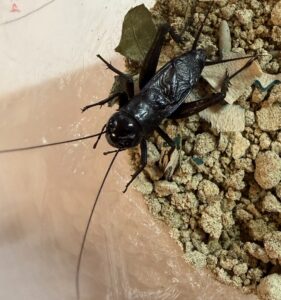
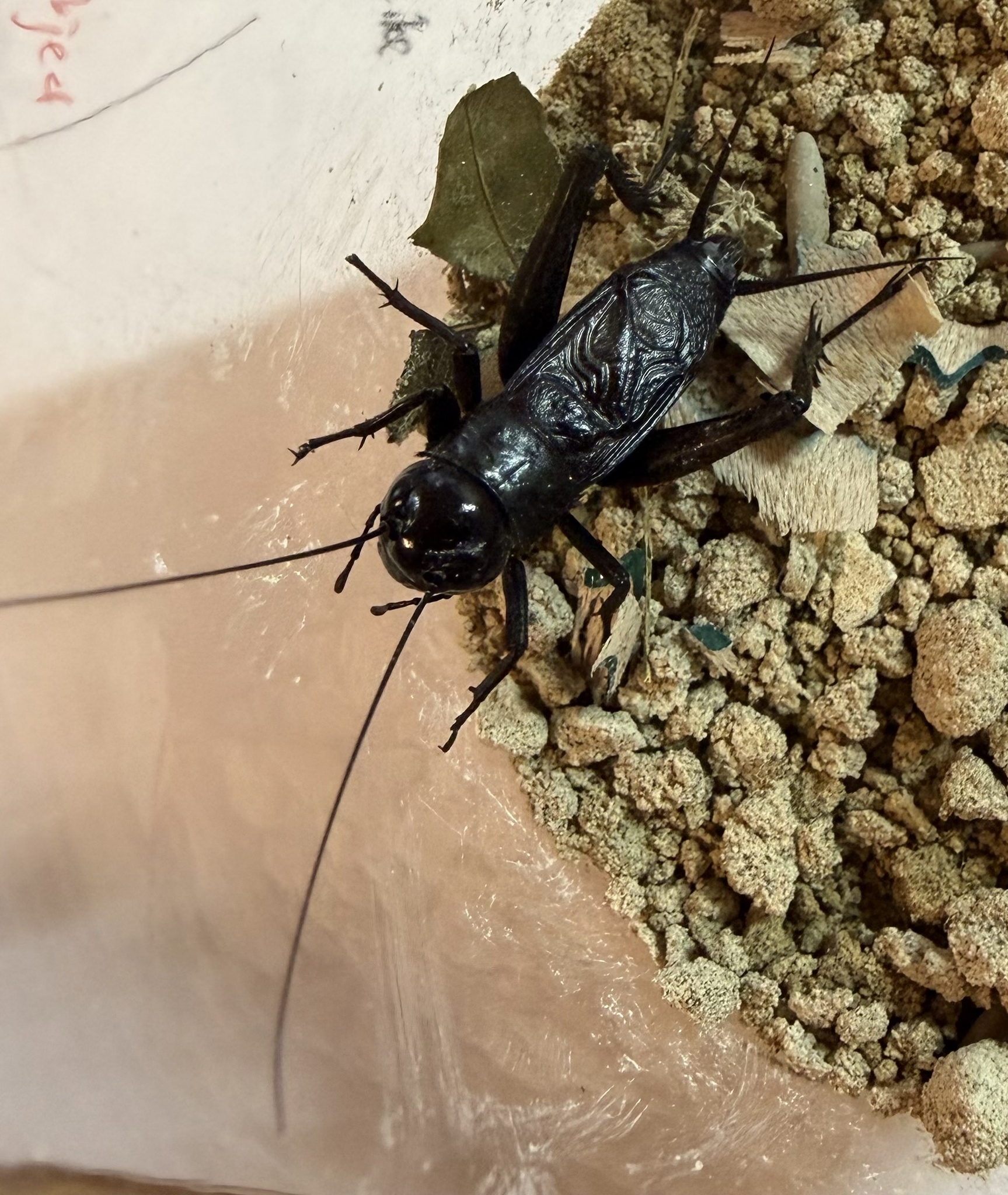
On the seventh of September, on the grounds of Shady Side Academy in Fox Chapel just outside Pittsburgh, this cricket was out on the ground among soil and fragments of dead wood. A dark, glossy insect with long antennae sweeping ahead of it, it stayed put while I crouched down, and only slipped into the shadows when I leaned in close.
It is a fall field cricket, Gryllus pennsylvanicus, a member of the family Gryllidae in the order Orthoptera. The name carries a little local history: pennsylvanicus means “of Pennsylvania,” and the species was described from this region by Burmeister in 1838. Across much of eastern North America it is one of the most familiar crickets of late summer and autumn, living in grassy and disturbed ground, fields, and forest edges, where it burrows into the soil to shelter.
Field crickets of the genus Gryllus are famously hard to separate by appearance alone. Several species look almost identical, and researchers usually rely on the males’ songs, each species calling with its own rhythm and pitch, or on fine structural details. The stout, dark body and long antennae visible here fit the fall field cricket, but the adults are similar enough that a photograph alone is rarely the final word.
For now the record stands as G. pennsylvanicus, identified without a confirming song, and is still marked as awaiting community confirmation. In a few weeks the nights will fill with chirping as males stridulate, rubbing their forewings together to call for mates, and the species that a photo could not separate will announce themselves plainly. I will be listening.
Nice find! I had read that up in the Northeast these autumn crickets are basically univoltine and spend the winter as eggs, with the adults dying off at the first hard frost — does that match what you see around Pittsburgh? And when you say a photo alone is rarely the final word, is it mainly the song that separates G. pennsylvanicus from something like G. veletis, or do the season and habitat help you narrow it down too? Curious how confident you are once you actually hear it calling.
Yes, that matches what I see here. Around Pittsburgh G. pennsylvanicus is univoltine, the eggs sit in the soil through the winter, nymphs come up in spring and early summer, the adults start calling in late summer, and the first hard frost takes the adults out. Same pattern as New England.
For pennsylvanicus versus veletis, the season does most of the work before you even hear anything. veletis overwinters as a nearly grown nymph and matures in spring, so it is calling in May and June, while pennsylvanicus starts from an egg, grows right through the summer and calls from August into the fall. A field cricket in October is pennsylvanicus. The songs line up with that too: veletis chirps faster and a little higher, pennsylvanicus slower and lower pitched.
Once one is calling in front of me I am comfortable calling it pennsylvanicus, but I would still describe the claim as song plus date rather than song alone. Temperature changes the chirp rate and there is regional variation in these calls, so in a place where three or four Gryllus overlap I would want both the recording and the calendar.