A leaf that learned to sing
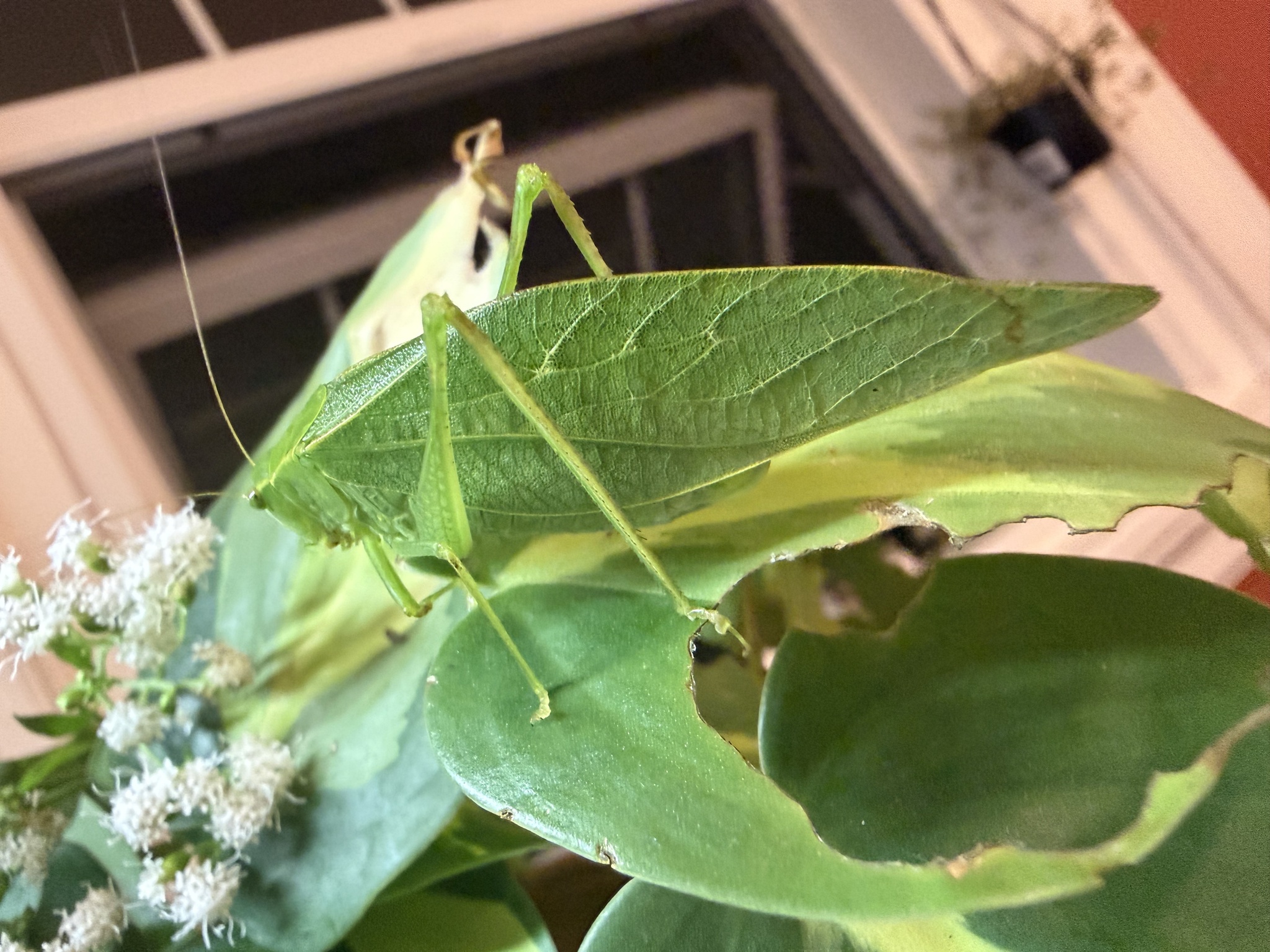
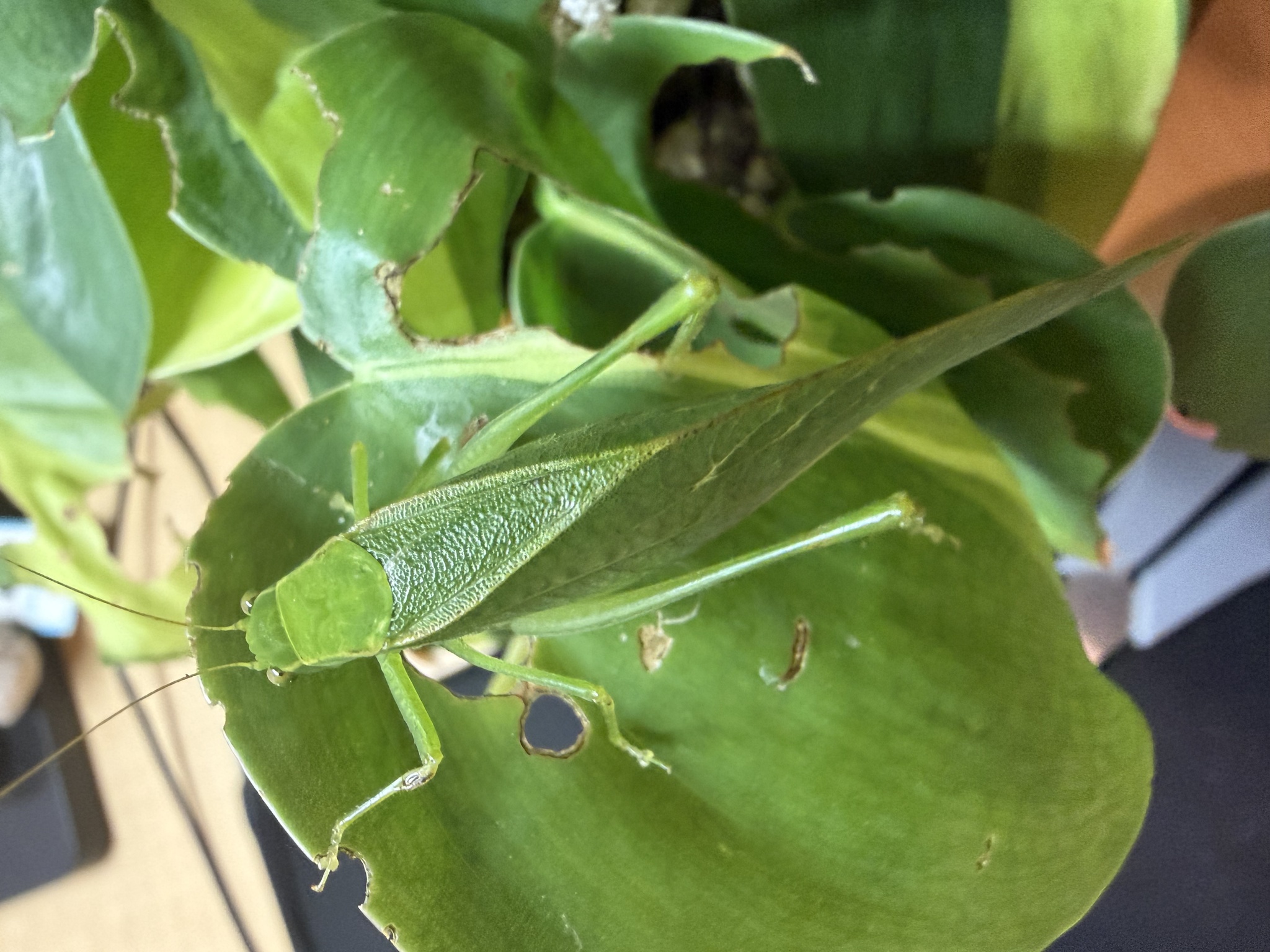
On the evening of September 19, in Fox Chapel, this katydid was resting on a leaf whose surface had already been chewed through here and there. It did not need the holes to hide. Sitting with its wings folded high over its back, it was almost the shape and green of the leaf itself, and I only noticed it because my eye caught an edge that was too neat to belong to the plant.
It is the lesser anglewing, Microcentrum retinerve, a member of the katydid family Tettigoniidae in the order Orthoptera. The English name comes from the wings, which fold into an angled roof over the body, and from the species being the smaller of the two angle-winged katydids common in eastern North America. Both share the same trick: green, leaf-shaped wings with veins arranged like the veins of a leaf, so that a resting katydid reads as foliage until it moves.
Angle-winged katydids are arboreal. They spend their days pressed against leaves and branches in the canopy, feeding on foliage and coming alive at night, when the males begin to sing. The song is produced by rubbing the forewings together, and on a warm late-summer night it is one of the steady background sounds of an eastern wood, a dry ticking that most people hear without ever seeing the singer.
For now this one is recorded as M. retinerve on the strength of the photographs alone, and is still awaiting community confirmation. Given that it was perched on a leaf already full of holes, it had picked its hiding place well, and it stayed still enough that I eventually left it to its camouflage and its evening.