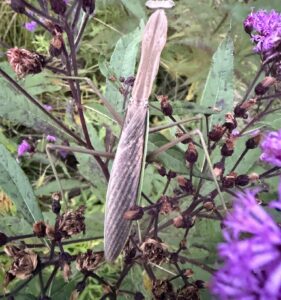
A patient hunter in the late-summer garden
On August 28, near the senior school in Fox Chapel, a praying mantis sat motionless on a leafy stem among purple flowers. It did not flinch as I leaned in, only turned its triangular head to watch me with both compound eyes. Its body was a soft brownish gray with darker stripes, its forelegs folded in the pose that gives mantises their name, and it had clearly been waiting there for a long time, trusting that patience would bring lunch.
This is Tenodera sinensis, the Chinese mantis, a member of the mantis family Mantidae in the order Mantodea. It is one of the largest mantises in North America, with adults reaching seven to ten centimeters, and it comes in both green and brown forms. The species is native to Asia and was accidentally introduced to the United States in 1896, when a nurseryman brought it to Mt. Airy near Philadelphia, Pennsylvania, so this is a Pennsylvania story with a Philadelphia beginning. It is sometimes still listed as Tenodera aridifolia sinensis, but it is now recognized as a full species in its own right. This individual is identified to species, awaiting community confirmation.
Chinese mantises are ambush predators. They sit still for hours, swaying slightly like a leaf in the wind, and strike with their raptorial forelegs in a fraction of a second when a cricket, grasshopper, or moth wanders within reach. In gardens they are welcome guests, quietly removing plant-eating insects without any help from us.
The name sinensis simply means “of China,” a nod to its homeland. What I found most memorable was how unbothered it was by me: a predator the size of my hand, completely confident in its camouflage, letting a much larger animal get close enough to photograph every detail. In the garden it may be the top of the food chain, and it clearly knows it.
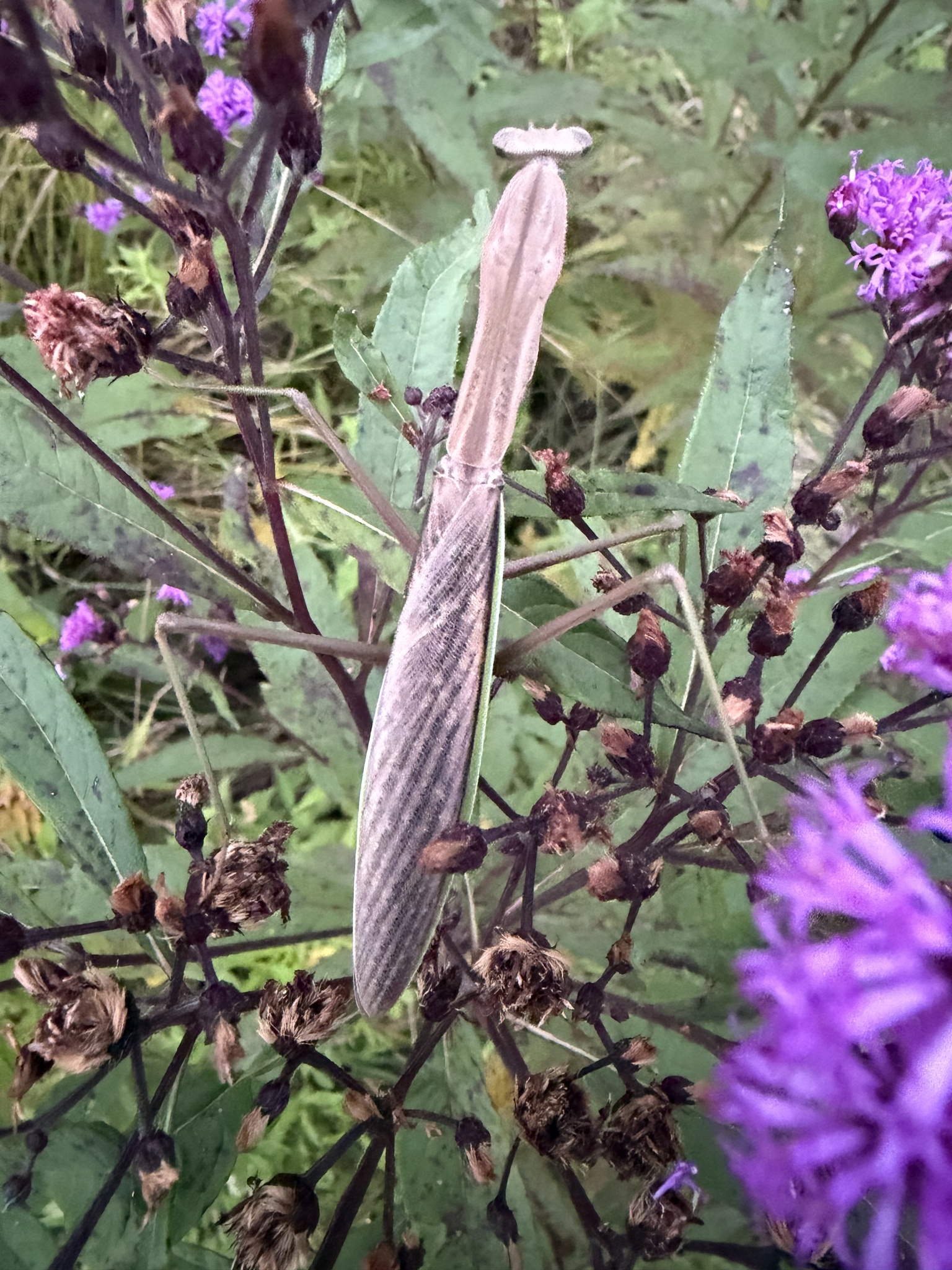
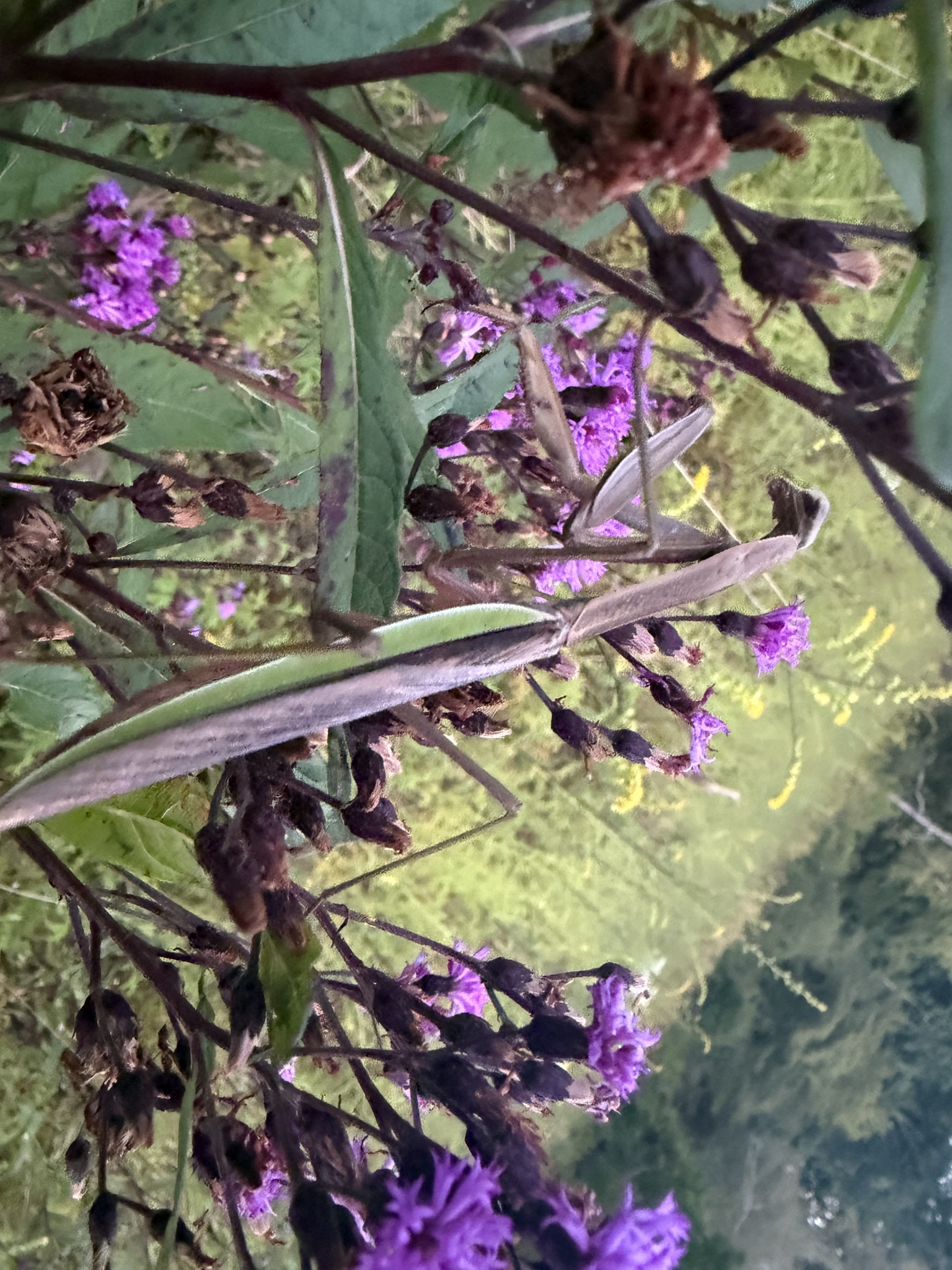
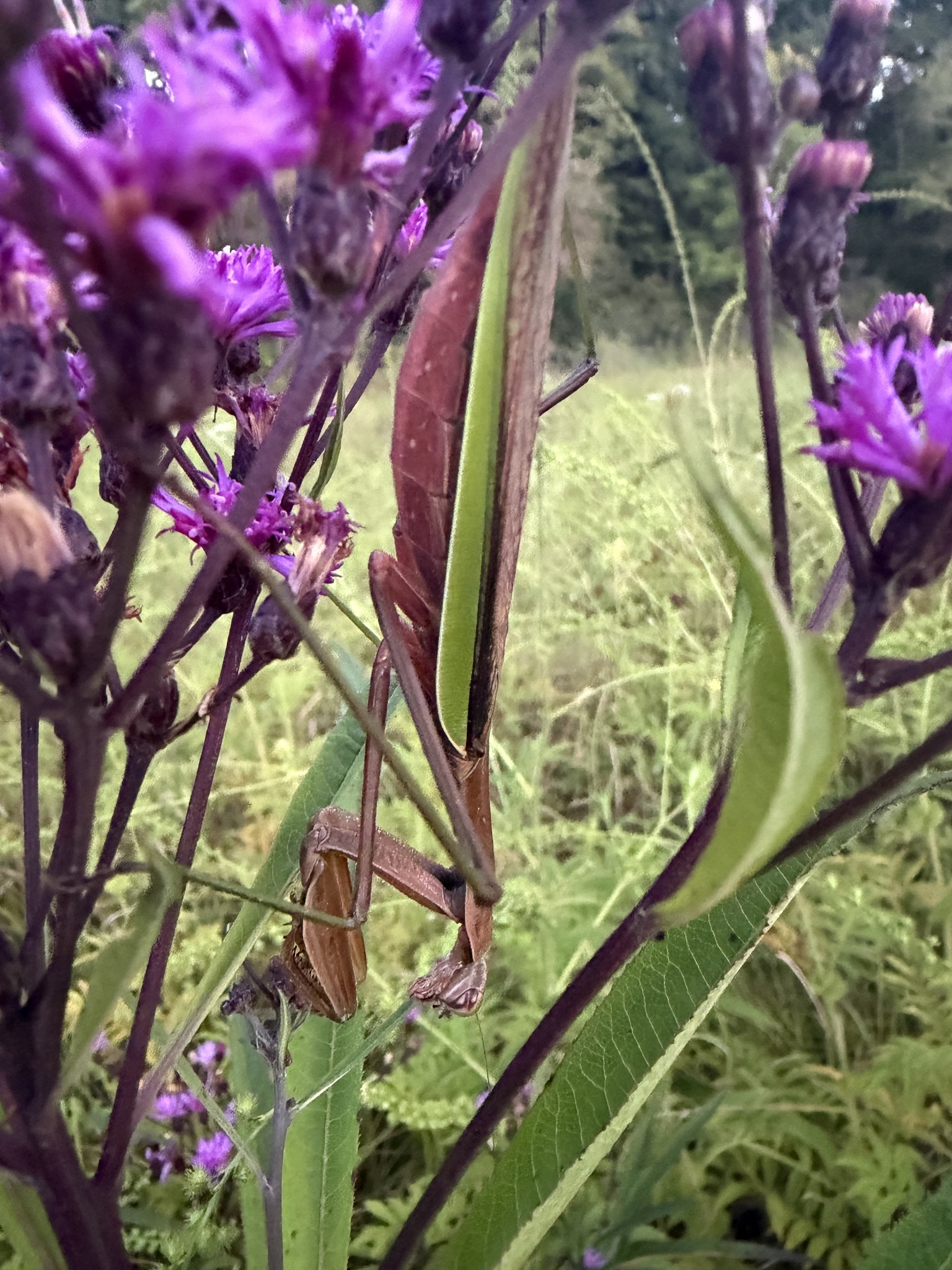
Wonderful observation and well‑written article! I especially enjoyed the vivid field description of the mantis’s behaviour, and it’s impressive you included the taxonomic history of Tenodera sinensis. Great work building this online insect museum, looking forward to more of your insect records!
One interesting thing I noticed: The Chinese mantis in Pittsburgh generally has a brown color while they are usually green in Beijing.
Probably because of the purple flowers. They really like staying on them.
Nice find! I have a question about the color forms — I have a brown Tenodera sinensis in my garden that stayed brown through every molt this summer, while a neighbor a few streets over only ever sees green ones. Is the brown vs. green form determined genetically, or does something in the environment (like humidity or the color of the plants they grow up on) decide it?
Both, and they are hard to separate neatly. In Tenodera the colour is set during development and is strongly influenced by the surroundings the nymph grows up in, so humidity, light and the tone of the vegetation all push it one way or the other, and the colour can change from one moult to the next. There is a genetic component too, which is why one garden can produce browns while a neighbour a few streets over only ever sees greens.
Your brown one moulting brown every time does not rule out the environment either: a dry, sun exposed, brownish spot will keep producing browns moult after moult. The interesting experiment would be moving a young nymph into a green, humid corner and watching the next moult, which is not something most people do in their garden.