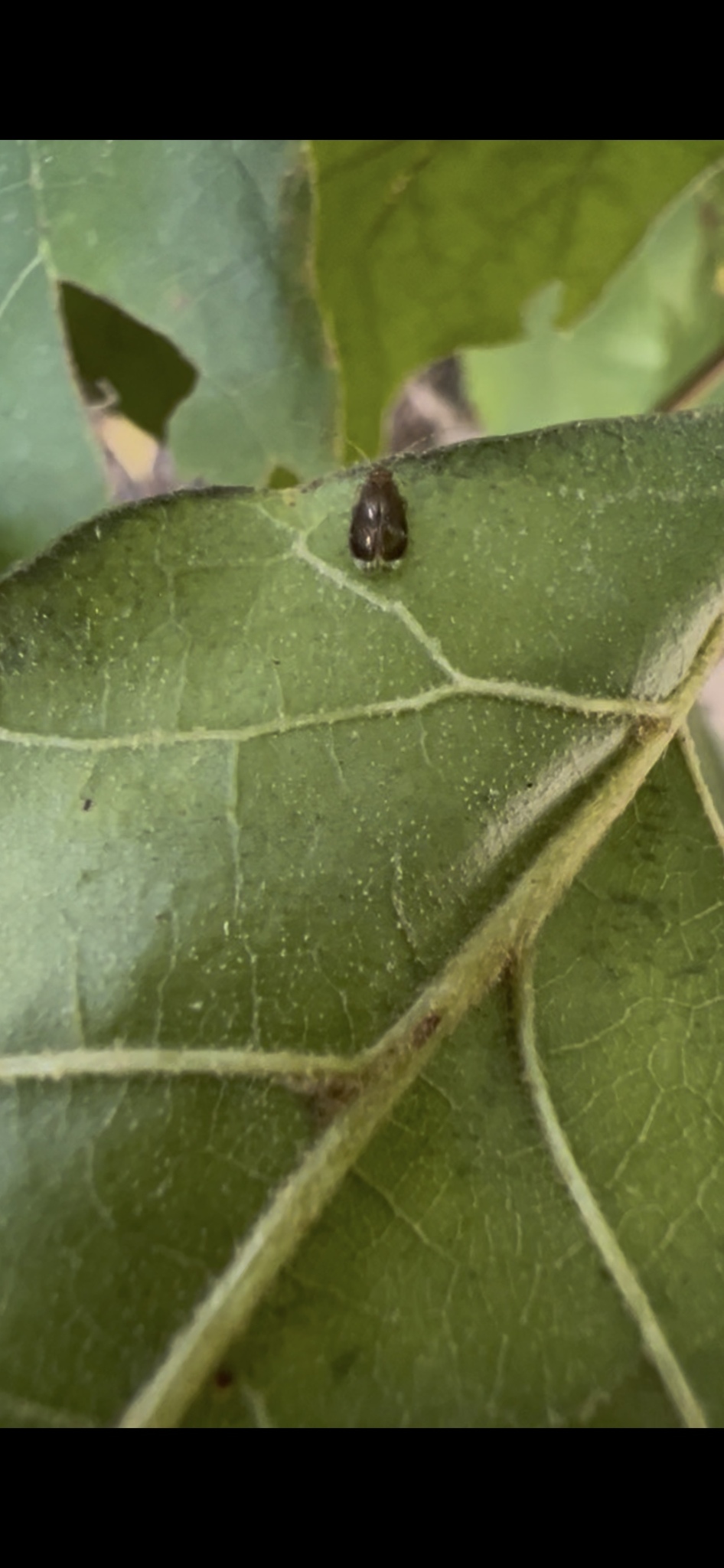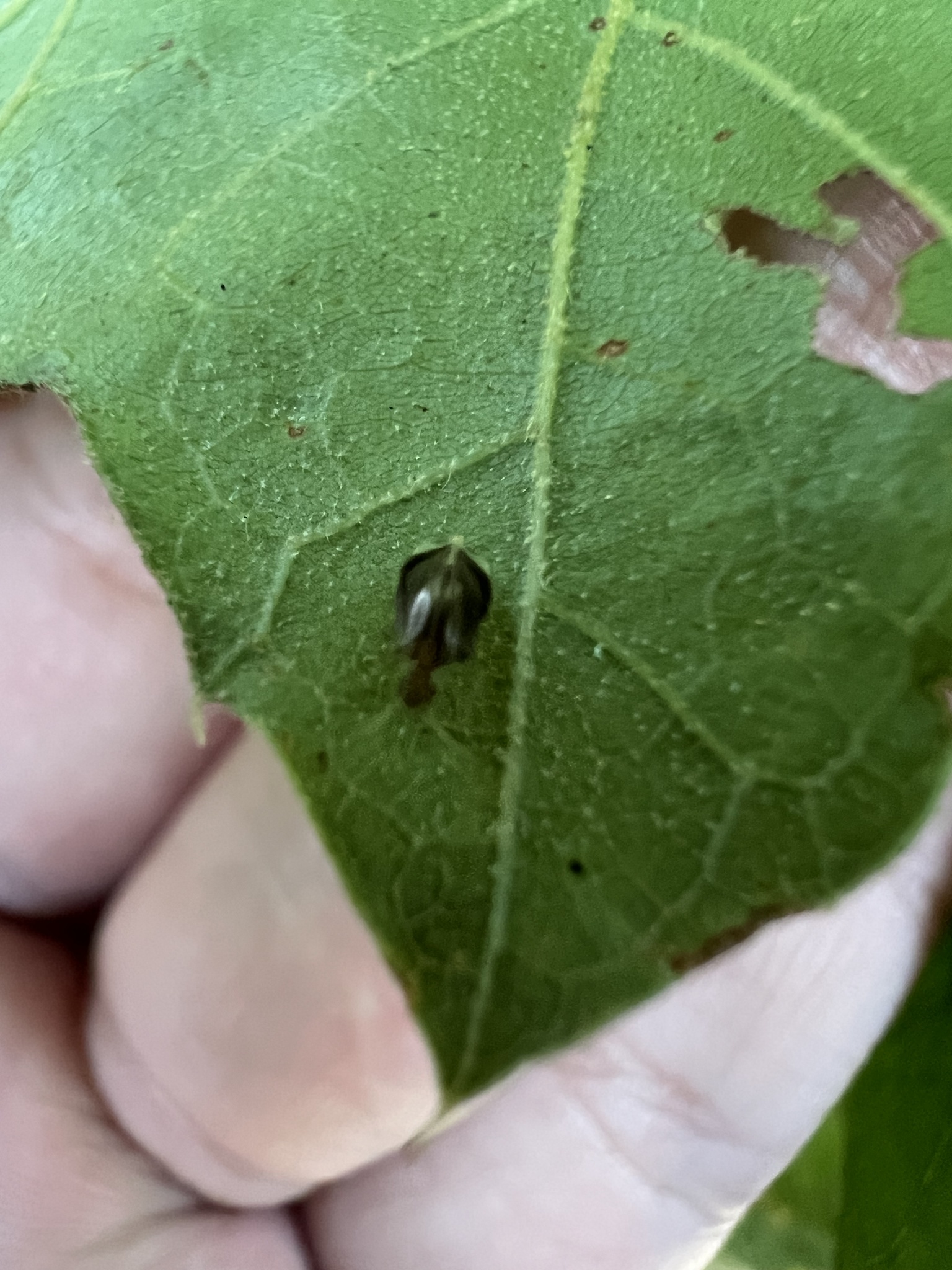
A tiny barklouse with a scandalous name
I almost missed this one entirely. On July 21 in Rhode Island, a dusting of pale specks on an old tree trunk caught my eye, and only when I leaned in did I see them moving. They were barklice, tiny soft-bodied insects no bigger than a fleck of wood.
This is Polypsocus corruptus, a barklouse in the family Amphipsocidae, order Psocodea. Despite the name, barklice are not lice, and they do not bite, sting, or infest anything. They are free-living scavengers that graze on the fungi, algae, lichens, and bits of organic matter that collect on bark, quietly keeping tree trunks tidy.
The order Psocodea is a mixed bag, since it also contains the true lice, parasites of birds and mammals. The barklice are the respectable, outdoorsy branch of the family, and most people walk past them every day without ever noticing. The name itself is a bit unfair, since it makes them sound like something you would want to shampoo out of your hair. Some species even spin silken sheets over the bark where they gather, and on humid mornings the silk glistens with dew, which is how I first learned to find them on a warm morning.
Which leaves the question of the name. Corruptus is a strange label for such an upstanding citizen, and whatever the original describer meant by it, the insect itself seems to be above reproach. I will take a barklouse over its slandered reputation any day of the week.